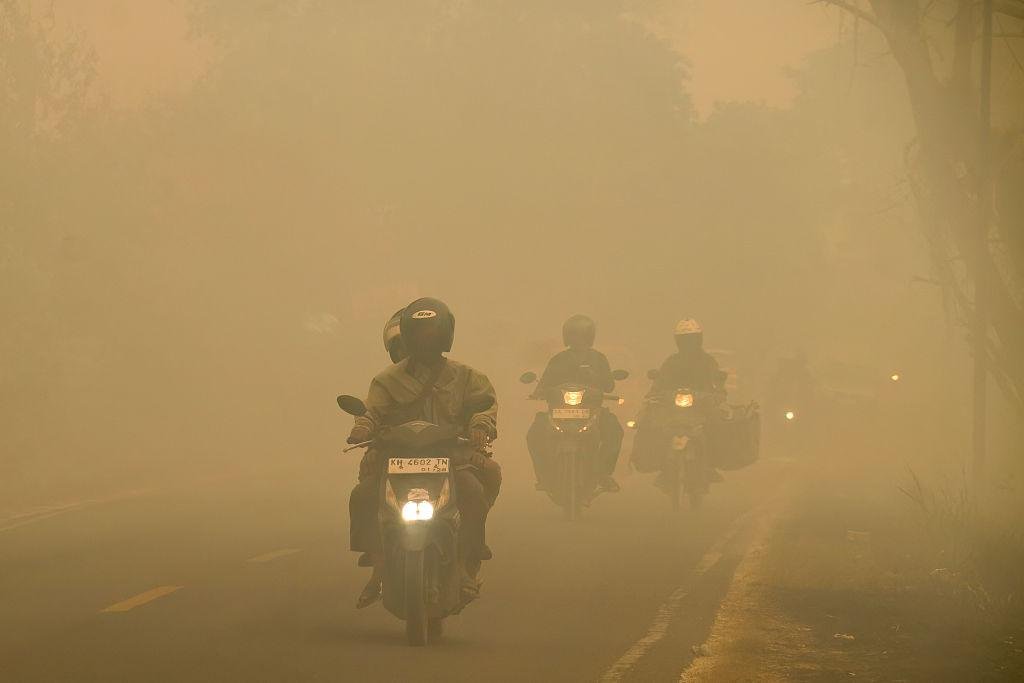
Indonesia is facing one of its most severe wildfire seasons in more than a decade, with massive fires burning across the forest and peatlands of Borneo and Sumatra. According to data from the European Union’s Copernicus climate monitoring service, Indonesian wildfires released an estimated 19.7 million metric tonnes of carbon dioxide between September 1 and 7, 2026—the highest fire-related emissions recorded globally during that period.
The fires have been intensified by extreme drought and heat linked to a powerful “super El Niño” weather pattern, creating exceptionally dry conditions that allow fires to spread rapidly and burn more intensely. Fire-emission intensity in Indonesia exceeded 1,500 kg per square kilometre, more than ten times the level recorded in Russia during the same period.
The environmental impact is already significant. Around 202,000 hectares had burned between January and July, while August is estimated to have added another 600,000 hectares. Smoke from the fires has also created hazardous air-quality conditions, particularly in parts of Kalimantan.
Authorities are using water-bombing aircraft, cloud seeding and ground firefighting teams to control the fires, while Japan is also sending helicopters to assist Indonesia.
News as reported