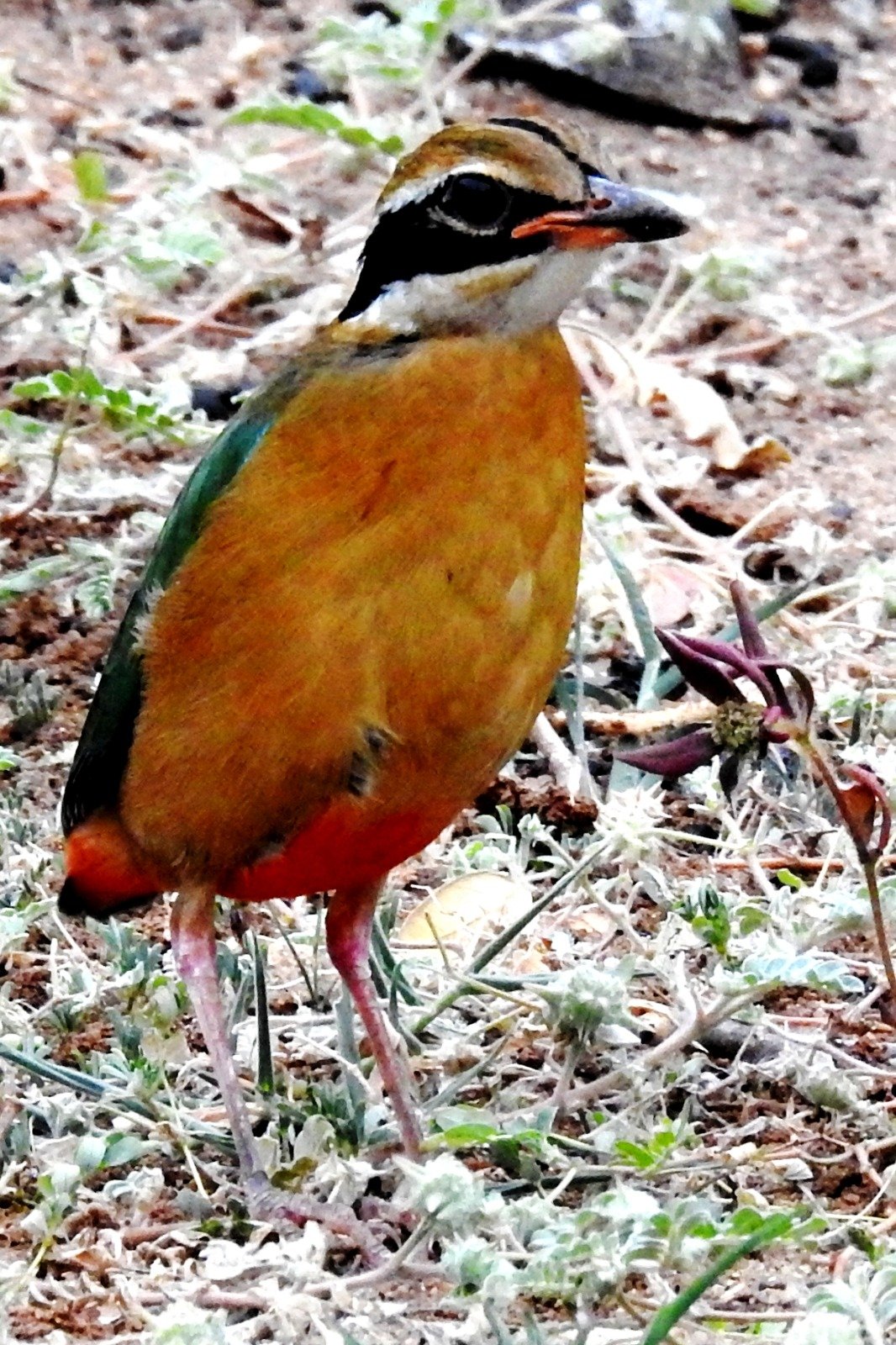
The Indian pitta (Pitta brachyura) is one of the most striking and colourful birds found across the Indian subcontinent. First formally recorded in 1766 by Swedish biologist and physician Carl Linnaeus, the species is known for its vibrant plumage and distinctive calls. The name Pitta is derived from a Telugu word meaning “small bird”, while brachyura refers to its short tail, combining the Greek words brakhus, meaning “short”, and ouros, meaning “tailed”.
The Indian pitta breeds across parts of northern India, Pakistan, the Himalayan foothills and Nepal, while migrating southwards during winter. It can be seen across much of South India and Sri Lanka during the winter season.
During courtship, males perform an energetic display involving hopping, body postures, wing movements and fluting calls. Their colourful, nine-toned plumage has earned the bird the Hindi name ‘Navrang’, meaning “nine colours”. Both parents participate in incubating the eggs and raising the chicks, with pairs generally remaining monogamous during the breeding season.
The species has also inspired fascinating folklore. In Sri Lanka, its call is traditionally interpreted as a poetic complaint about a peacock stealing its colourful dress.
The photograph featured here was taken by me in Alathur, Palakkad District, ten years ago, capturing this beautiful winter visitor in its natural surroundings.
Vincent Vanur