The fascinating world of insects is filled with species that use clever adaptations to survive, and the white-sox fly is a striking example. Belonging to the family Micropezidae, stilt-legged flies are slender-bodied true flies known for their remarkable resemblance to wasps and ants. Although completely harmless, their appearance helps deter potential predators.
A distinctive feature of these flies is the way they hold their front pair of legs forward while walking or resting. Since true flies have relatively short antennae, this posture makes the legs look like antennae. Their large compound eyes further reveal their identity as members of the order Diptera.
The genus Mimegralla contains more than 80 described species. Its name combines the Greek word mimos, meaning “mimic,” with the Latin gralla, meaning “stilts”—aptly describing these wasp-mimicking insects.
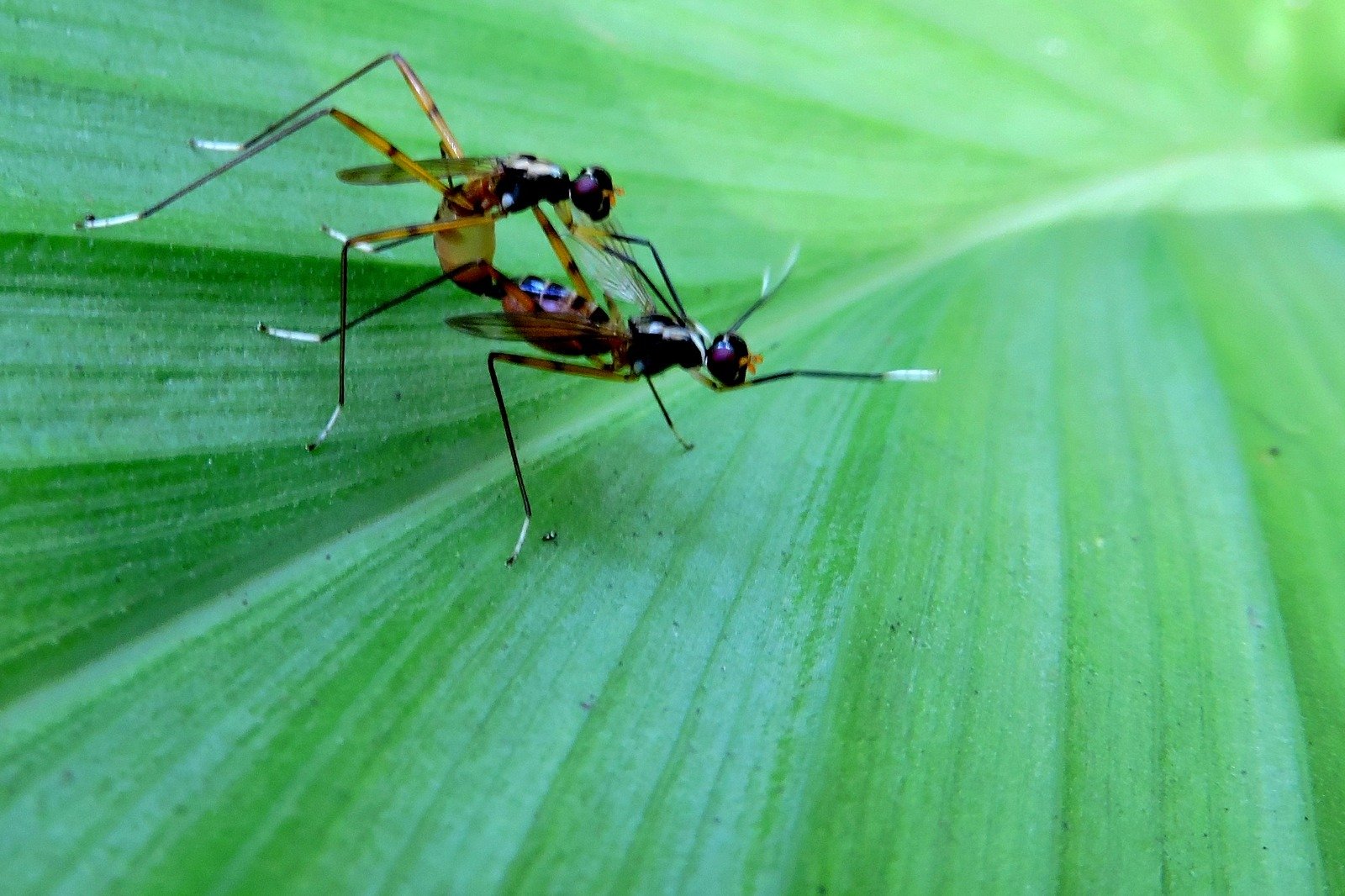
The Mimegralla albimana, commonly known as the white-sox fly, is particularly distinctive. Its name refers to the conspicuous bright-white tarsi at the ends of its forward-held front legs, creating the appearance of white socks. The species was first recorded in 1856 by Hungarian entomologist Carl Ludwig Doleschall.
A mating pair of M. albimana was photographed in 2014, capturing a fascinating moment in the life of this remarkable insect.
Vincent Vanur