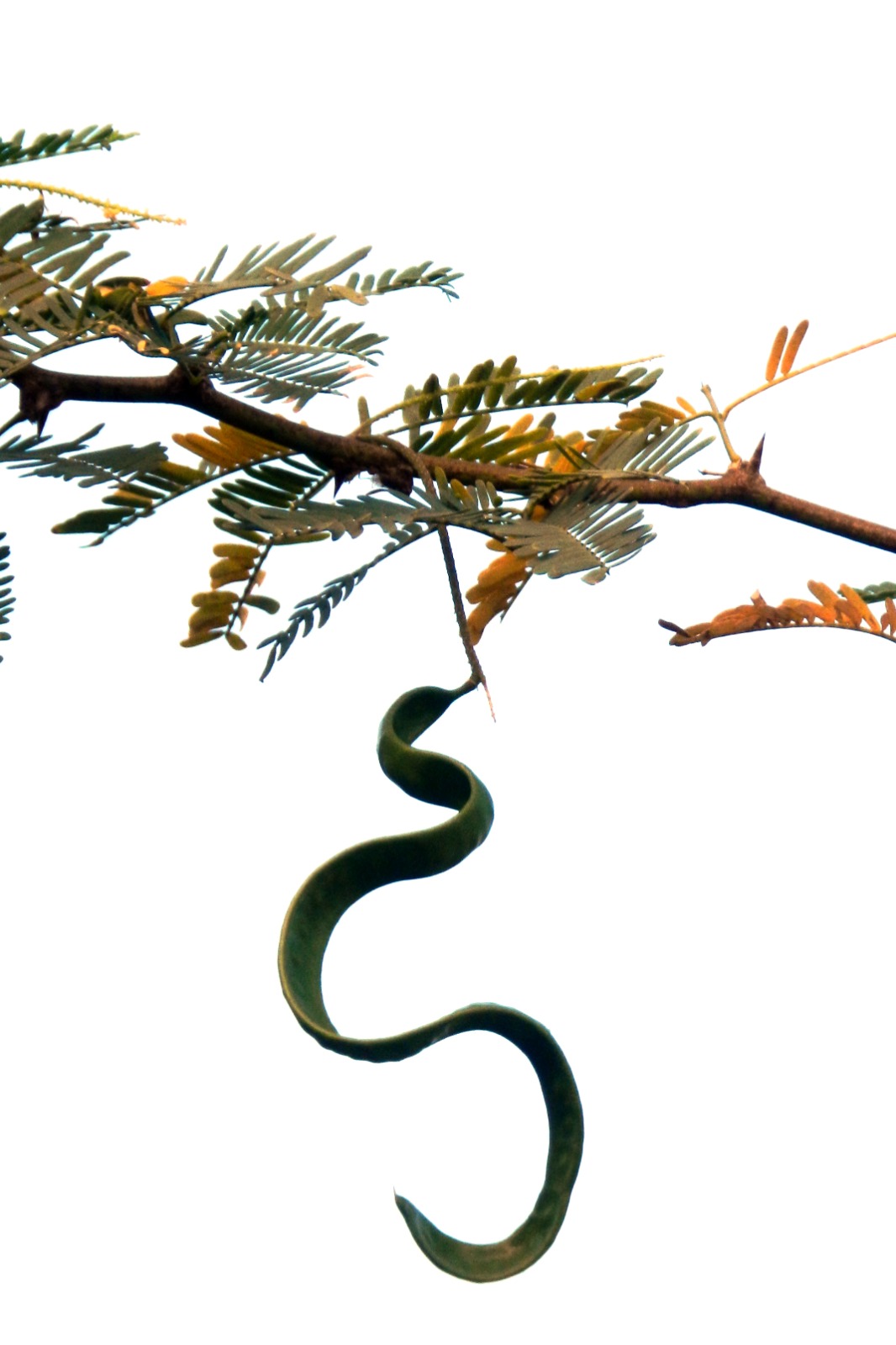
Neltuma juliflora, formerly known as Prosopis juliflora, is a shrub or small tree belonging to the legume family (Fabaceae) and is one of the mesquite species. Native to Mexico, South America, and the Caribbean, it has spread widely and is now considered an invasive species in many parts of Africa, India, Asia, Australia, and other regions.
The plant was first scientifically described by Swedish botanist Olof Swartz. Later, the renowned American polymath and botanist Constantine Samuel Rafinesque reclassified it into the genus Neltuma, giving it its currently accepted scientific name.
Despite its invasive nature, Neltuma juliflora has several beneficial uses. Its fragrant flowers are an excellent source of nectar for honeybees, making it valuable for honey production. The sweet, nutritious pods are edible and have long been used as food in countries such as Peru and Chile. Indigenous communities traditionally chewed the pods during long journeys to quench thirst. The fruits can also be ground into flour for bread and fermented to produce alcoholic beverages.
In India, the species was introduced to the state of Tamil Nadu by the British in 1877 for planting in dry, arid regions. During the 1960s, under the leadership of Chief Minister K. Kamaraj, its cultivation was actively promoted as a source of firewood and as a living fence to protect agricultural fields from grazing animals.
However, the rapid spread of the tree has caused significant ecological concerns. Recognizing its harmful impact on native ecosystems, the Madras High Court directed the Tamil Nadu government in 2017 to eradicate the species. In 2022, the court again ordered the government to formulate an immediate eradication policy, which was subsequently introduced the same year.
Today, Neltuma juliflora stands as a striking example of how a plant introduced for practical benefits can become a major environmental challenge when it spreads beyond control.
Vincent Vanur