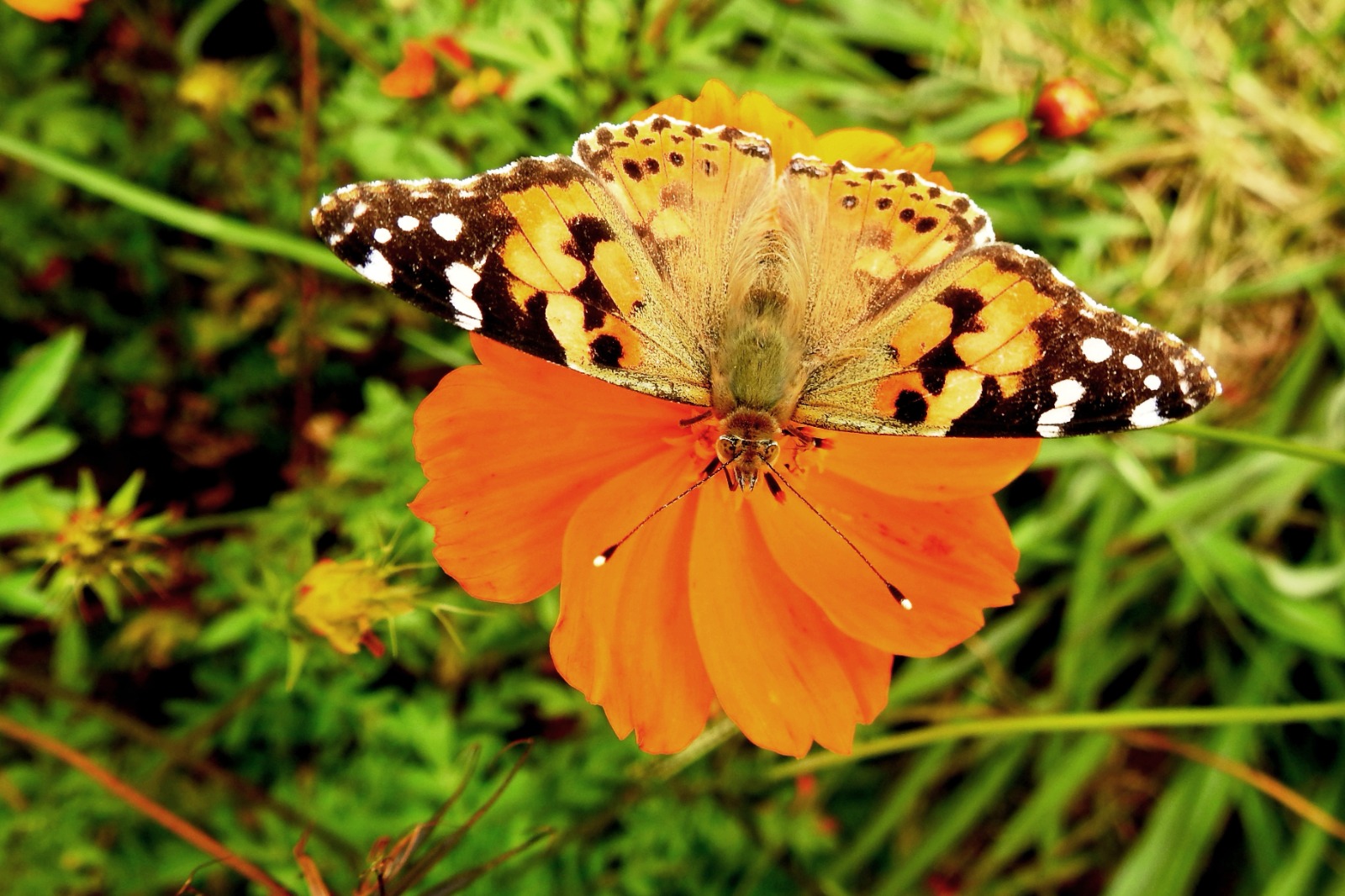
The Painted Lady (Vanessa cardui) was first scientifically described in 1758 by the Swedish physician and zoologist Carl Linnaeus. It is one of the world’s most widespread and remarkable migratory butterflies.
Unlike many butterflies that remain within a limited range, the Painted Lady undertakes extraordinary seasonal migrations. In biodiverse tropical regions, including much of India, populations may remain in the same area throughout the year. However, in temperate regions they travel vast distances, moving northward during spring and returning south through successive generations in autumn.
Each year, Painted Ladies migrate from the Red Sea basin to Turkey through Israel and Cyprus during March and April. Others travel from North Africa and the Mediterranean into Europe during May and June. Research by the Radar Entomology Unit at Rothamsted Research has confirmed that these migrations occur regularly. Over as many as six generations, Painted Ladies complete an astonishing 14,500-kilometre round-trip journey between tropical Africa and the Arctic Circle.
The Worldwide Painted Lady Migration Citizen Science Project, coordinated by the Barcelona-based Institute of Evolutionary Biology, has further revealed the immense scale of these movements. Some populations travel from Iceland to the Sahara Desert and continue even farther south across multiple generations.
In March 2019, millions of Painted Lady butterflies appeared in the deserts of Southern California following unusually heavy rainfall. Scientists believe that large-scale weather patterns such as El Niño may influence their migration routes and timing, highlighting the close connection between climate and insect behavior.
– Vincent Vanur