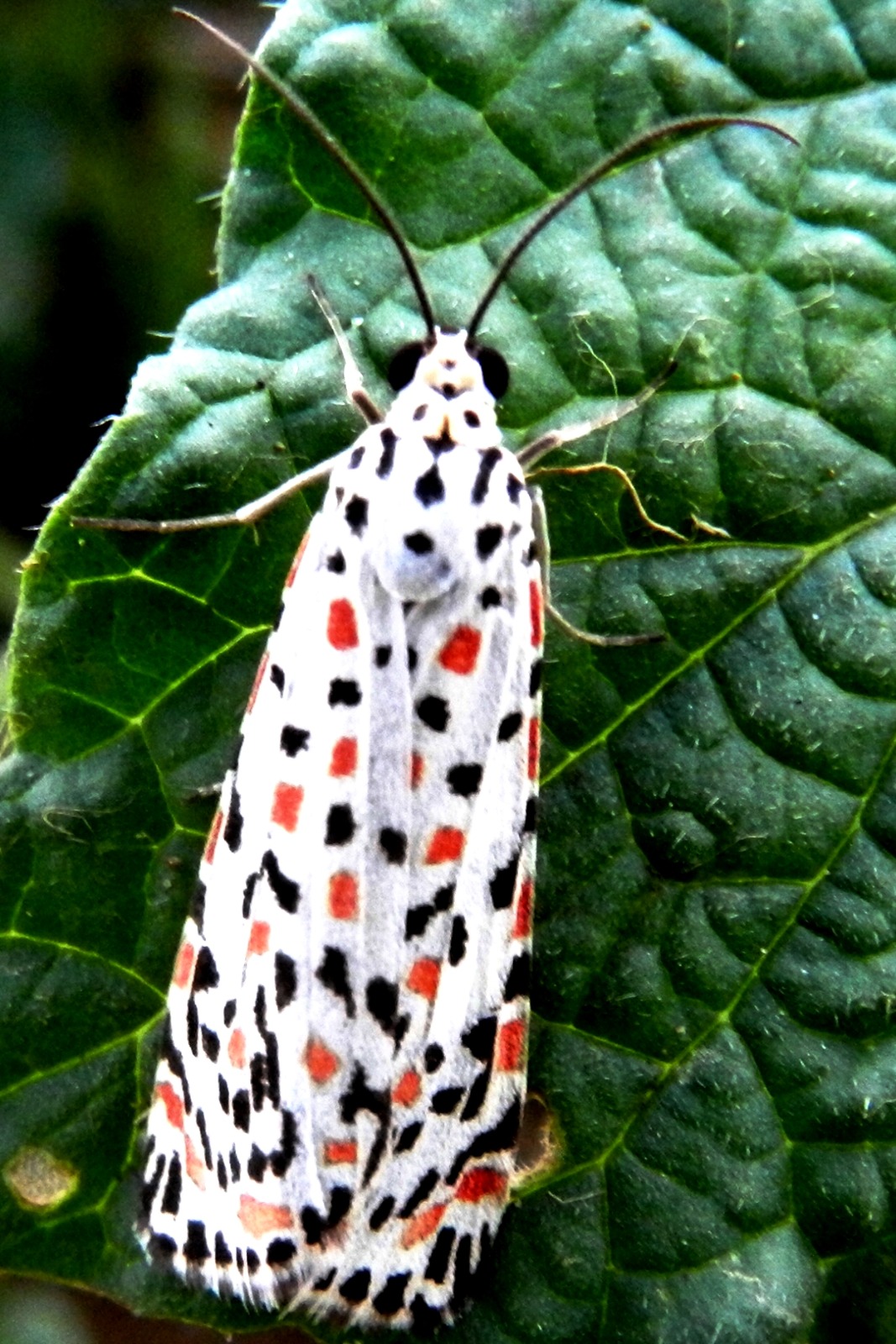
Utetheisa pulchella, the crimson-speckled flunkey, crimson-speckled footman, or crimson-speckled moth, is a moth of the family Erebidae. It was first recorded by the Swedish physician and zoologist Carl Linnaeus (1707 – 1778) in 1758.
This moth is toxic and unpalatable to predators, as the caterpillar accumulates a large amount of alkaloids while feeding. The characteristic coloration, especially the red dots, of its wings serves as a sign of warning to its predators (aposematism).
Aposematism is the advertising by an animal to potential predators that it is not worth attacking or eating. This unprofitability may consist of any defences that make the prey difficult to kill and eat, such as toxicity, venom, foul taste or smell, sharp spines, or aggressive nature. Aposematic signals are beneficial for both predator and prey because both avoid potential harm.
There are also creatures that imitate those that actually give aposematic signals to falsely give such signals for self-defense. These creatures imitate such signals to delay the attack by the hesitating predator and to escape by that time.
– Vincent Vanur