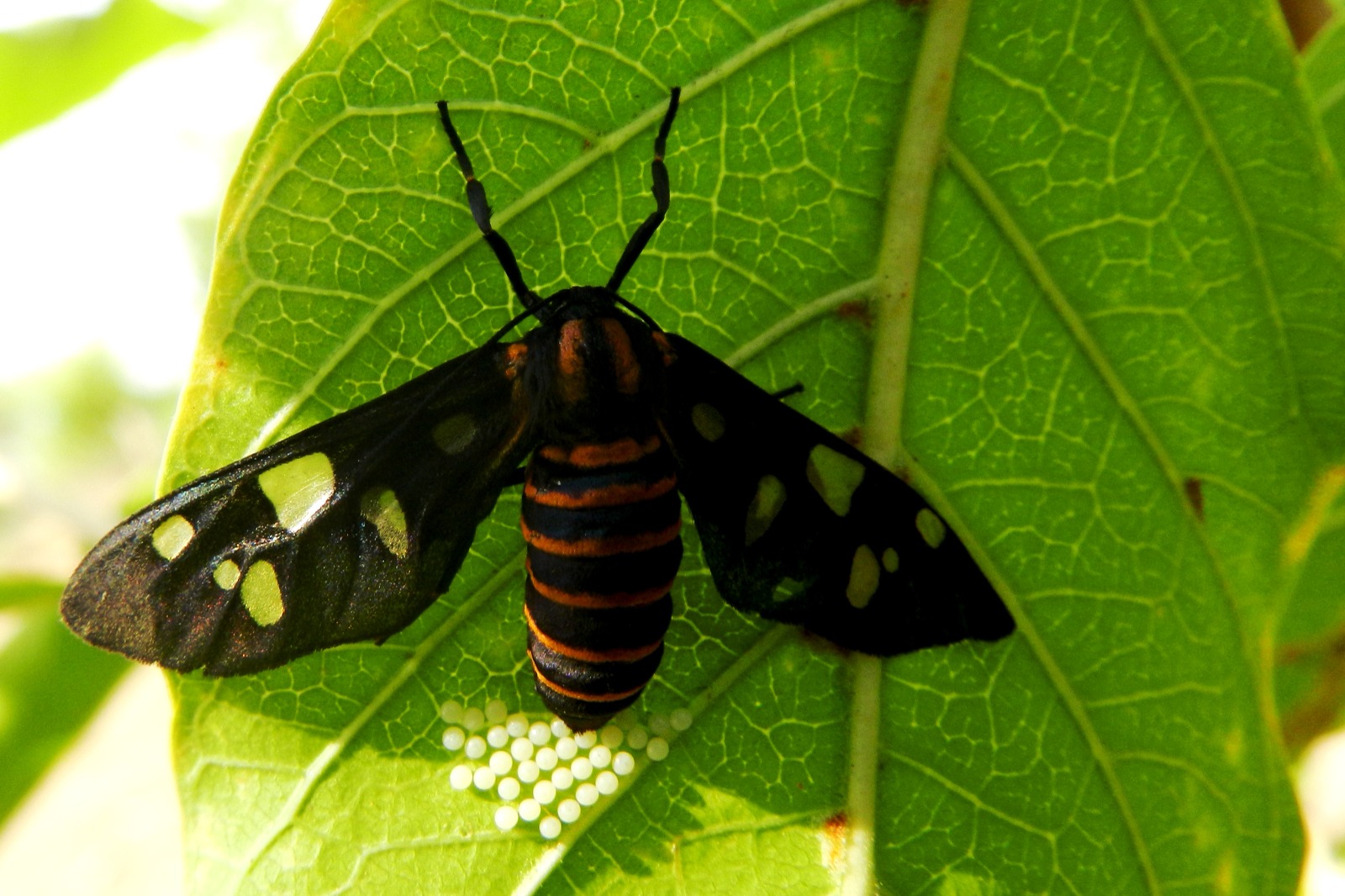
The sandalwood defoliator (Amata passalis) is a moth of the genus Amata in the subfamily Arctiinae (“woolly bears” or “tiger moths”) of the family Erebidae. Its name comes from the fact that its larvae feed on the leaves of the sandalwood tree. Their larvae also feed on the leaves of peas and many other plants. It was first recorded in 1781 by the Danish zoologist Johan Christian Fabricius (1745 – 1808).
I took this photo of a moth laying eggs 14 years ago. They are generally safe because their coloration sends a message to birds and other predators that they are not tasty.
They emerge from their pupae as moths within an hour or two after sunrise and begin mating the next day. They live less than four days after mating, during which time they lay more than three hundred eggs. They breed throughout the year and go through six to ten generations a year. However, we can rest assured that their numbers are under control due to some mechanisms in nature that control the population growth of all living organisms, except, perhaps, ours.
– Vincent Vanur