

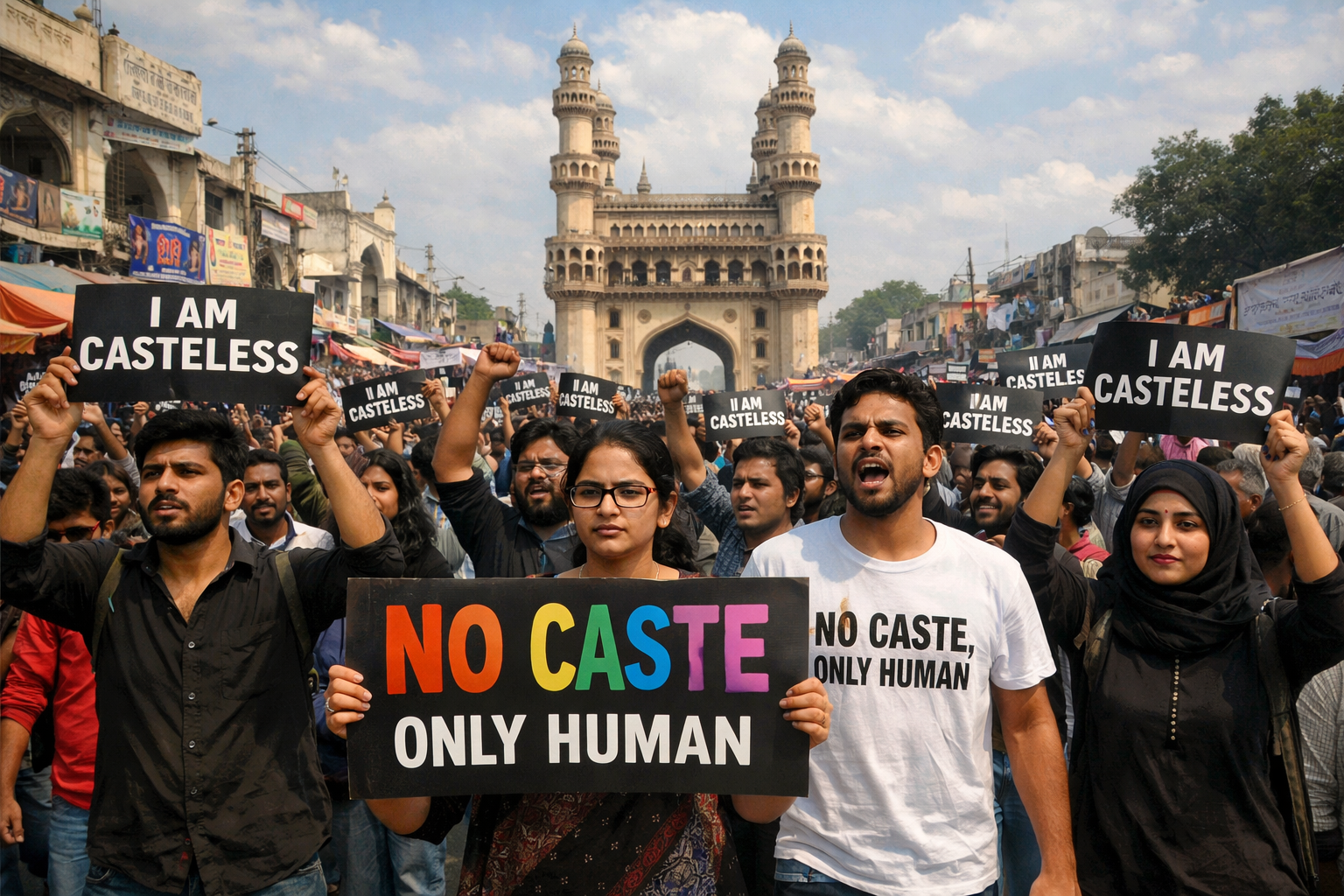
A recent socio-economic survey in Telangana has revealed an interesting social shift, particularly in Hyderabad. Nearly 12 lakh people across the state have chosen to identify themselves under a “No Caste” category, with a large concentration coming from Greater Hyderabad.
This development is significant because caste has historically played a major role in Indian society, influencing everything from social interactions to education and politics. The emergence of a sizable group rejecting caste identity indicates changing attitudes, especially in urban areas where education, employment opportunities, and exposure to diverse cultures are more prevalent.
Experts suggest that Hyderabad’s cosmopolitan environment, driven by IT industries and migration from different parts of the country, may be contributing to this shift. Younger generations, in particular, appear to be distancing themselves from traditional caste labels, preferring a more individualistic identity.
However, the trend also raises questions. While some see it as a progressive step toward social equality, others argue that caste-based data is still essential for welfare policies and reservation systems. Without clear identification, it may become difficult for governments to track and address inequalities among historically disadvantaged groups.
The survey highlights a broader transformation in Telangana society, where traditional identities coexist with modern perspectives. Hyderabad, being a major urban hub, seems to be at the forefront of this change.
Overall, the rise of the “No Caste” category reflects both evolving social values and the complex challenges of balancing equality with targeted welfare policies in a diverse society.
News as reported
