

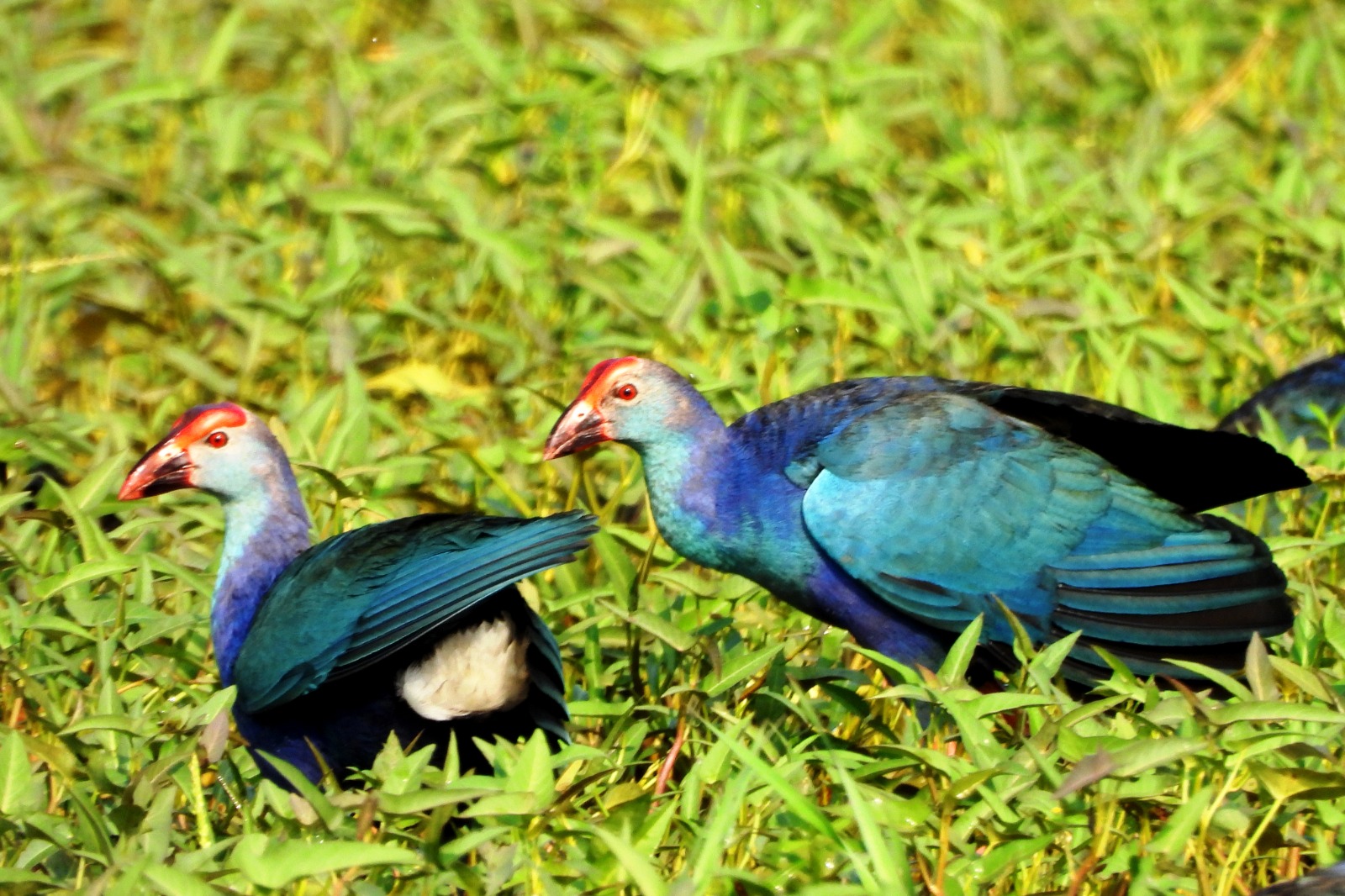
The Grey-headed Swamphen (Porphyrio poliocephalus), a striking wetland bird belonging to the Rallidae family, continues to draw attention among birdwatchers and researchers. Once considered a subspecies, it was officially elevated to full species status in 2015, marking an important update in avian classification.
Easily recognized by its large size and vivid coloration, the bird’s most distinctive feature is the bright white patch beneath its tail, which becomes especially visible during movement. Found in marshes, wetlands, and paddy fields, the Grey-headed Swamphen is known for its graceful yet bold presence.
One of its most fascinating behaviors is the male’s courtship display. During mating season, the male collects water weeds in its bill and performs a unique bowing gesture toward the female, accompanied by loud chuckling sounds. This ritual highlights its complex social behavior.
The species was first recorded in 1801 by English naturalist John Latham. Today, it stands as a symbol of wetland biodiversity and the importance of conserving natural habitats.
CONTRIBUTION BY VINCENT MASH —FORMER
EDITOR OF PHOTOWIDE MAGAZINE AND ASSOCIATE EDITOR OF PHOTOTRACKS MAGAZINE
