

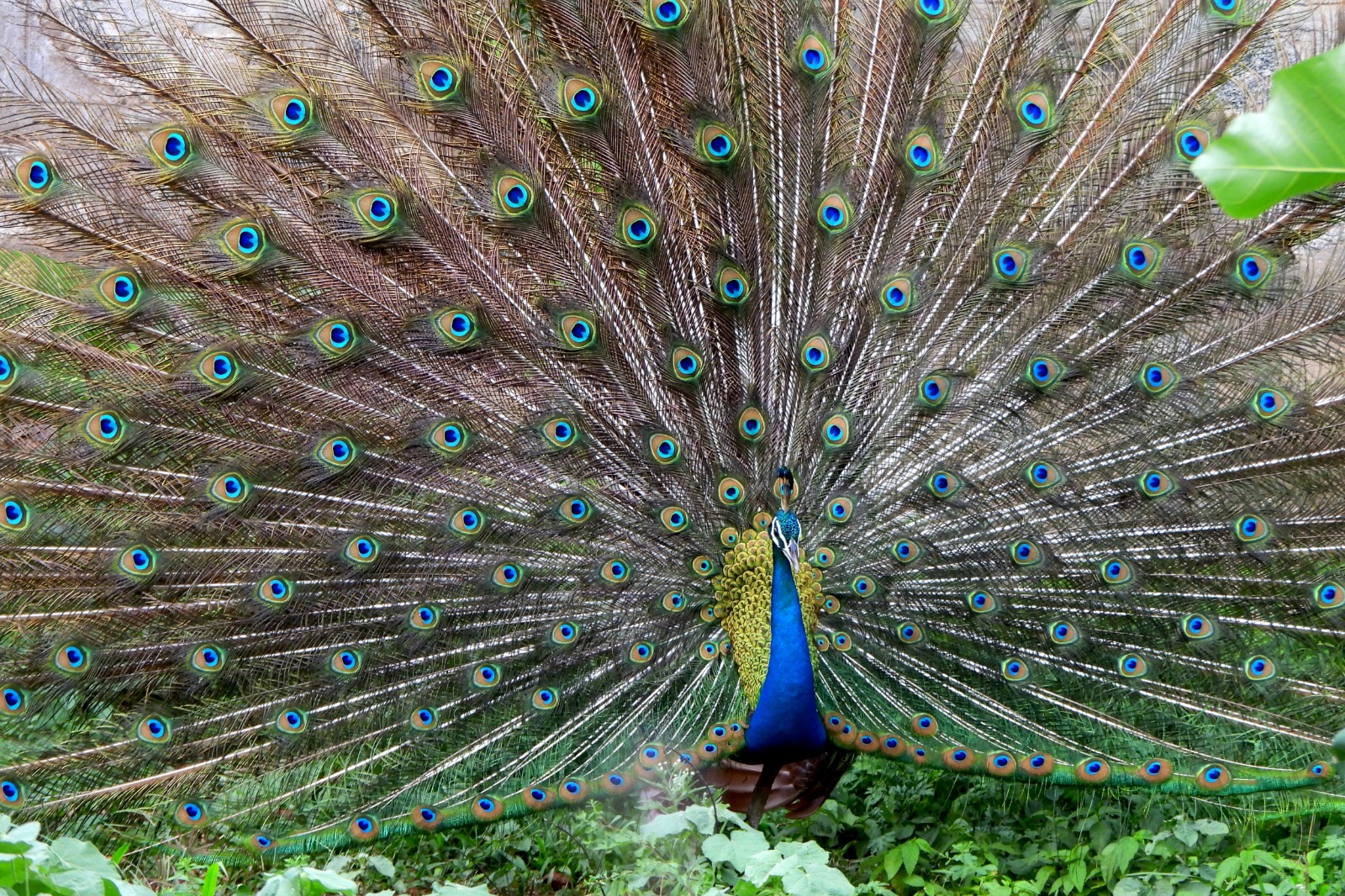
Those long, shimmering “tail” feathers are actually upper tail coverts, not the true tail. A fully grown male can carry around 200 feathers, including about 170 eye-spotted (ocelli) feathers and roughly 30 plain “T” feathers. When fully fanned, they can reach up to six feet in length, creating the iconic display used during courtship.
The brilliant metallic colors—blues, greens, and coppers—aren’t produced by pigments. Instead, they result from thin-film interference, where microscopic, crystal-like structures in the feathers reflect and refract light to produce shifting iridescent hues.
These ornate feathers begin developing when the male is about two years old and reach full glory by around four years. Each year, after the breeding season, the bird sheds and regrows this elaborate train. Beneath it lies the true tail, much shorter (about 1–1.5 feet), which acts as a support structure to lift and fan the display.
Historically, the bird has long captured human admiration. When Alexander the Great reached India in 326 BC, he was so struck by the peacock’s beauty that he reportedly ordered strict punishments for anyone harming them.
Today, the Indian peafowl holds official status as the National Bird of India (declared in 1963), though its symbolic importance in Indian culture goes back much further—appearing in art, mythology, and royal imagery for centuries.
EDITOR OF PHOTOWIDE MAGAZINE AND ASSOCIATE EDITOR OF PHOTOTRACKS MAGAZINE

- upgraderz.aws@gmail.com
- upgraderz.aws@gmail.com
- upgraderz.aws@gmail.com
- upgraderz.aws@gmail.com