

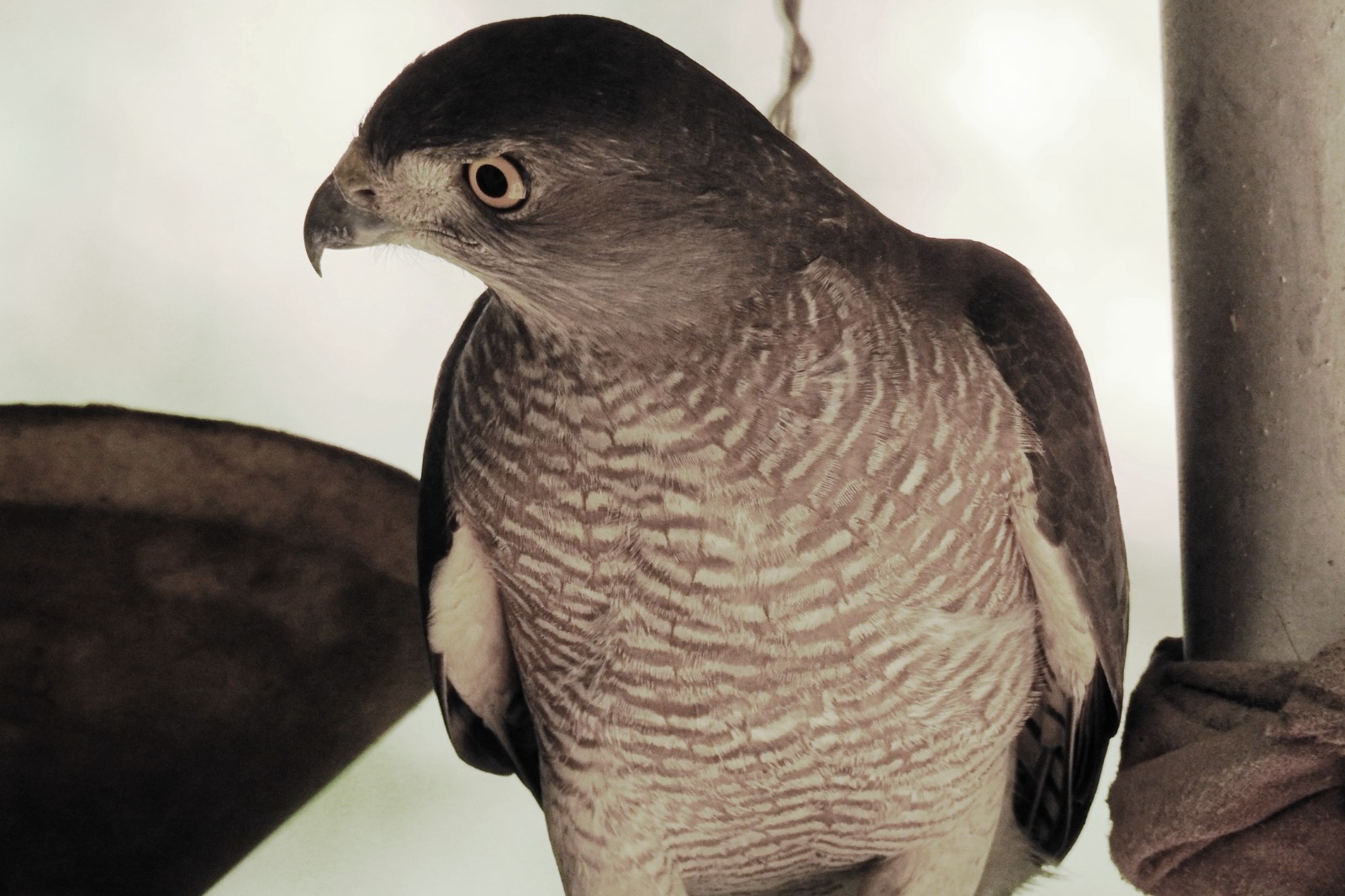
The Eurasian sparrowhawk carries a name that reflects both scientific progress and ancient mythology. First classified in 1758 by Swedish naturalist Carl Linnaeus as Falco nisus, the bird was later reassigned to its correct genus in 1760 by French zoologist Mathurin Jacques Brisson, who named it Accipiter nisus. The term Accipiter is derived from Latin, meaning “hawk,” aligning with the bird’s swift and agile hunting nature.
The species name nisus has roots in Greek mythology, linking the bird to the tragic tale of King Nisus of Megara. According to legend, Nisus possessed a magical purple lock of hair that ensured his kingdom’s safety. However, his daughter betrayed him by cutting it off to aid her lover, leading to his downfall. As the story goes, Nisus was transformed into a hawk, eternally pursuing his daughter in the form of a bird.
This blend of taxonomy and mythology highlights how scientific naming often preserves cultural stories, giving species like the Eurasian sparrowhawk a rich and layered identity beyond biology.
EDITOR OF PHOTOWIDE MAGAZINE AND ASSOCIATE EDITOR OF PHOTOTRACKS MAGAZINE

- upgraderz.aws@gmail.com
- upgraderz.aws@gmail.com
- upgraderz.aws@gmail.com
- upgraderz.aws@gmail.com