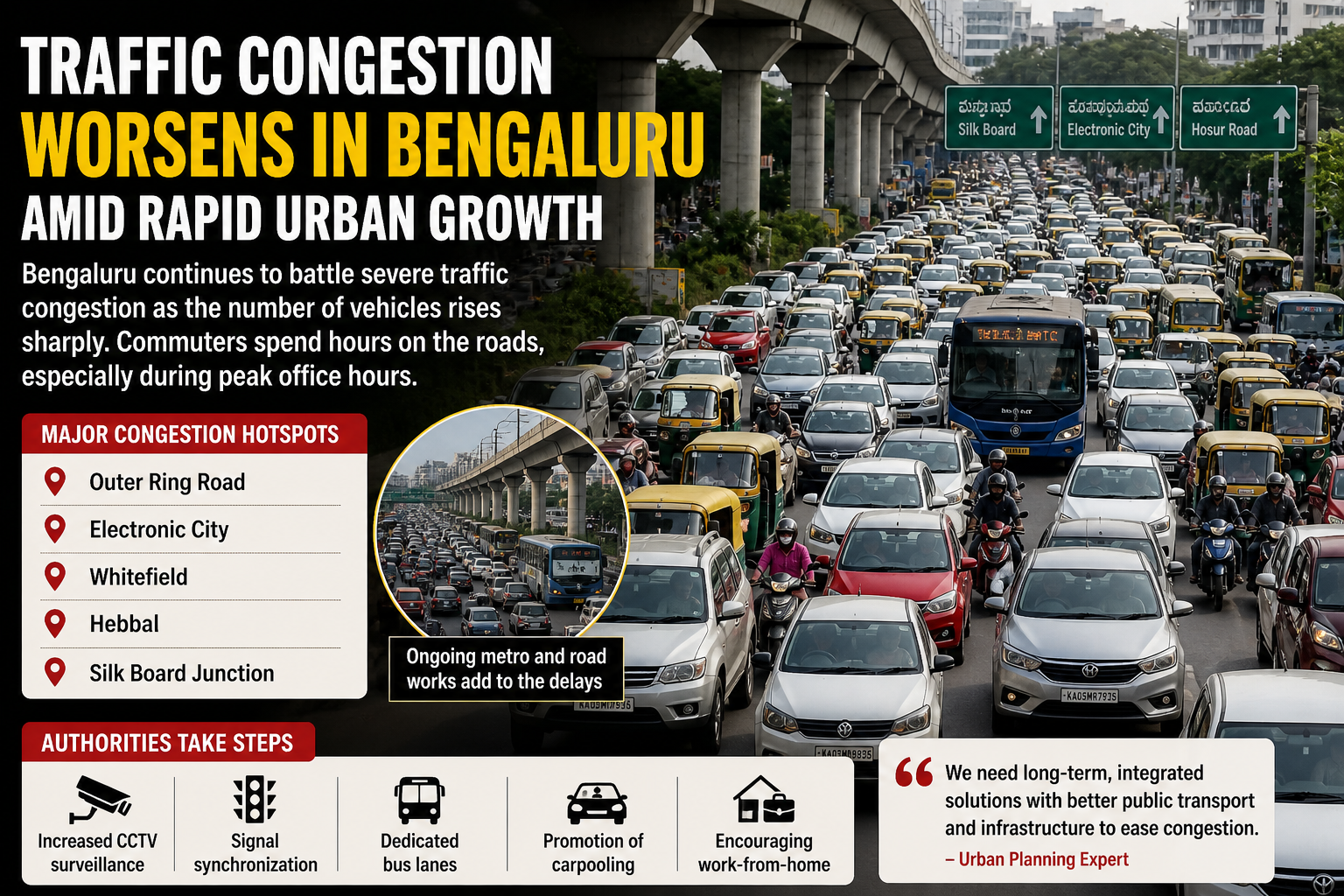
Traffic congestion in Bengaluru continues to worsen as the city struggles to cope with rapid urban expansion and a growing number of vehicles. Known as India’s Silicon Valley, the city has witnessed a sharp increase in private cars and two-wheelers over the past decade, putting immense pressure on its road infrastructure.
Commuters report spending hours stuck in traffic, especially during peak office hours in IT hubs like Electronic City, Whitefield, and Outer Ring Road. The situation is further aggravated by ongoing construction projects, including metro expansion and road widening works. While these projects aim to improve long-term mobility, they have caused short-term disruptions and bottlenecks.
Experts say that the lack of adequate public transport options and poor last-mile connectivity are major contributors to the problem. Although the Namma Metro has expanded significantly, it still does not cover all major residential and commercial areas. As a result, many people rely on private vehicles for daily commuting.
The city traffic police have introduced measures such as signal synchronization, dedicated bus lanes, and increased surveillance using cameras. However, these efforts have provided only limited relief. Authorities are now considering promoting carpooling, flexible work hours, and work-from-home policies to reduce peak-time congestion.
Urban planners emphasize the need for a long-term, integrated mobility plan that includes better public transport, pedestrian-friendly infrastructure, and stricter vehicle regulations. Without immediate and sustained action, traffic congestion could significantly impact productivity and quality of life in the city.
News as reported