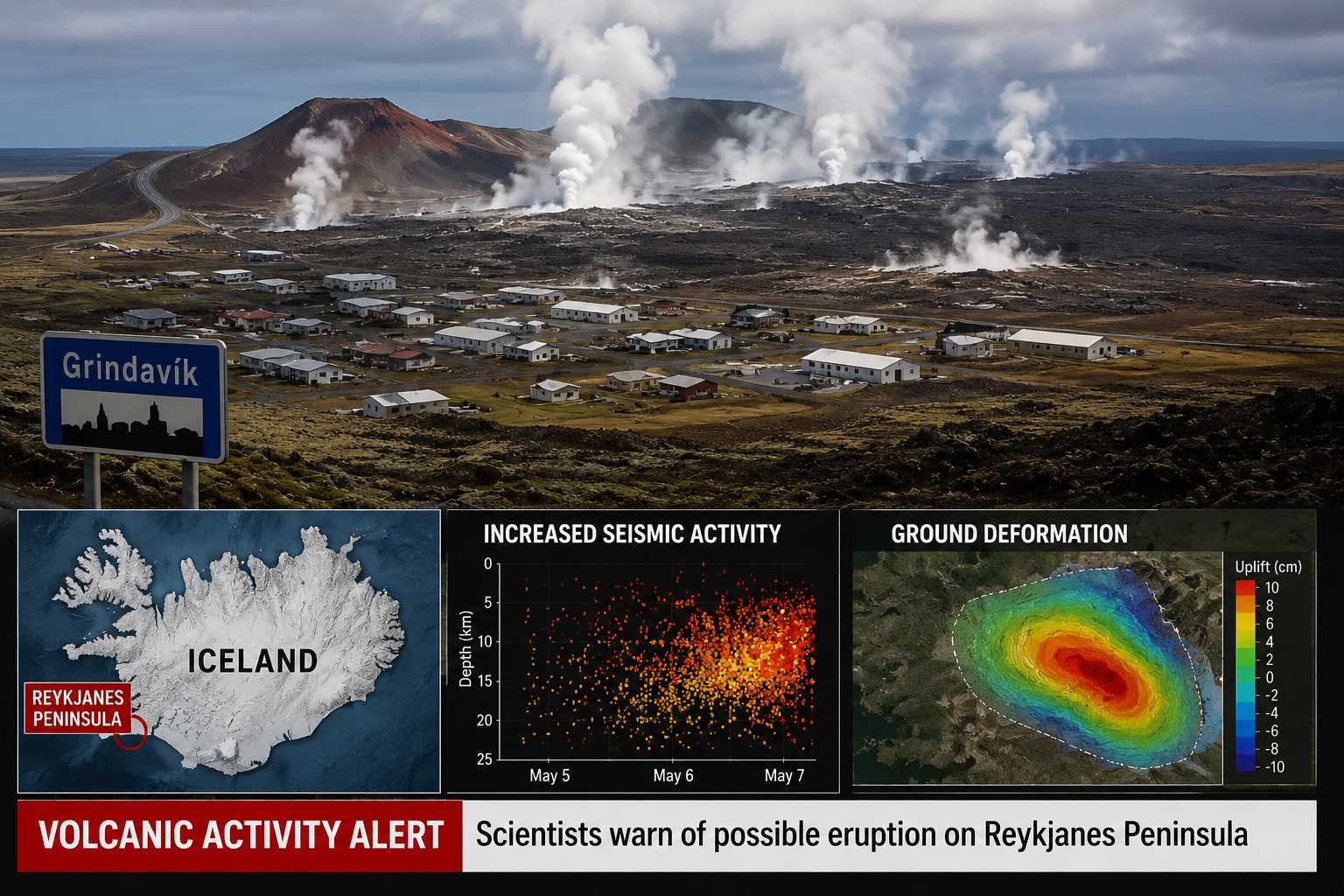
Scientists in Iceland are closely monitoring a sharp increase in seismic and volcanic activity on the Reykjanes Peninsula after thousands of small earthquakes and rising magma pressure were detected beneath the region. Experts warn the activity could signal a possible volcanic eruption in the coming days or weeks.
According to the Icelandic Meteorological Office, more than 2,000 tremors were recorded over the past 48 hours near the town of Grindavík and the Svartsengi geothermal area. Ground deformation measurements also indicate magma is moving closer to the surface beneath the peninsula.
Authorities have raised alert levels and emergency teams are preparing evacuation plans for nearby communities. Iceland’s Civil Protection Agency stated that while no eruption has begun, the situation remains highly unstable due to continuous underground magma movement.
The Reykjanes Peninsula has experienced several eruptions since 2021 after nearly 800 years of volcanic dormancy. Scientists say the current activity resembles patterns observed before previous eruptions, though predicting the exact timing and scale remains difficult. Air traffic authorities are also monitoring the situation closely to avoid disruptions similar to the 2010 Eyjafjallajökull eruption that affected flights across Europe.
Experts emphasize that Iceland’s advanced volcanic monitoring systems provide early warning capabilities, but residents and tourists have been advised to stay away from restricted zones around Grindavík and nearby lava fields while assessments continue.
News as Reported.