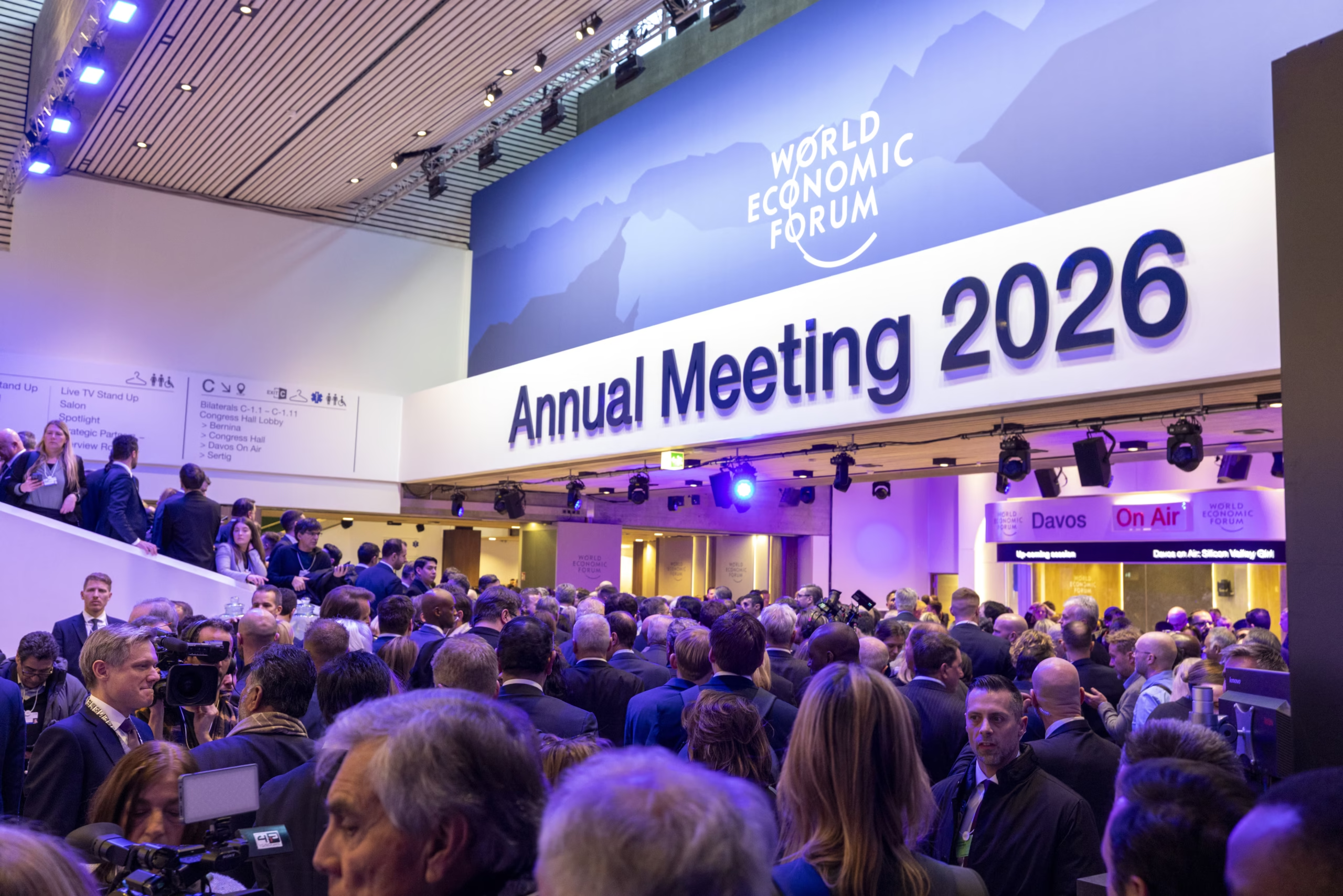
DAVOS, Switzerland — The 56th World Economic Forum in Davos has drawn intense international attention, not just for economic discussions but for the escalating political influence of the United States and the messaging emerging from the summit village. U.S. President Donald Trump’s presence and speeches dominated much of the discourse, spotlighting American policy priorities and shaping diplomatic interactions with allies and critics alike.
Trump’s address to the forum underscored U.S. economic achievements and foreign policy stances, touching off a mix of accommodation, unease and outright resistance among global leaders. The summit’s agenda became a de facto platform for political signaling as much as economic cooperation, with debates over trade, security alliances and geopolitical strategy unfolding on the snow-covered stages of Davos.
Officials from Europe and other regions used their own sessions to push back against what they described as unilateral approaches, emphasizing the need for collaboration over competition. The result was an unusually fractious dialogue for a forum traditionally centered on consensus building.
The converging discussions highlighted Davos not just as a forum for economic policy but as a vibrant — and sometimes contentious — venue for political messaging and alliance-building among world powers. news as reported.