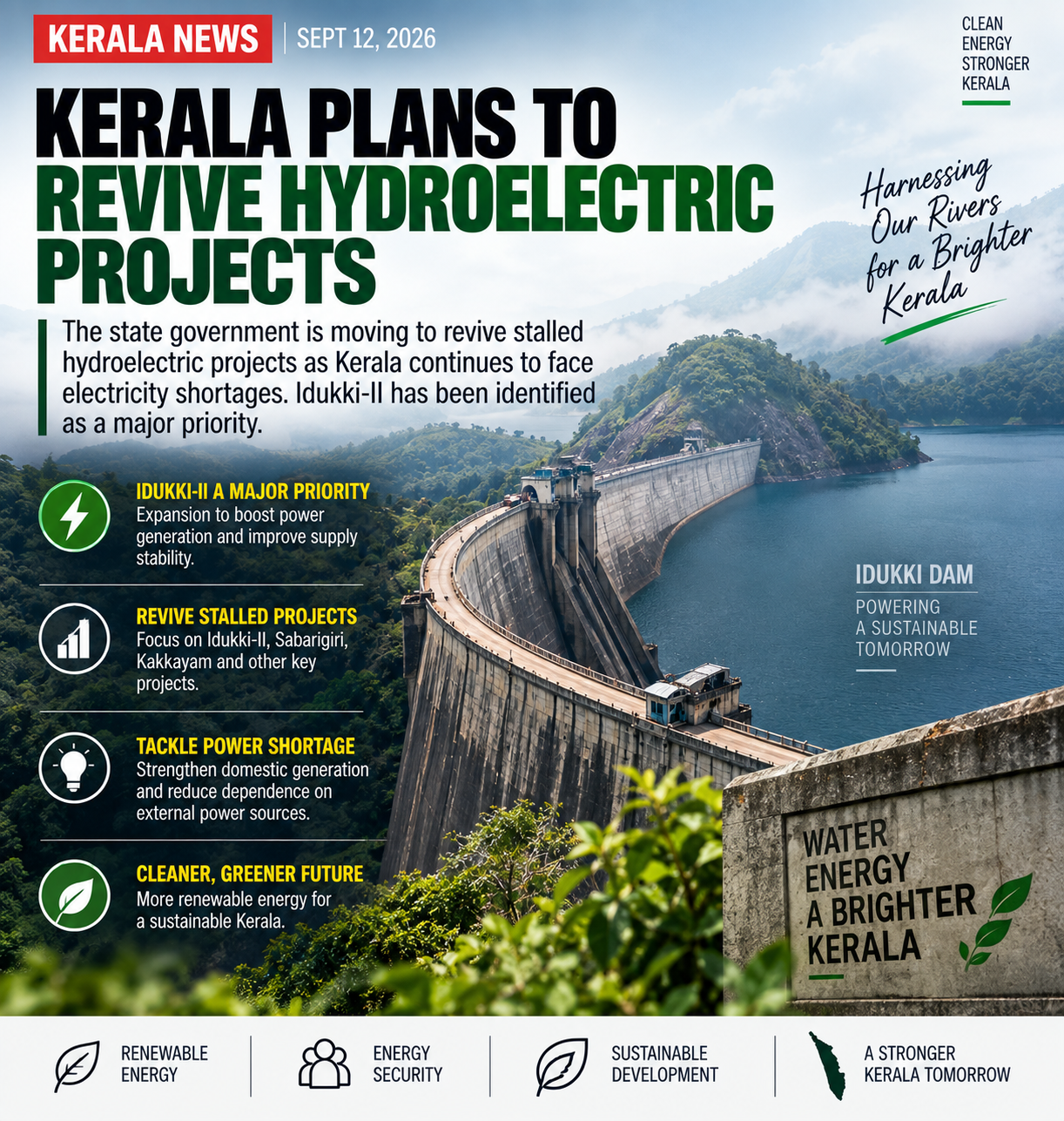
THIRUVANANTHAPURAM: Kerala is stepping up efforts to accelerate ongoing hydroelectric projects and revive stalled power-generation schemes as the state continues to face a widening electricity shortage. The Idukki-II project has been identified as a top priority, along with projects at Sabarigiri and Kakkayam.
The Kerala State Electricity Board (KSEB) is pursuing a long-term strategy that combines new hydropower generation with the expansion of solar power and battery energy-storage systems. The aim is to strengthen the state’s electricity supply and reduce dependence on costly power purchases from outside Kerala, particularly during peak hours.
A major focus is the Golden Jubilee Second Phase of the Idukki Hydroelectric Project, which is planned to add around 800 MW of peak-hour generation by making better use of water stored in the Idukki reservoir. A study by the central agency WAPCOS is expected next month and will help determine the way forward for the project.
The proposed Idukki expansion is expected to use modern construction methods, including tunnels and underground powerhouses, with the objective of limiting environmental impact. The Idukki reservoir has sufficient storage potential for significantly higher generation, while the existing Idukki project has an installed capacity of about 780 MW.
Other projects are also being pushed forward. A study has been prepared for the proposed 1,000 MW Kakkayam project, which includes a pumped-storage component, while the 450 MW Sabarigiri project is also expected to be fast-tracked.
The urgency comes as Kerala’s peak electricity demand has risen sharply. Recent reports indicate that peak demand has reached around 5,000 MW, while the state’s own hydropower generation capacity is significantly lower, forcing KSEB to rely heavily on power sourced from outside the state.
The renewed focus on hydropower marks a shift toward strengthening Kerala’s domestic generation capacity after years without major additions to its large hydroelectric infrastructure. Authorities are now looking at a combination of hydropower, solar generation and energy storage to build a more reliable and sustainable electricity system.
If implemented successfully, the proposed projects could help Kerala reduce its dependence on external power markets, improve peak-hour availability and provide a more stable electricity supply for households and industries.