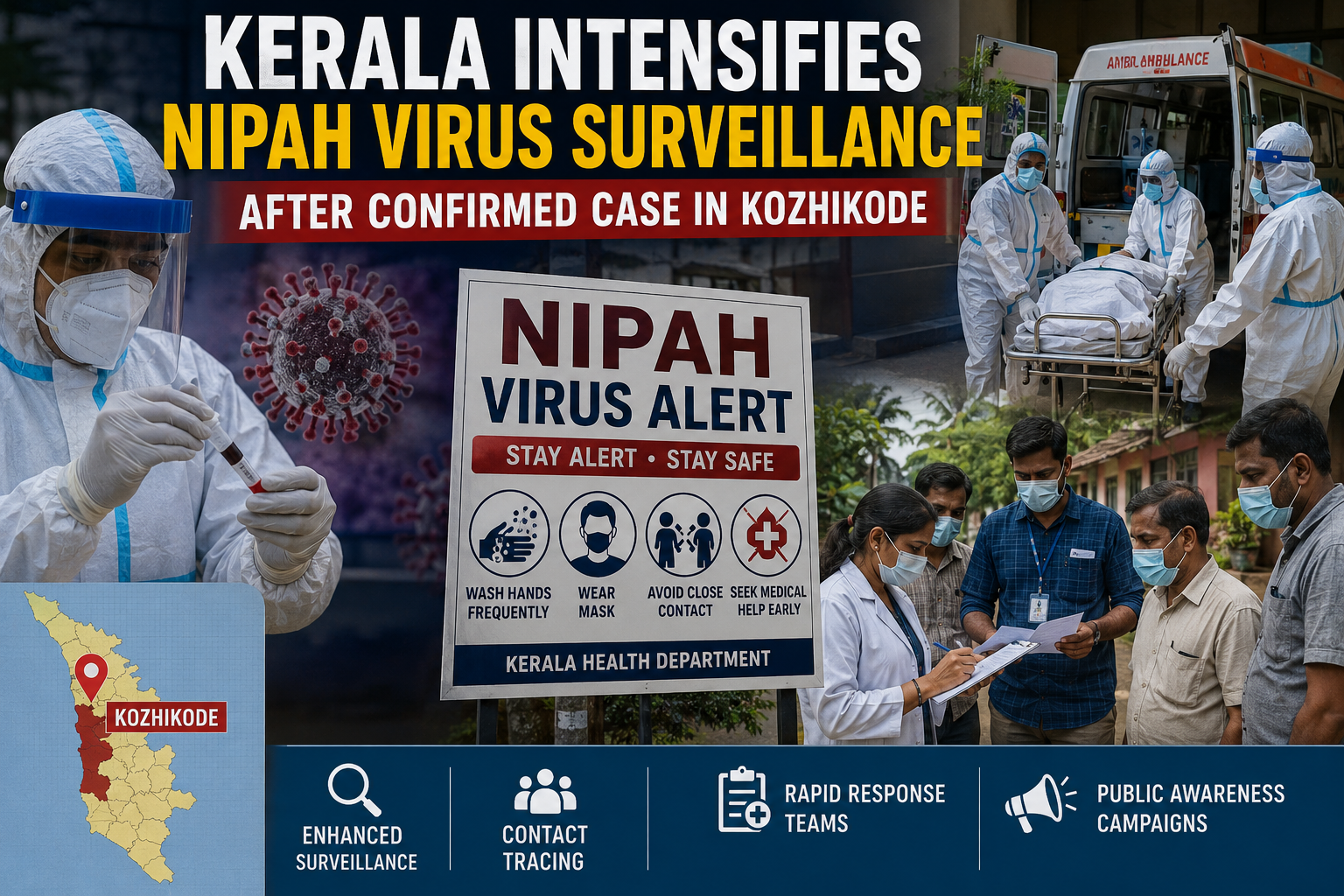
Kerala health authorities have intensified surveillance and preventive measures after a Nipah virus infection was confirmed in Kozhikode district, triggering a coordinated response from health departments and local administrations. Officials have started monitoring contacts, strengthening medical preparedness, and increasing public awareness efforts to prevent further transmission.
The confirmed case involves a 43-year-old man from Ramanattukara in Kozhikode district. After developing symptoms associated with Nipah infection, the patient underwent medical evaluation and was later confirmed positive through laboratory testing. The patient is receiving treatment under close medical observation, while authorities have begun tracing people who may have come into contact with him.
Following confirmation of the case, health officials launched immediate containment activities. Contact tracing has been a major focus, with dozens of individuals identified and high-risk contacts placed under observation and quarantine as a precautionary measure. Medical teams are monitoring these individuals for symptoms and conducting necessary tests to detect any possible spread at an early stage.
The Kerala Health Department has increased surveillance in Kozhikode and surrounding areas while coordinating with national health agencies. Teams from expert institutions, including the Indian Council of Medical Research, have been involved in supporting response measures and providing technical assistance.
Authorities have advised the public to remain alert but avoid unnecessary panic. Residents have been encouraged to maintain hygiene, report symptoms early, and follow health department instructions. Health officials are also focusing on awareness campaigns to educate people about symptoms, prevention methods, and the importance of timely medical attention.
Nipah virus is a zoonotic infection that can spread from animals to humans and, in some cases, through close contact between people. It can cause symptoms ranging from fever and headache to severe neurological complications, making early detection and isolation important.
Kerala has previously dealt with Nipah outbreaks, particularly in Kozhikode, and has developed strong surveillance and response systems over the years. Health experts note that quick identification, contact tracing, and coordinated action are essential in controlling potential outbreaks.
Officials continue to monitor the situation closely, with emphasis on preventing further infections while ensuring proper treatment and support for affected individuals. The latest response reflects Kerala’s continued focus on strengthening public health preparedness against emerging infectious diseases.