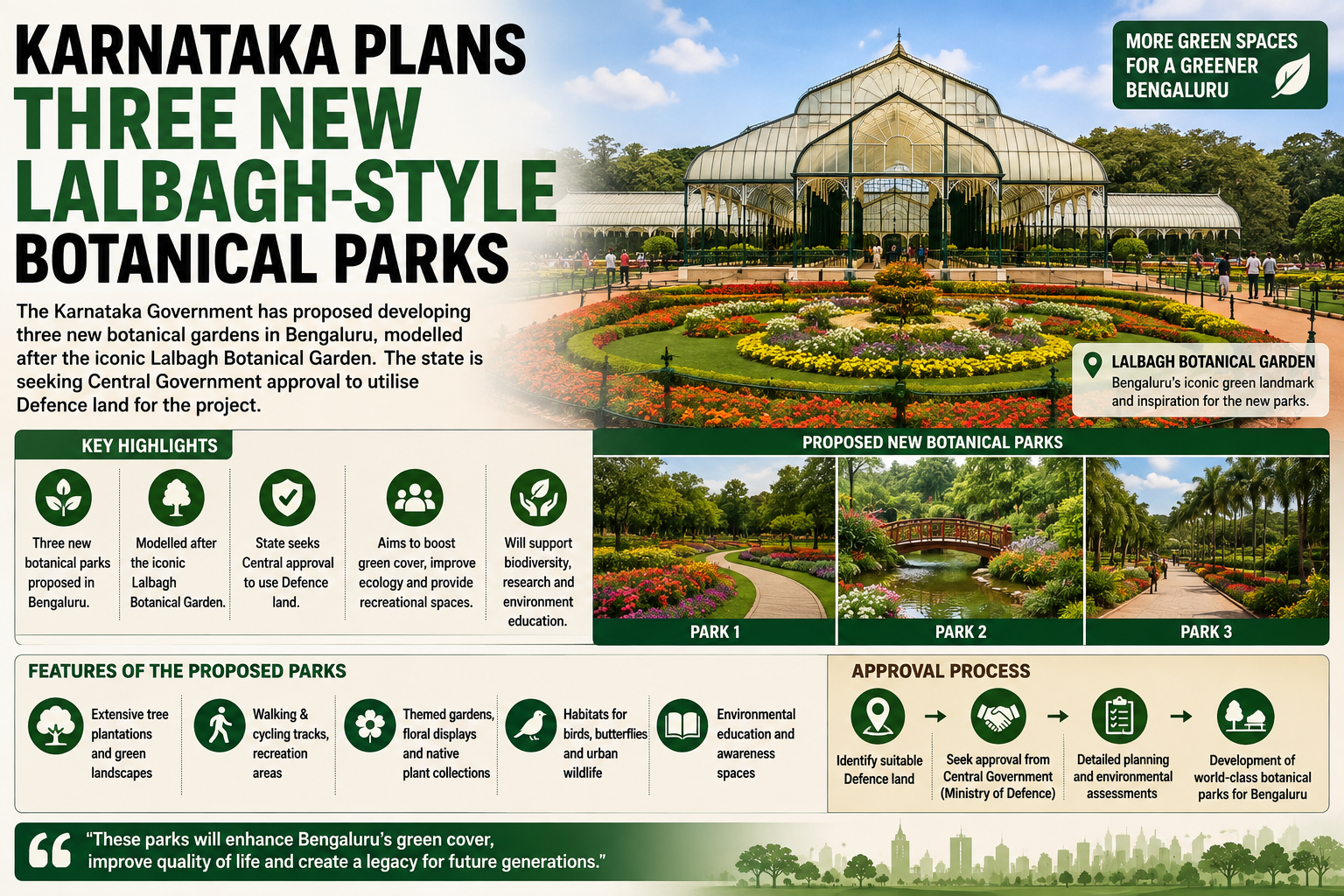
Bengaluru, August 6: The Karnataka Government has announced plans to develop three new Lalbagh-style botanical parks in Bengaluru as part of a major initiative to expand green spaces and improve the city’s ecological balance. The proposed gardens are intended to replicate the success of the historic Lalbagh Botanical Garden, offering residents additional recreational spaces while promoting biodiversity, environmental conservation, and urban sustainability.
According to state officials, the government has sought approval from the Central Government to utilise selected Defence Department land for the proposed parks. Discussions are underway with the Ministry of Defence to identify suitable locations where large botanical gardens can be developed without affecting defence operations.
The planned parks are expected to feature extensive tree plantations, landscaped gardens, walking and cycling tracks, themed floral displays, native plant collections, water bodies, children’s recreation areas, and dedicated spaces for environmental education. Authorities also intend to create habitats that support birds, butterflies, and other urban wildlife, contributing to the conservation of Bengaluru’s biodiversity.
Officials said the project forms part of Karnataka’s broader strategy to address the rapid loss of green cover caused by urban expansion. By creating additional botanical parks, the government aims to improve air quality, reduce urban heat, strengthen climate resilience, and provide healthier public spaces for the city’s growing population.
Environmental experts have welcomed the proposal, noting that Bengaluru has witnessed significant pressure on its parks, lakes, and open spaces due to rapid development. They believe the creation of new botanical gardens will not only enhance the city’s environmental health but also provide opportunities for botanical research, conservation of native plant species, and public awareness about sustainable living.
The iconic Lalbagh Botanical Garden, established in the 18th century, remains one of Bengaluru’s most recognised landmarks, attracting thousands of visitors every day. Its rich collection of rare plants, historic glasshouse, and diverse landscapes have made it a model for urban botanical gardens across India. The proposed parks are expected to follow similar design principles while incorporating modern ecological and sustainability features.
The Karnataka Government stated that once the required approvals are obtained, detailed planning and environmental assessments will be undertaken before construction begins. Officials expressed confidence that the project will significantly enhance Bengaluru’s reputation as India’s “Garden City” while providing future generations with valuable green spaces for recreation, education, and conservation.