

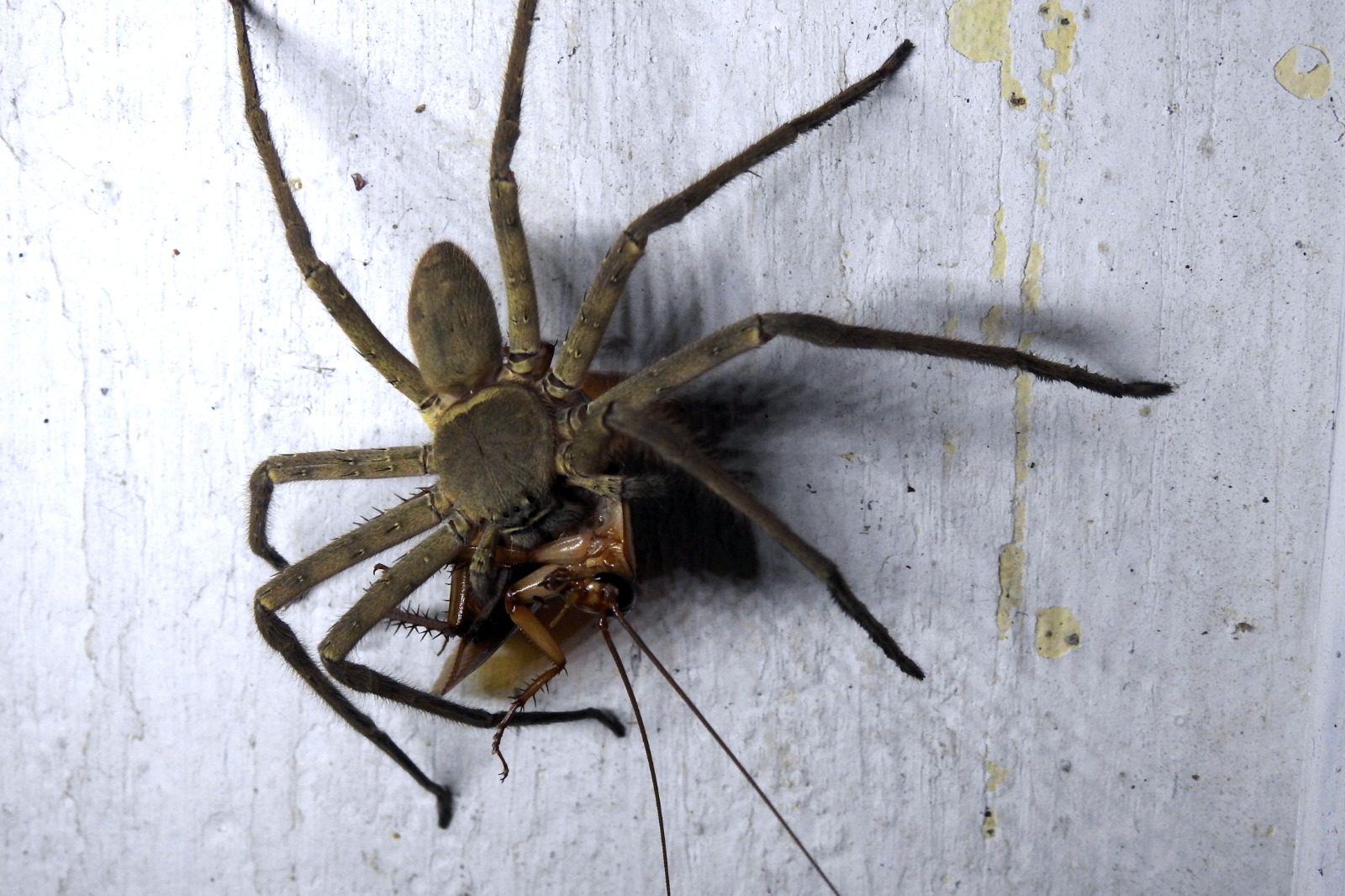
The Giant crab spider, also known as the pantropical huntsman spider, is a surprisingly helpful presence in many homes. It plays a natural pest-control role by hunting insects like cockroaches, reducing the need for chemical repellents.
Despite its large size and intimidating appearance, this spider is not dangerous to humans. It rarely bites, and even if it does, the effect is usually limited to mild, short-lived pain.
A remarkable scene often observed is its method of feeding: it swiftly captures a cockroach, begins feeding—sometimes starting at the head—and then secures the prey to a surface using silk. This allows the spider to return later and consume the rest at its own pace.
What truly sets this species apart is its ability to produce sound, something rare among spiders. During courtship, males create a soft humming noise by vibrating their abdomen while keeping their legs steady—a unique communication behavior in the spider world.
Reproduction is equally fascinating. The female uses her short front appendages, called pedipalps, to carry an egg sac that may contain 100 to 400 eggs. She protects and carries this sac for about three weeks, often without feeding, until the eggs hatch safely inside.
This species was first scientifically described in 1767 by Carl Linnaeus, one of the pioneers of modern biological classification.
CONTRIBUTION BY VINCENT MASH —FORMER
EDITOR OF PHOTOWIDE MAGAZINE AND ASSOCIATE EDITOR OF PHOTOTRACKS MAGAZINE

- upgraderz.aws@gmail.com
- upgraderz.aws@gmail.com
- upgraderz.aws@gmail.com
- upgraderz.aws@gmail.com