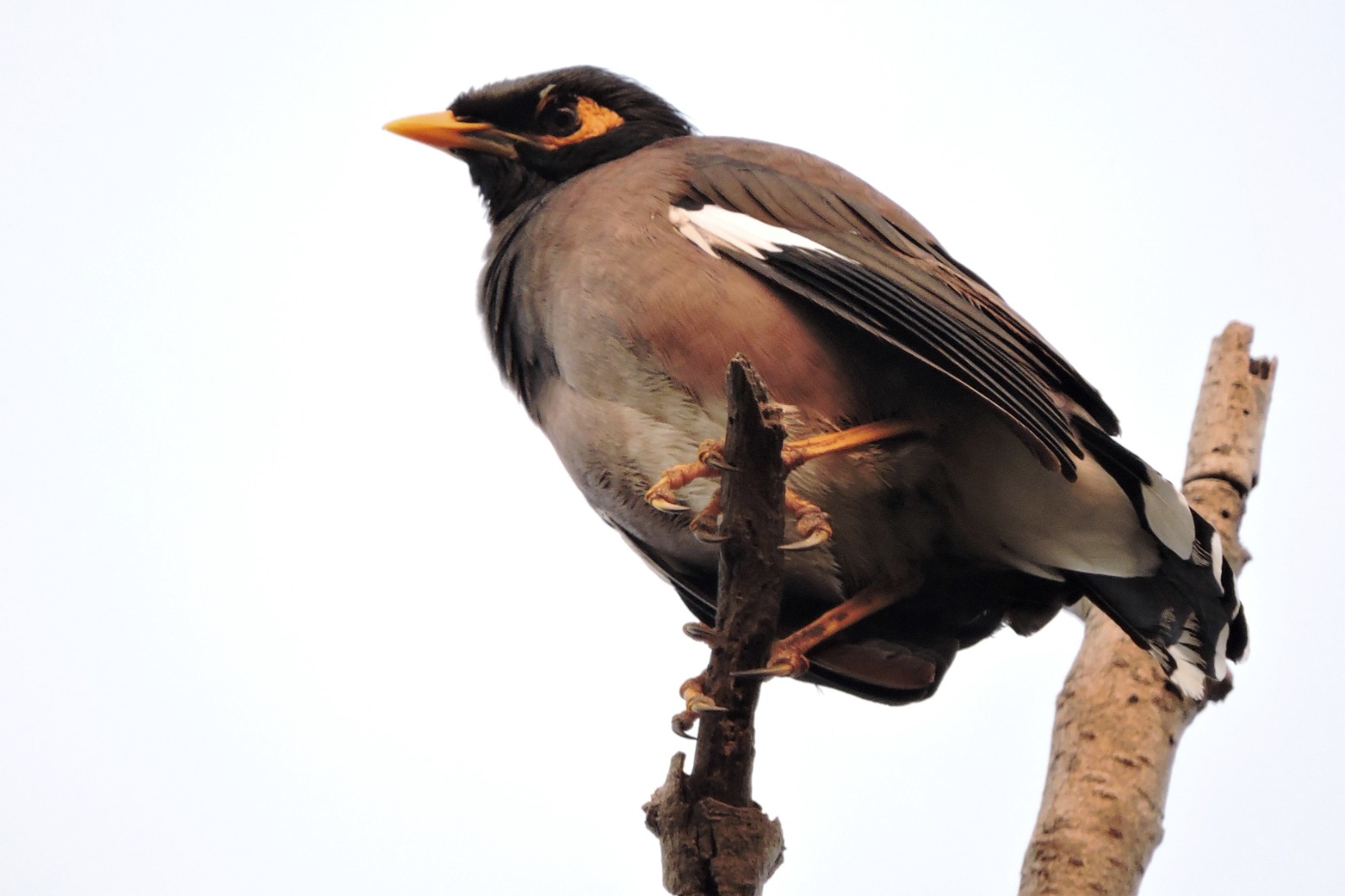
The common myna (Acridotheres tristis) was first described in 1766 by the Swedish physician and zoologist Carl Linnaeus (1707–1778). The species name tristis is derived from Latin, meaning “sad” or “gloomy,” while Acridotheres comes from Greek and means “grasshopper hunter.”
Common mynas are highly social and intelligent birds. They are believed to mate for life and are often seen in pairs. Known for their loud calls, they warn nearby birds when predators are close. Mynas are also popular as cage birds because of their ability to mimic sounds and even imitate human speech. Before settling into communal roosts at night, they produce loud synchronized calls, a behaviour known as “communal noise.”
The range of the common myna has expanded rapidly across the world. In 2000, the International Union for Conservation of Nature Species Survival Commission listed it among the “100 of the World’s Worst Invasive Species,” making it one of only three bird species on the list due to its serious impact on biodiversity, agriculture, and human interests.
Today, the common myna is considered a pest in countries such as South Africa, Australia, New Zealand, parts of North America, the Middle East, and several Pacific islands. These birds can cause major crop damage, spread diseases, and aggressively compete with native wildlife. Mynas often take over the nests of birds such as woodpeckers and parakeets, sometimes forcing out eggs or chicks already occupying the nest. Because of these impacts, several countries use bird-scaring devices, trapping, poisoning, or shooting to control their populations.
– Vincent Vanur