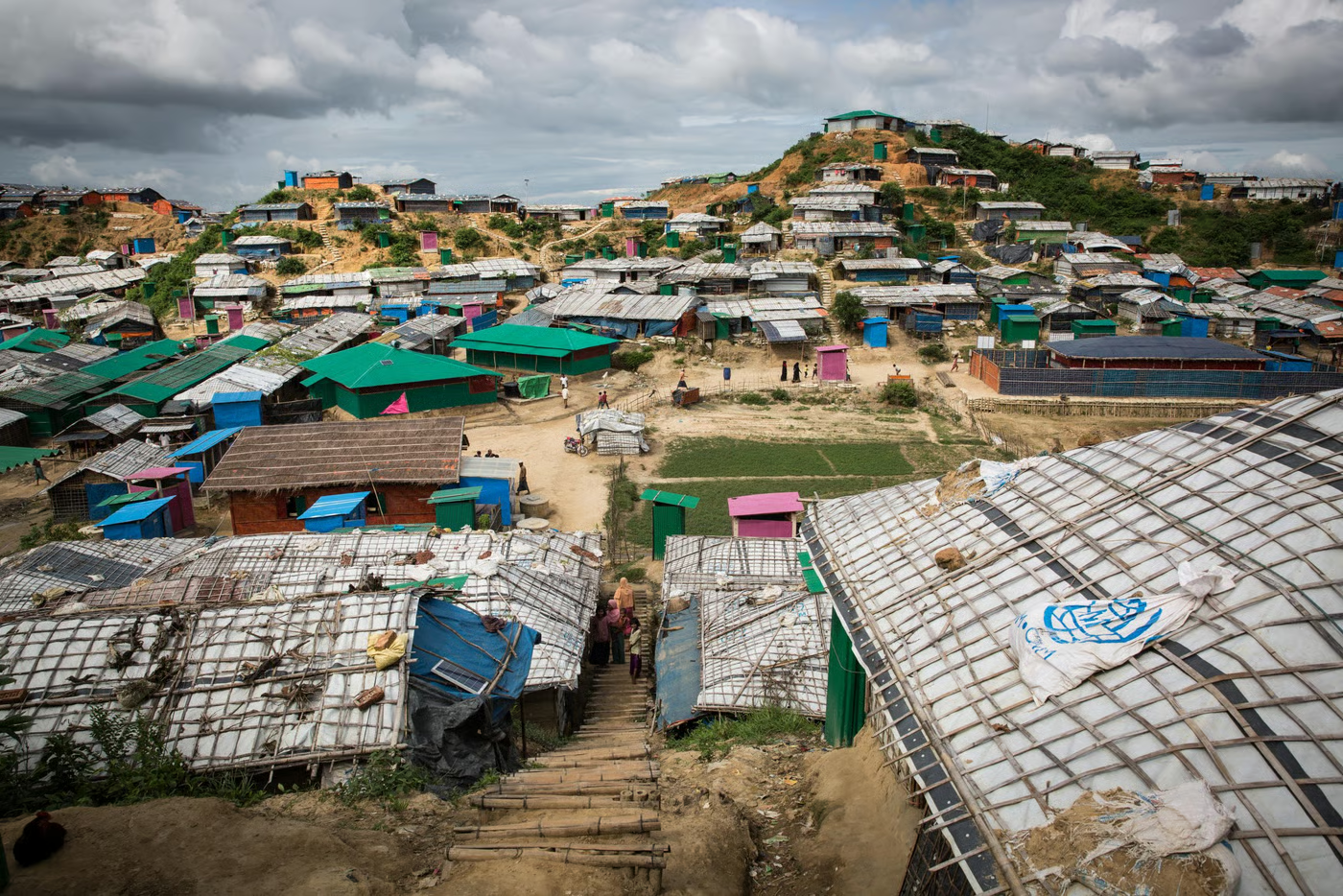
The International Court of Justice (ICJ) in The Hague has formally opened hearings in a landmark genocide case against Myanmar, marking the first full genocide trial at the United Nations’ top judicial body in more than a decade. The case, brought by the West African nation of Gambia in 2019, accuses Myanmar of breaching the 1948 Genocide Convention through “clearance operations” by its military against the Rohingya, a predominantly Muslim minority from Rakhine State.
More than 700,000 Rohingya were driven into Bangladesh in 2017 amid reports of mass killings, rape, and the burning of villages. A UN fact-finding mission previously concluded that “genocidal acts” occurred, while Myanmar’s authorities deny the allegations, arguing the military actions were legitimate counter-terrorism operations.
Over the next three weeks, judges will hear oral arguments, expert testimony, and evidence from both sides. Legal experts say the outcome could shape future interpretations of genocide in international law and influence other high-profile cases at the ICJ. Rohingya survivors and human rights advocates view the proceedings as a historic step toward accountability and justice for atrocities committed nearly a decade ago.news as reported.