


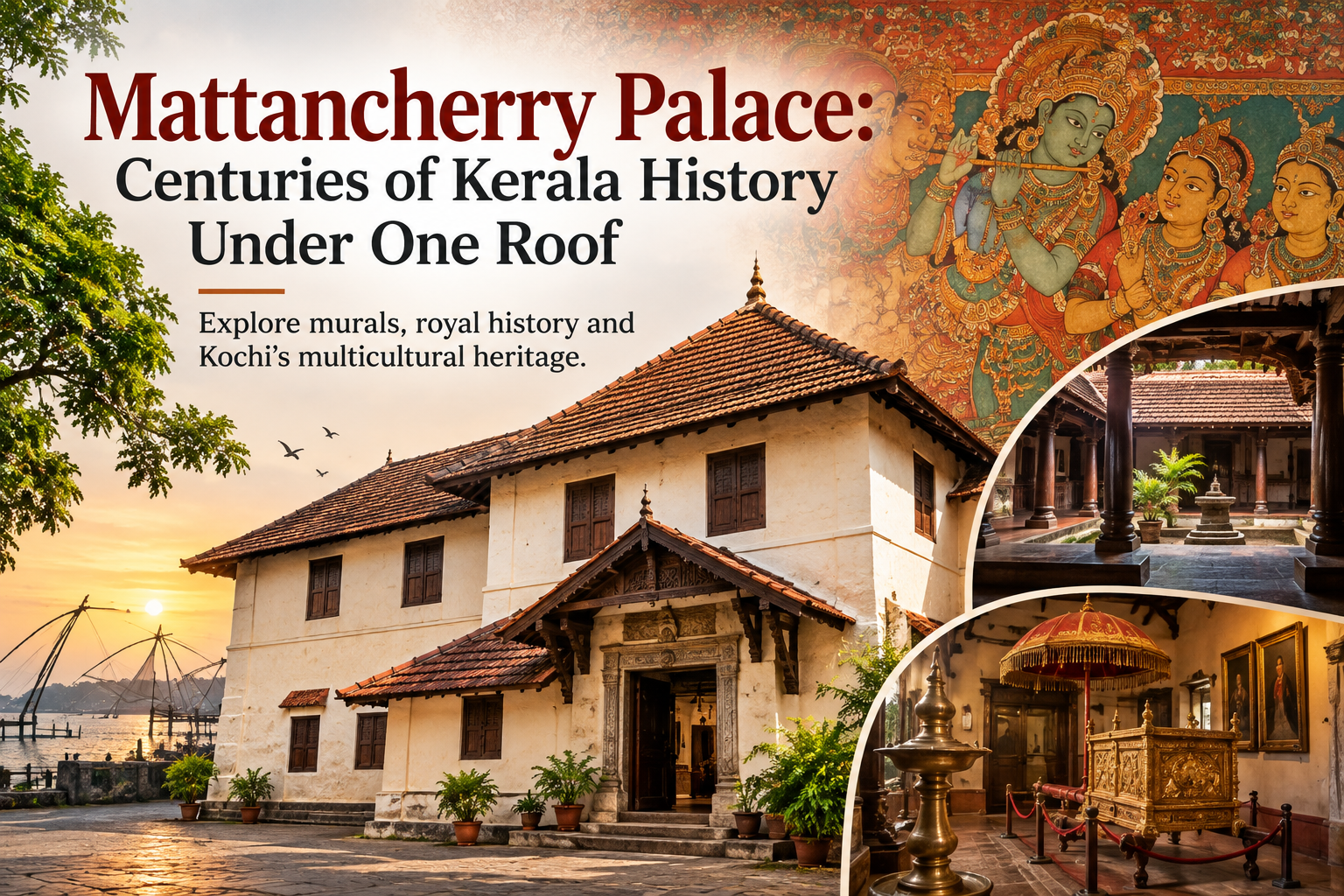
In the historic quarter of Kochi stands Mattancherry Palace, a monument where Kerala’s royal heritage meets centuries of European influence. Popularly known as the Dutch Palace, the building is especially remarkable because it was actually constructed by the Portuguese and later renovated by the Dutch.
A Palace With a Colonial Beginning
The palace was built in the 16th century by the Portuguese and presented to Veera Kerala Varma of the Kochi royal dynasty. After the Dutch gained control of Kochi in the 17th century, they carried out major renovations, leading to the building becoming widely known as the Dutch Palace.
Despite its European connections, the palace was used by the rulers of Kochi, including for important royal ceremonies such as coronations.
A Masterpiece of Kerala Architecture
Mattancherry Palace is built largely in the traditional nalukettu, or quadrangular, architectural style. Its four wings surround a central courtyard containing a shrine dedicated to Pazhayannur Bhagavathi, the deity associated with the Kochi royal family.
Its interiors feature carved wooden ceilings, spacious halls and distinctive flooring made from traditional materials including burnt coconut shells, lime and plant extracts. The resulting polished surface can resemble black marble.
Murals That Tell Epic Stories
The palace’s greatest artistic treasures are its extraordinary Kerala-style murals.
Murals in the royal bed chamber depict scenes from the Ramayana, while other sections contain representations connected with Krishna, Shiva and Kumarasambhavam, the celebrated work of Sanskrit poet Kalidasa.
The Archaeological Survey of India lists the palace’s 16th–17th-century mural paintings as a centrally protected monument.
Inside the World of Kochi’s Kings
Mattancherry Palace also preserves objects that provide a glimpse into royal life. Its collections include portraits of Kochi rulers, ceremonial weapons, royal palanquins, costumes, umbrellas and historical Dutch maps of Kochi.
But the palace tells a story larger than that of one royal family. Mattancherry developed as an important trading centre where communities including Jews, Konkanis, Gujaratis, Jains and Marathis established themselves. Churches, temples, mosques and the historic synagogue remain reminders of this multicultural past.
A Monument Where Cultures Meet
Mattancherry Palace is therefore much more than an old royal residence. Its Portuguese origins, Dutch renovations, Kerala architecture, Hindu murals and connection with the Kochi royal dynasty capture the cultural exchanges that shaped the region.
Centuries later, the palace remains one of Kochi’s most important heritage landmarks—a place where royalty, art, architecture, trade and multicultural history survive under one roof.