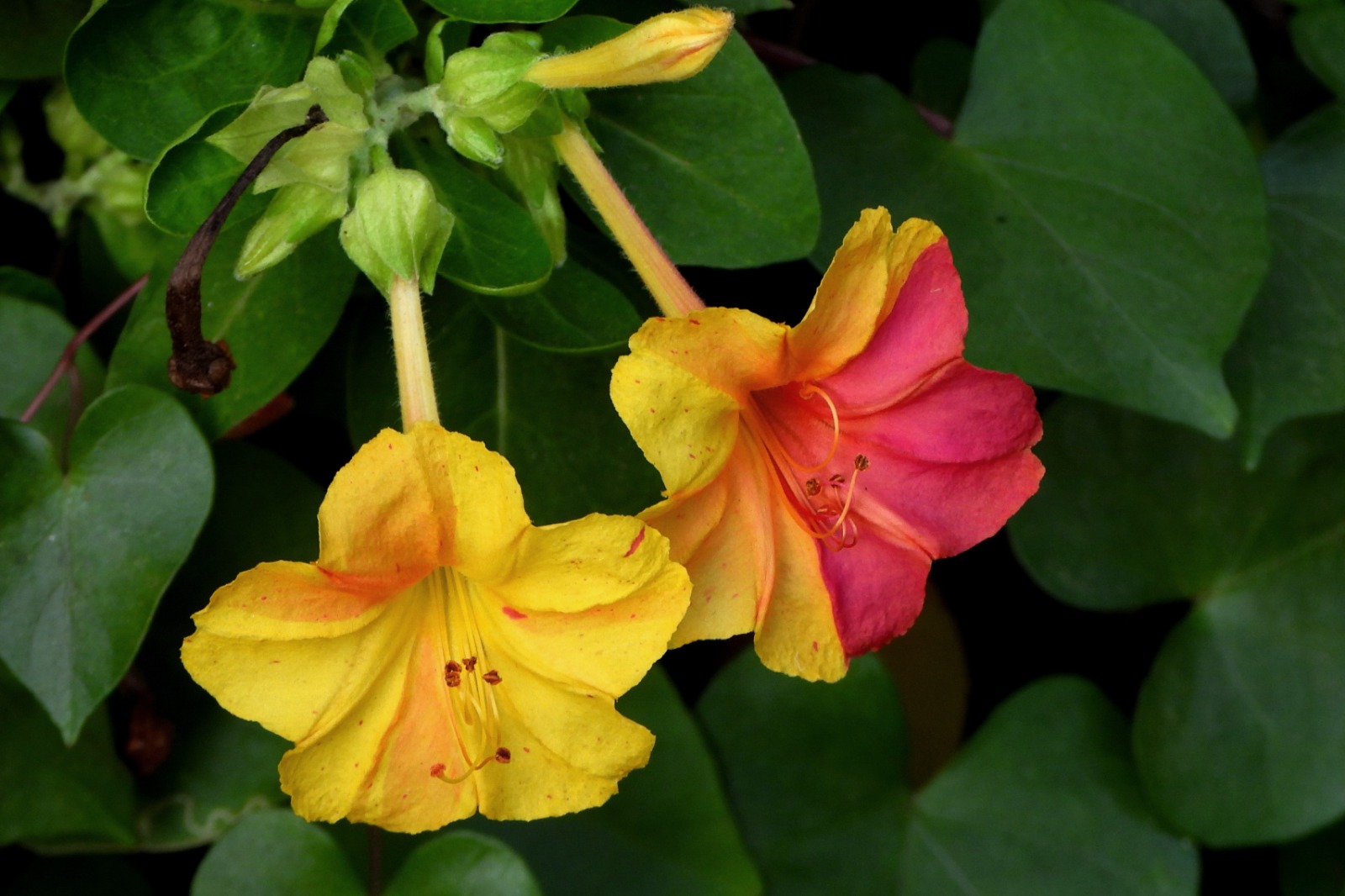
Mirabilis jalapa, commonly known as the Marvel of Peru or Four O’Clock Flower, is one of the most widely cultivated ornamental species in the genus Mirabilis. Native to tropical America, it is admired for its vibrant blooms, which appear in a remarkable range of colors. The species was first formally described in 1753 by the Swedish biologist and physician Carl Linnaeus (1707–1778).
One of the most fascinating features of Mirabilis jalapa is its extraordinary flower coloration. A single plant can produce flowers of different colors simultaneously, including white, yellow, pink, red, magenta, and combinations of these shades. Individual flowers may display striking patterns such as sectors, stripes, flakes, or spots of contrasting colors. As the plant matures, flower colors may even change gradually, making each bloom unique.
True to its common name, the flowers usually open in the late afternoon, around four o’clock, although they may also open earlier on cloudy or overcast days. They remain open throughout the night for more than 16 hours, releasing a sweet fragrance that attracts nocturnal pollinators. Long-tongued moths of the family Sphingidae, including sphinx and hawk moths, are the primary pollinators, although other night-active insects are also drawn to the flowers’ scent.
Beyond its ornamental value, Mirabilis jalapa has several traditional uses. The flowers produce a natural edible crimson dye used to color foods such as cakes and jellies. In traditional medicine, the leaves have been used to help reduce inflammation and treat wounds and skin infections. The roots are believed to possess aphrodisiac properties and have also been used as a diuretic and purgative, as well as in the treatment of dropsy (edema). In some varieties, the powdered seeds have been used as cosmetic pigments and natural dyes.
With its colorful blooms, pleasant evening fragrance, and fascinating genetic diversity, the Marvel of Peru remains a favorite ornamental plant in gardens around the world while continuing to attract interest for its traditional medicinal and natural dye applications.
Vincent Vanur