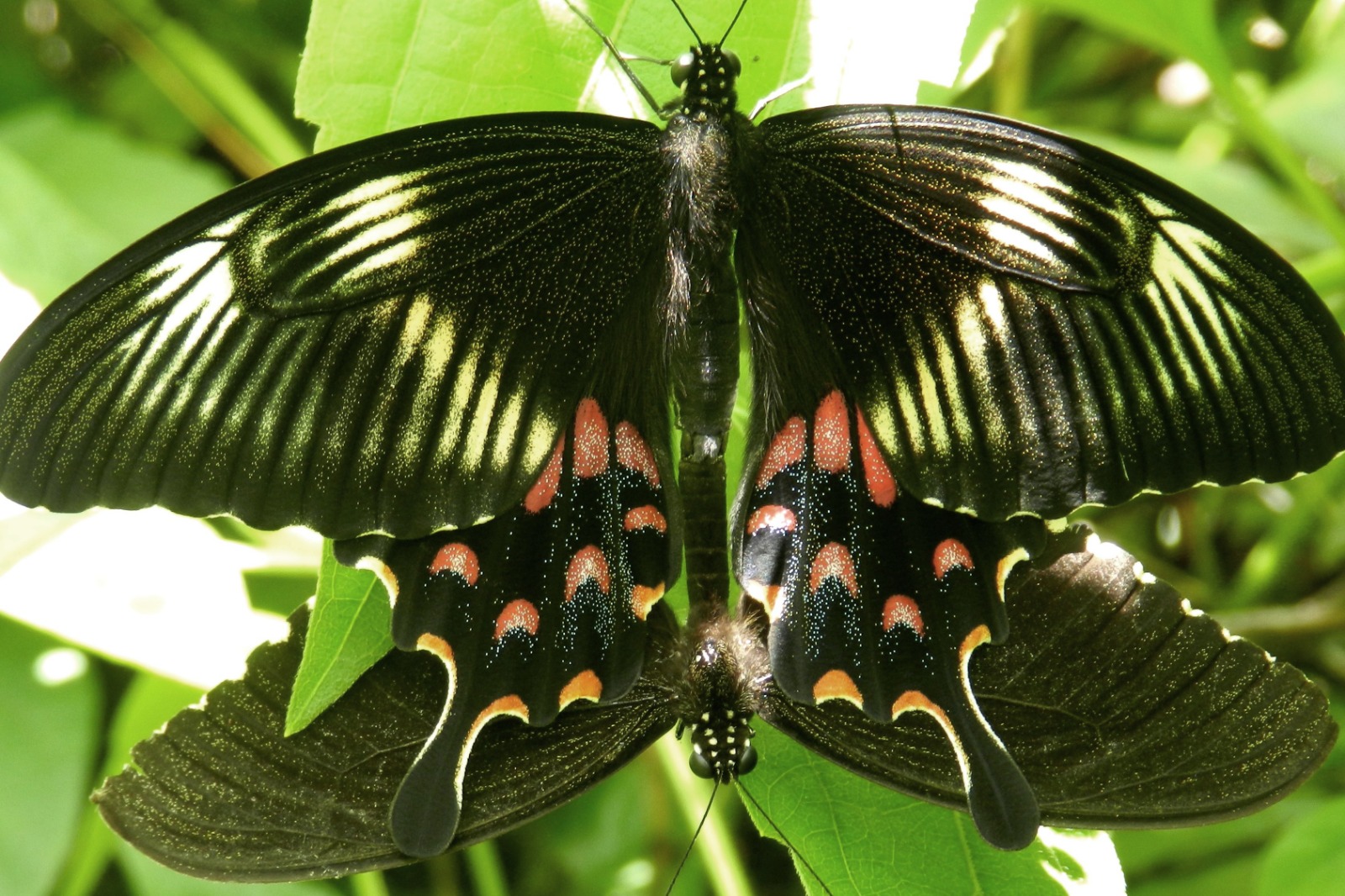
The Common Mormon (Papilio polytes) is one of the most widespread and familiar swallowtail butterflies in Asia, occurring across the Indian subcontinent, Southeast Asia, southern China, Taiwan, Japan, and parts of Indonesia. It belongs to the family Papilionidae. The species was first formally described in 1758 by Carl Linnaeus (1707–1778), the renowned Swedish biologist and physician who established the modern system of biological classification.
The common name “Common Mormon” is a historical reference to the former practice of polygamy among members of the Mormon faith, inspired by the butterfly’s multiple female forms. The scientific name combines the Latin word papilio, meaning “butterfly,” with the Greek-derived polytes, meaning “many,” referring to the remarkable diversity of female forms found in this species.
The Common Mormon is celebrated for its extraordinary example of female-limited Batesian mimicry. While the males have a consistent black-and-white appearance, the females occur in several distinct forms, many of which closely resemble toxic, unpalatable swallowtails such as the Common Rose (Pachliopta aristolochiae) and the Crimson Rose (Pachliopta hector). The female form stichius is an especially convincing mimic of the Common Rose and is the most frequently encountered form where the model species is abundant. Despite their close resemblance, the mimics can be distinguished by their black bodies, whereas the model butterflies have bright red bodies. This remarkable mimicry is controlled primarily by a single gene called doublesex, which regulates the wing patterns, colours, and structural features required for the different female forms.
Adult Common Mormons are active flower visitors and feed on nectar using their long proboscis, allowing them to reach nectar deep within flowers with long corolla tubes. The larvae feed on plants belonging to the citrus family (Rutaceae), including cultivated citrus species, making them occasional garden pests. Adult males frequently engage in mud-puddling, gathering on damp soil, stream banks, or mineral-rich patches—usually in cool, shaded areas—to absorb salts and other essential minerals that contribute to their reproductive fitness. This behaviour is rarely observed in females, making it a distinctive characteristic of the males.
Vincent Vanur