Here’s a polished and fact-checked version of your write-up with improved readability and grammar while preserving the scientific accuracy:
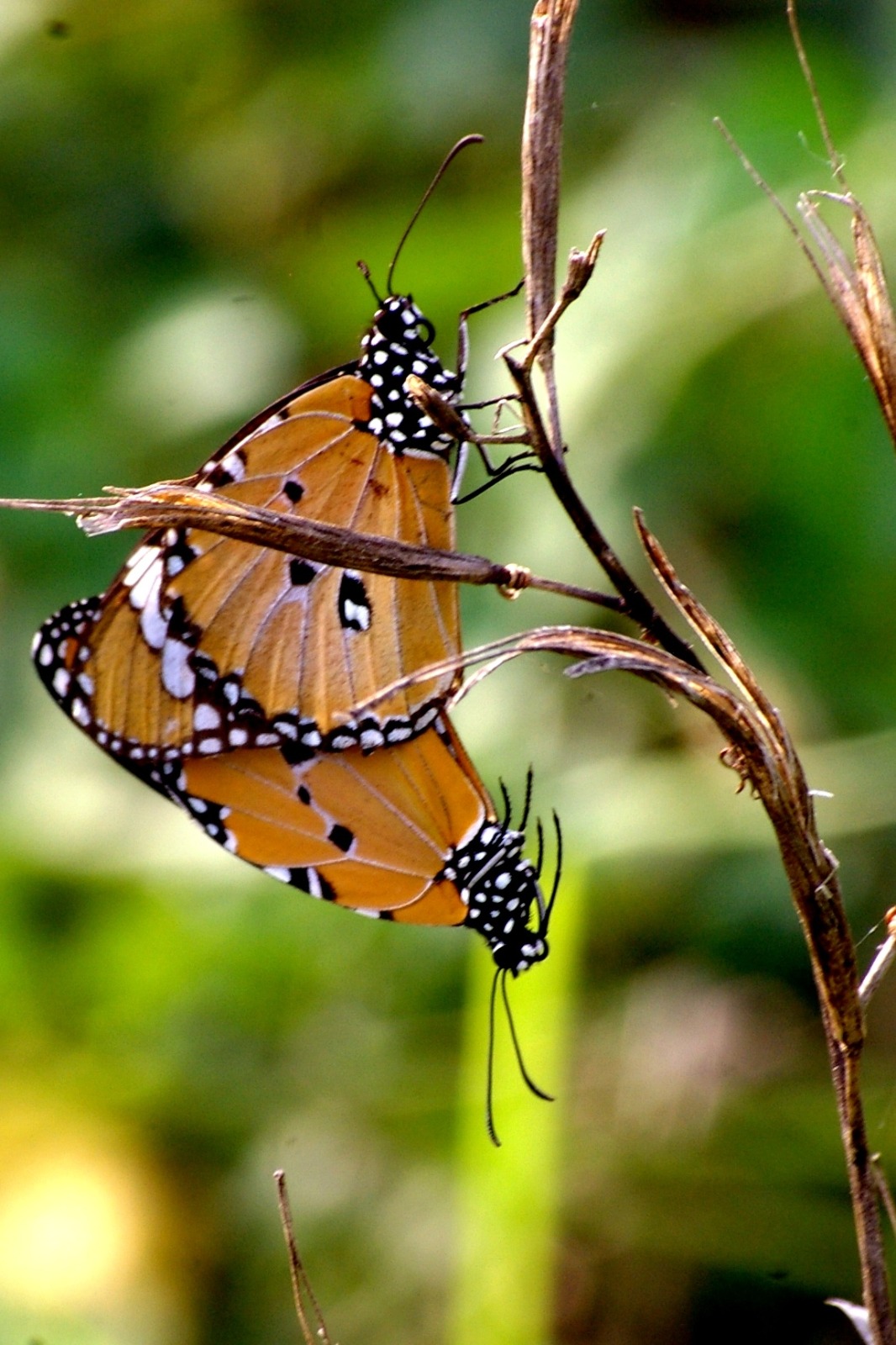
The Plain Tiger (Danaus chrysippus), also known as the African Queen or African Monarch, is a medium-sized butterfly widely distributed across Asia, Africa, and Australia. It belongs to the Danainae subfamily of the brush-footed butterfly family Nymphalidae. The species was first formally described in 1758 by Carl Linnaeus (1707–1778), the renowned Swedish biologist and physician who laid the foundation for modern biological classification.
The Plain Tiger thrives in a wide range of habitats, including open grasslands, scrublands, gardens, agricultural fields, and forest edges. It is commonly found from sea level to elevations of about 1,500 metres (5,000 feet), making it one of the most adaptable butterflies in its range.
The caterpillars primarily feed on milkweed plants (family Apocynaceae, including the genus Asclepias and related genera such as Calotropis). These plants contain cardenolides, toxic compounds that the caterpillars absorb and retain into adulthood. The stored toxins make the Plain Tiger distasteful to most birds and other predators, while its striking orange, black, and white wing pattern serves as a warning signal. This effective defence has led several other butterfly species to evolve similar colour patterns through Batesian or Müllerian mimicry.
Pyrrolizidine alkaloids, obtained from certain flowering plants, also play an important role in the butterfly’s reproduction. Male Plain Tigers convert these alkaloids into chemical pheromones that are stored in hair-pencils housed within specialised scent organs known as androconia on the hindwings. During courtship, the males fan out these hair-pencils to release the pheromones, helping attract females. Studies have shown that males lacking sufficient pyrrolizidine alkaloids are significantly less successful in mating, highlighting the importance of these compounds in their reproductive success.
Vincent Vanur