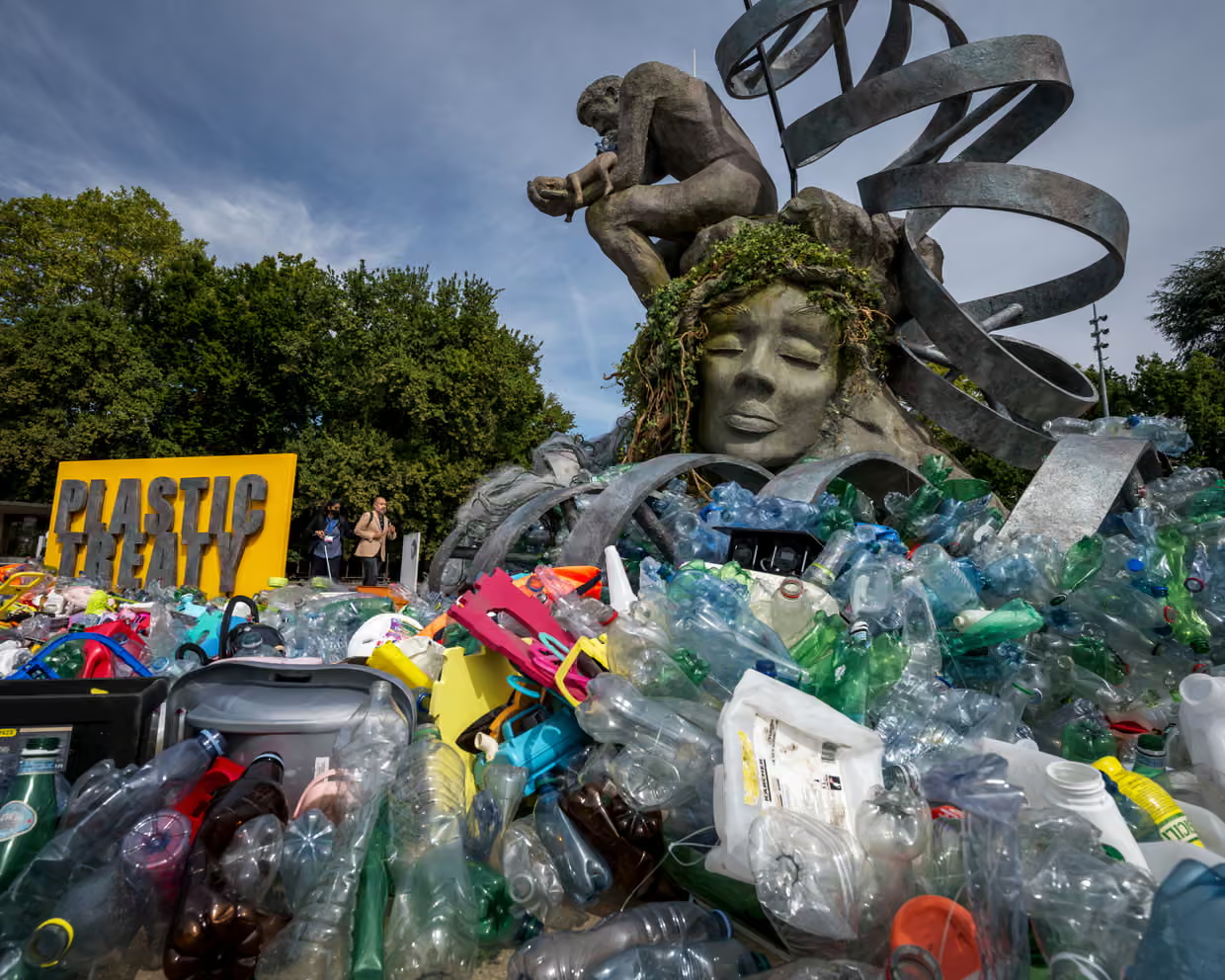
Governments around the world are intensifying efforts to secure the first legally binding global treaty to tackle plastic pollution before the next round of United Nations negotiations. The proposed agreement aims to address the entire lifecycle of plastics—from production and design to consumption, recycling, and final disposal. Negotiators are working to establish common international rules that will reduce plastic waste, encourage sustainable alternatives, and improve waste management systems across countries.
Plastic pollution has become one of the world’s most pressing environmental challenges. Every year, millions of tonnes of plastic waste enter rivers, lakes, and oceans, threatening marine life, damaging ecosystems, and breaking down into harmful microplastics that contaminate food, water, and even the air. Scientists have warned that without stronger global action, plastic pollution could continue to rise significantly over the coming decades.
Many nations, environmental organizations, and scientists are calling for ambitious measures, including limits on unnecessary single-use plastics, increased producer responsibility, improved recycling infrastructure, and financial support for developing countries. While discussions continue over the treaty’s final provisions, there is growing international recognition that coordinated global action is essential.
If successfully adopted, the treaty could become a landmark international agreement, helping protect biodiversity, safeguard human health, and accelerate the transition toward a cleaner, more sustainable, and circular global economy.
News as reported