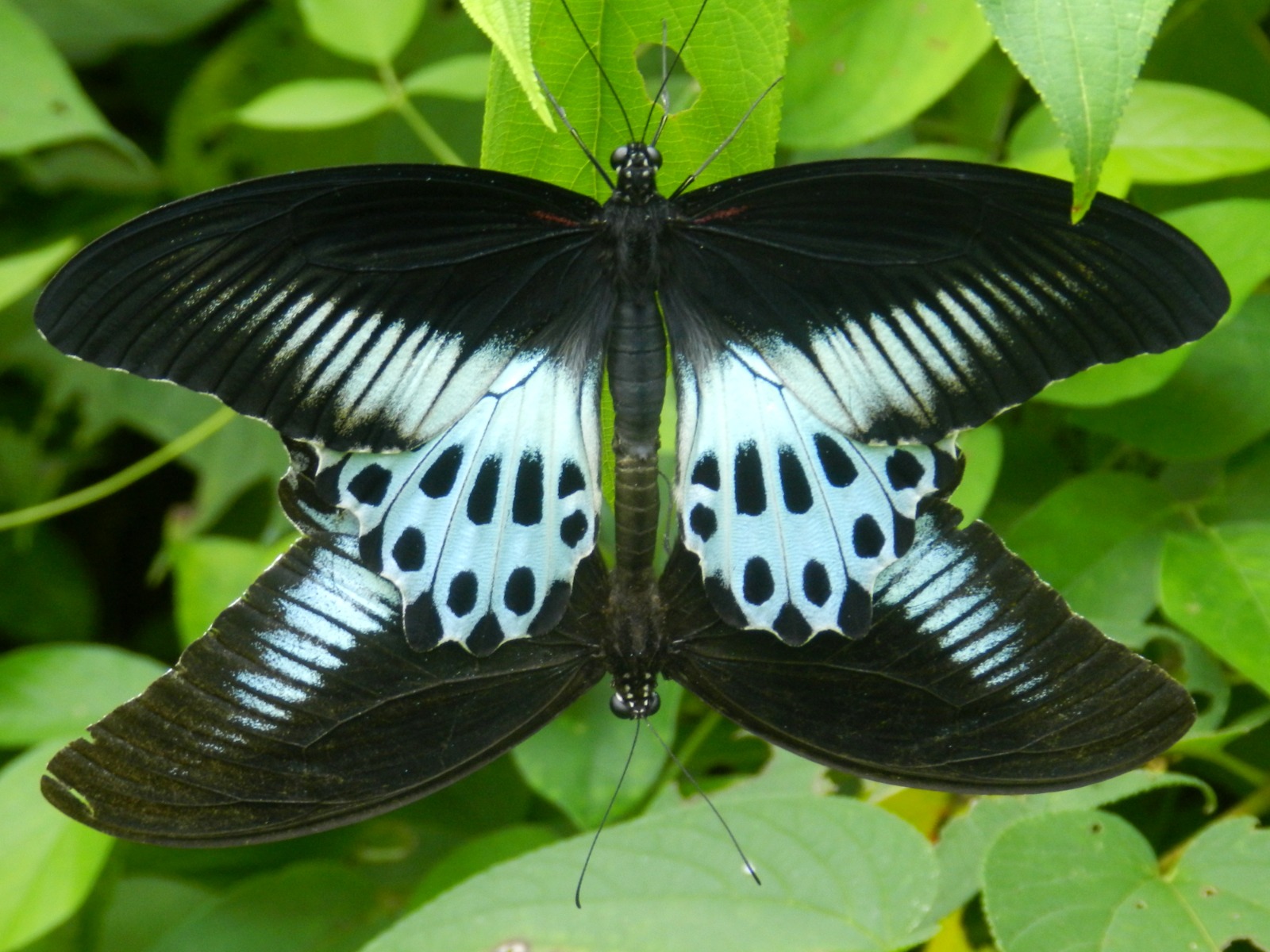
The Indian Blue Mormon (Papilio agenor polymnestor) is India’s fourth-largest butterfly and one of the most spectacular swallowtails found in the Western Ghats and Sri Lanka. With an impressive wingspan of 120–150 mm, this striking butterfly is easily recognized by its velvety black wings adorned with brilliant blue patches. It is popularly known as the “Monsoon Nomad” because it becomes especially active and abundant during and immediately after the monsoon season, when flowering plants are plentiful.
The species was first described in 1775 by the Dutch merchant and entomologist Pieter Cramer (1721–1776). In June 2015, the Indian Blue Mormon was officially declared the State Butterfly of Maharashtra, making Maharashtra the first Indian state to designate an official state butterfly. Besides its beauty, the butterfly also plays an ecological role as a pollinator, including visits to cardamom (Elettaria cardamomum) flowers.
One of the most fascinating features of this butterfly is the remarkable defense mechanism of its caterpillar. When threatened, the caterpillar extends a bright red, Y-shaped organ called the osmeterium from behind its head. This fleshy structure is accompanied by the release of a foul-smelling chemical secretion that effectively deters predators such as ants, spiders, mantids, and birds. The secretion contains concentrated volatile organic compounds, mainly isobutyric acid, 2-methylbutyric acid, methyl isobutyrate, and methyl 2-methylbutyrate. The exact chemical composition changes as the caterpillar develops, providing effective protection throughout its growth.
The Indian Blue Mormon is not only a symbol of the rich biodiversity of the Western Ghats but also an important contributor to forest ecosystems through pollination. Protecting its habitats helps conserve one of India’s most iconic butterfly species and the diverse ecosystems it represents.
Vincent Vanur