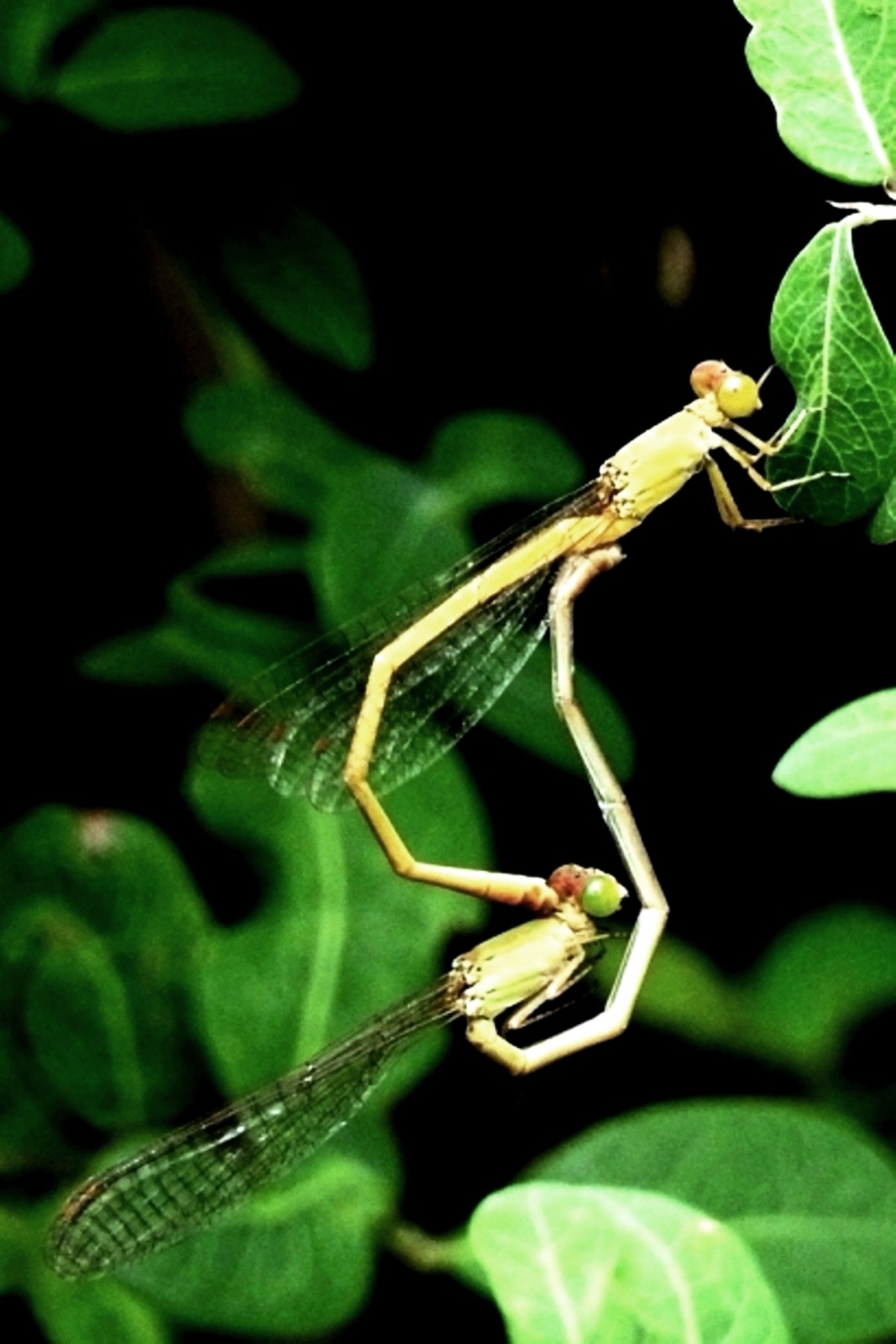
The Coromandel marsh dart, also known as the yellow waxtail (Ceriagrion coromandelianum), is a small, brightly coloured damselfly belonging to the family Coenagrionidae. It is widely distributed across South Asia and is commonly found near ponds, marshes, paddy fields, canals, and other freshwater wetlands. The species was first scientifically described by the Danish zoologist Johann Christian Fabricius.
The mating behaviour of the Coromandel marsh dart is one of the most remarkable examples of reproductive adaptation among insects. Before mating begins, the male transfers sperm from his primary genital opening, located near the tip of his abdomen, to his secondary genitalia near the base of the abdomen. He then grasps the female securely behind the head or thorax using specialized claspers at the end of his abdomen. This forms a position known as the tandem, in which the pair often flies together while searching for a suitable perch.
Once they settle on emergent aquatic vegetation, the female curls her abdomen forward to connect with the male’s secondary genitalia, creating the characteristic heart-shaped or circular “love wheel.” Before transferring his sperm, the male may remove sperm deposited by previous mates, increasing the likelihood that he will fertilize the female’s eggs. Following successful mating, the male often remains with the female during egg-laying, either by continuing in tandem or by flying nearby to guard her from rival males. This mate-guarding behaviour helps ensure successful fertilization while the female deposits her eggs into aquatic plants, where the developing larvae will hatch and begin their aquatic life cycle.
-Vincent Vanur