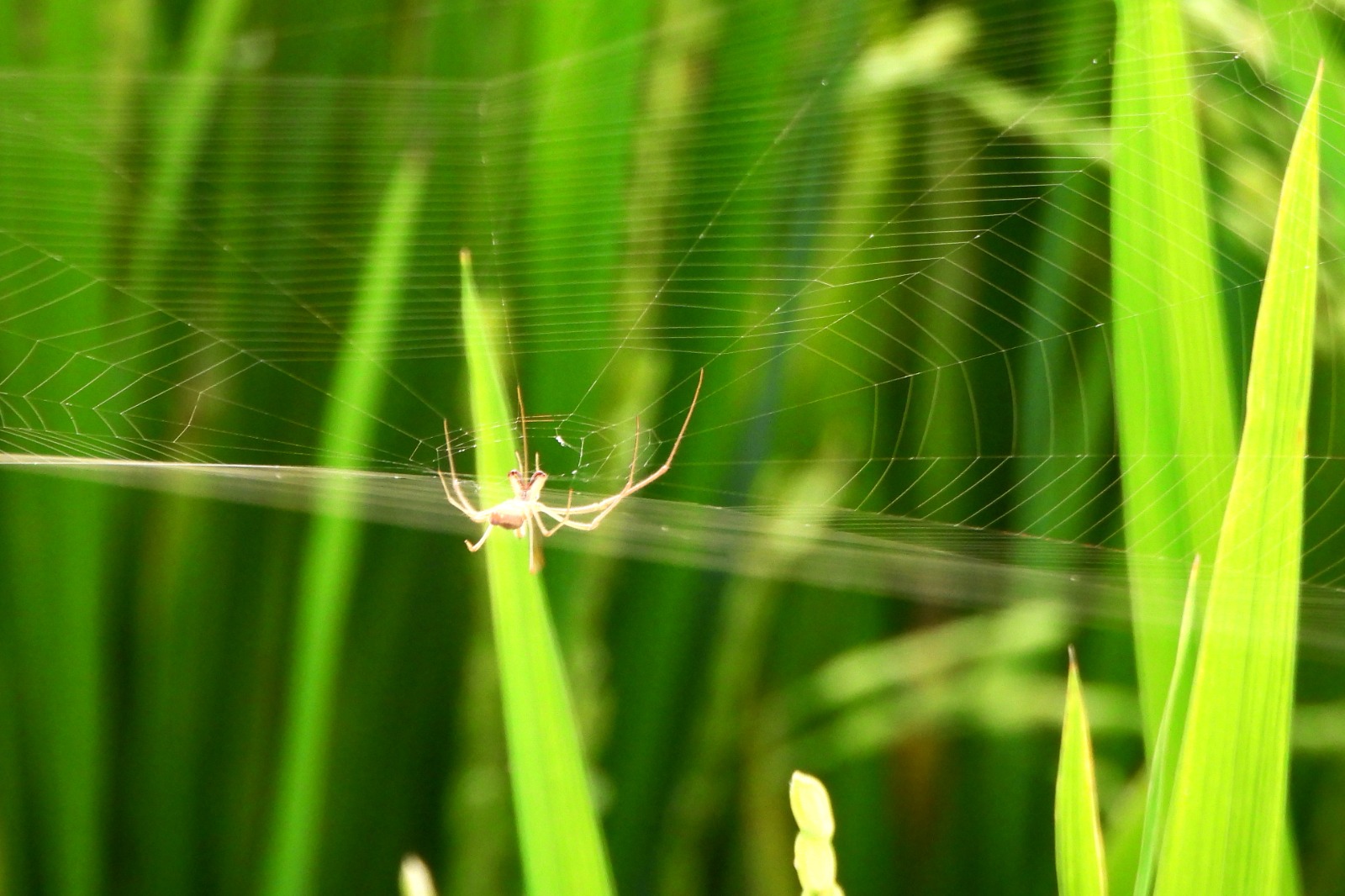
Tetragnatha cochinensis is a species of long-jawed orb-weaver spider belonging to the family Tetragnathidae. It was first described in 1921 by Frederic Henry Gravely (1885–1965), a British arachnologist, entomologist, botanist, and zoologist whose pioneering research significantly advanced the study of Indian invertebrates during his tenure at the Indian Museum, Calcutta, and the Government Museum, Madras. Although the species was originally described in 1921, important anatomical details—particularly the genital morphology used for species identification—remained incomplete until they were comprehensively re-described in 2021 by arachnologists from Christ College, Irinjalakuda, Kerala.
Widely distributed across India, Tetragnatha cochinensis is commonly encountered in rice paddies, field bunds, and the vegetation bordering agricultural fields. Like other members of its genus, it is often called a “stretch spider” because of its remarkably elongated body and long, slender legs. When disturbed, it adopts a characteristic camouflage posture by extending its front legs forward and its hind legs backward, aligning its body with grass blades or twigs. This behavior makes the spider extremely difficult for predators to detect.
Species of the genus Tetragnatha are valuable natural predators in rice ecosystems and play an important role in biological pest control. They prey on a wide variety of insects, including planthoppers, leafhoppers, and other small crop pests that can damage paddy fields. Studies have shown that spiders are among the most abundant arthropod predators in tropical rice ecosystems, helping to suppress pest populations naturally and reduce dependence on chemical pesticides. Their presence is therefore an indicator of a healthy and ecologically balanced agricultural landscape.