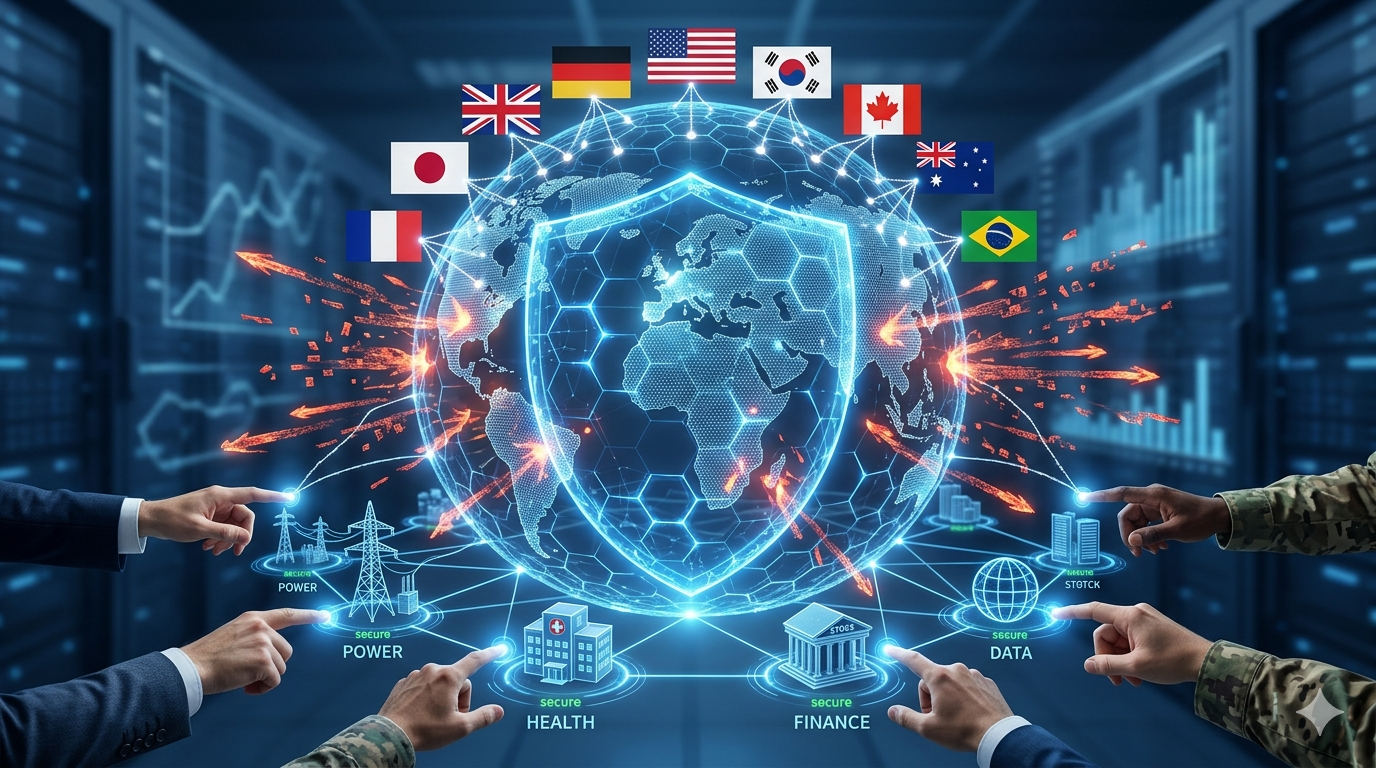
In response to a sharp rise in cyberattacks targeting critical infrastructure, major nations across the globe are intensifying efforts to strengthen cybersecurity cooperation, signaling a new era of collective digital defense.
Recent incidents, including state-linked cyberattacks on energy and water systems, have underscored the urgency of coordinated international action. Authorities in the United States issued emergency alerts after hackers targeted industrial control systems, highlighting vulnerabilities in essential services and the growing sophistication of cyber warfare.
Experts warn that cyber threats are increasingly being driven by nation-state actors employing advanced and persistent tactics. Groups linked to countries such as North Korea have demonstrated the ability to carry out financial theft, espionage, and large-scale disruptions, prompting calls for deeper intelligence sharing and infrastructure-level monitoring among nations.
At the policy level, countries are moving quickly to formalize partnerships. The European Union and India recently signed a comprehensive security and defence agreement that includes enhanced cooperation in cybersecurity, intelligence exchange, and protection of critical infrastructure.
Similarly, NATO members and Indo-Pacific partners—including Japan, Australia, and South Korea—have expanded joint cyber defence initiatives, focusing on real-time information sharing, coordinated response strategies, and joint training exercises.
Global institutions are also stepping in to create unified frameworks. The United Nations has advanced its landmark cybercrime convention, aimed at improving cross-border investigations and enabling faster sharing of digital evidence among member states.
Meanwhile, private sector collaboration is playing a growing role. Major technology companies are partnering with governments to enhance cyber resilience, invest in AI-driven threat detection, and build secure digital infrastructure. For instance, large-scale investments in countries like Japan are aimed at strengthening both AI capabilities and cybersecurity readiness.
India has also taken significant steps domestically, launching new national strategies that integrate cybersecurity with counter-terrorism frameworks, emphasizing multi-agency coordination and global cooperation.
According to global reports, the rapid expansion of artificial intelligence and digital technologies is further complicating the threat landscape, making international collaboration not just beneficial but essential. News as Reported.