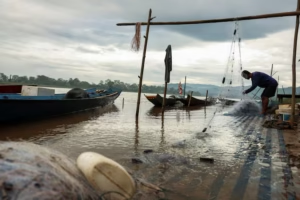
A new study published this week warns that illegal and unregulated mining across mainland Southeast Asia is triggering a major water-pollution crisis — threatening rivers, ecosystems and the health of millions.
Researchers from Stimson Center say over 2,400 mines — many unlicensed — could be releasing deadly chemicals such as cyanide, mercury, arsenic and heavy rare-earth elements into major river systems including the Mekong River, Salween River and Irrawaddy River.
In northern Thailand, farmers like the 59-year-old Tip Kamlue — who once irrigated their fields with water from a tributary of the Mekong — have been forced to abandon river water after contamination warnings.
Contaminated waterways undermine local agriculture, fisheries and livelihoods, and raise serious public-health alarms: many downstream communities depend on the rivers for drinking, fishing and irrigation.
Environmental and human-rights groups are urging immediate halts to illegal mining, rigorous regulation, and transboundary cooperation among Southeast Asian nations to prevent further irreversible damage to water systems and biodiversity.