

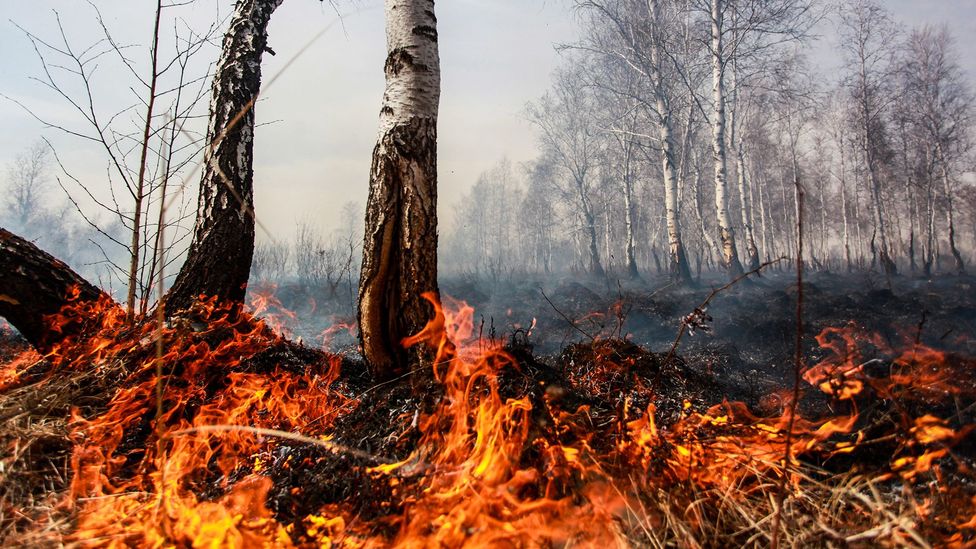
Scientists warn that the Arctic is entering a new and dangerous era of wildfire risk as rapidly warming conditions trigger unprecedented fire activity in regions that were once too cold and wet to burn. Rising temperatures, longer summers, and drier landscapes are transforming vast stretches of tundra and boreal areas into fire-prone zones.
Recent observations show an increase in both the frequency and intensity of Arctic wildfires, with blazes spreading across peatlands and permafrost-rich soils. These fires are particularly concerning because they release large amounts of stored carbon, including ancient carbon locked in frozen ground for thousands of years. Once released, these emissions further accelerate global warming, creating a powerful feedback loop.
Wildfires in the Arctic also have serious ecological consequences. They disrupt fragile ecosystems, damage wildlife habitats, and alter vegetation patterns that are slow to recover in extreme northern climates. Smoke from these fires can travel long distances, affecting air quality far beyond the Arctic and posing health risks to nearby communities.
Researchers caution that current fire management systems are not designed for the Arctic’s unique conditions, leaving many areas unprepared. The findings highlight the urgent need for improved monitoring, adaptation strategies, and global emissions reductions to limit further warming and prevent the Arctic from becoming a major new source of climate-driven fire activity- News as reported
