

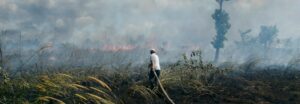
New reports warn that wildfires across the world’s northern boreal forests are surging — with recent fire seasons turning into full-blown emergencies as remote woodlands from Canada to Siberia blaze at unprecedented scale. In 2024–2025, boreal fire activity hit near-record levels: in North America alone, the area burned (BA) in boreal regions reached about 20,000 km², ~86 % above the 2002–average, with carbon emissions roughly three times the long-term norm.
In 2025’s first half, satellite monitoring flagged intense wildfire outbreaks across both Canadian and Russian boreal zones — prompting widespread evacuations, emergency firefighting mobilisations and cross-border smoke drift impacting air quality thousands of kilometres away.
Scientists attribute the surge to a dangerous combination: rising global temperatures, drying peatlands and thawing permafrost that make even historically cold and damp boreal landscapes tinder-dry. In some Arctic and sub-Arctic regions, soils once too wet to burn are now fueling “zombie fires” — underground blazes that rekindle after winter snowmelt.
The consequences go beyond lost trees. These wildfires release huge amounts of stored carbon — turning boreal forests from carbon sinks into carbon sources — and threaten biodiversity, indigenous livelihoods, and the global climate system. Experts warn that unless climate change is curbed and forest-fire governance strengthened, boreal wildfires may become a new “normal.”
