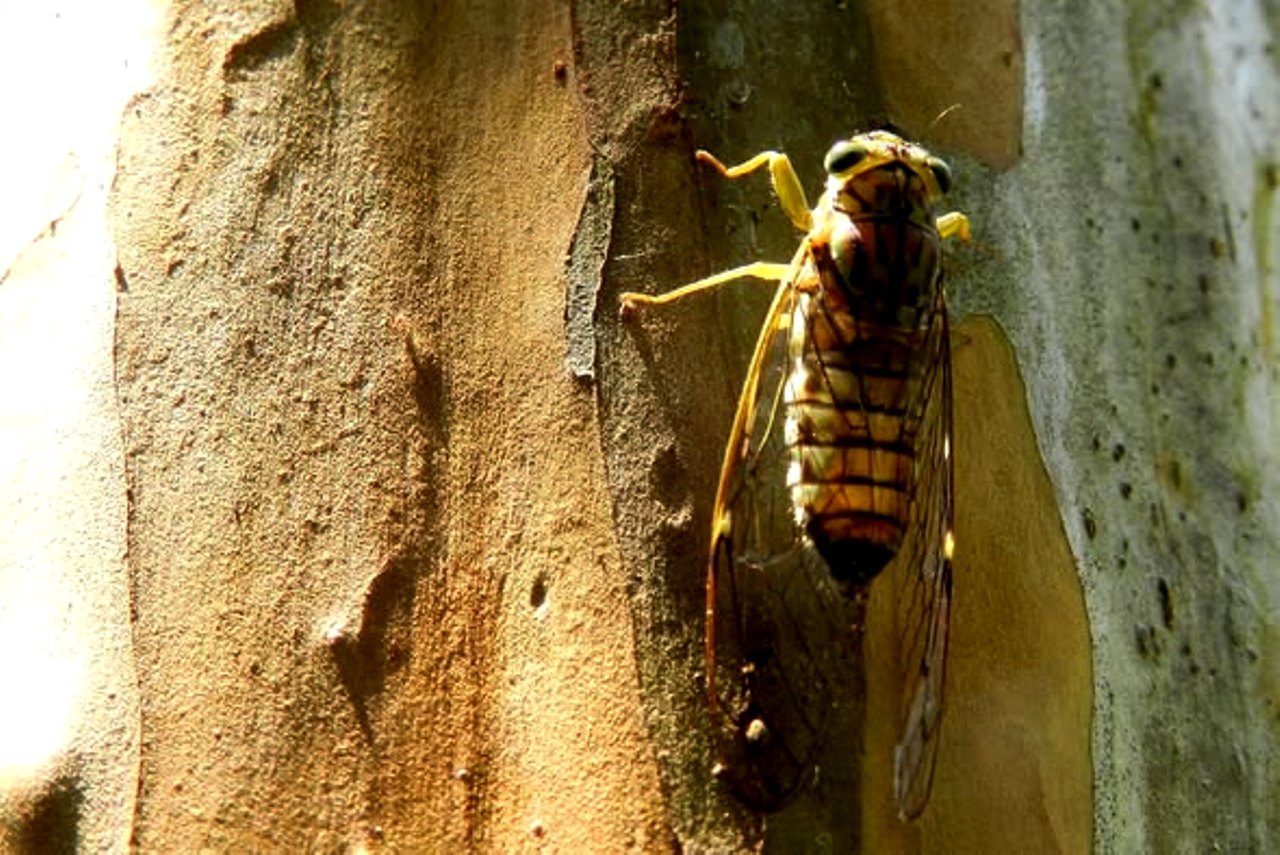
The Common Indian Cicada (Purana tigrina), a familiar insect across many parts of India, is drawing attention for its unique behavior and ecological role. Belonging to the order Hemiptera, cicadas are often mistaken for crickets, though the two differ significantly in classification and lifestyle.
Cicadas are best known for their loud daytime calls, produced by specialized structures called tymbals located in their abdomen. These rhythmic sounds, often heard during hot afternoons, play a key role in communication, especially during mating. In contrast, crickets—belonging to a different group within Arthropoda—are nocturnal and generate sound at night through stridulation, a process of rubbing their wings together.
Habitat and movement further distinguish the two insects. Cicadas typically inhabit tree bark and vegetation, where they spend much of their life cycle, and are capable fliers. Crickets, on the other hand, are ground dwellers, commonly found in soil or grassy areas, and primarily move by hopping.
Understanding these differences not only helps in accurate identification but also highlights the diversity of insect life and their roles in ecosystems, from aiding nutrient cycles to serving as indicators of environmental health.
CONTRIBUTION BY VINCENT MASH — FORMER
EDITOR OF PHOTOWIDE MAGAZINE AND ASSOCIATE EDITOR OF PHOTO TRACK MAGAZINE