

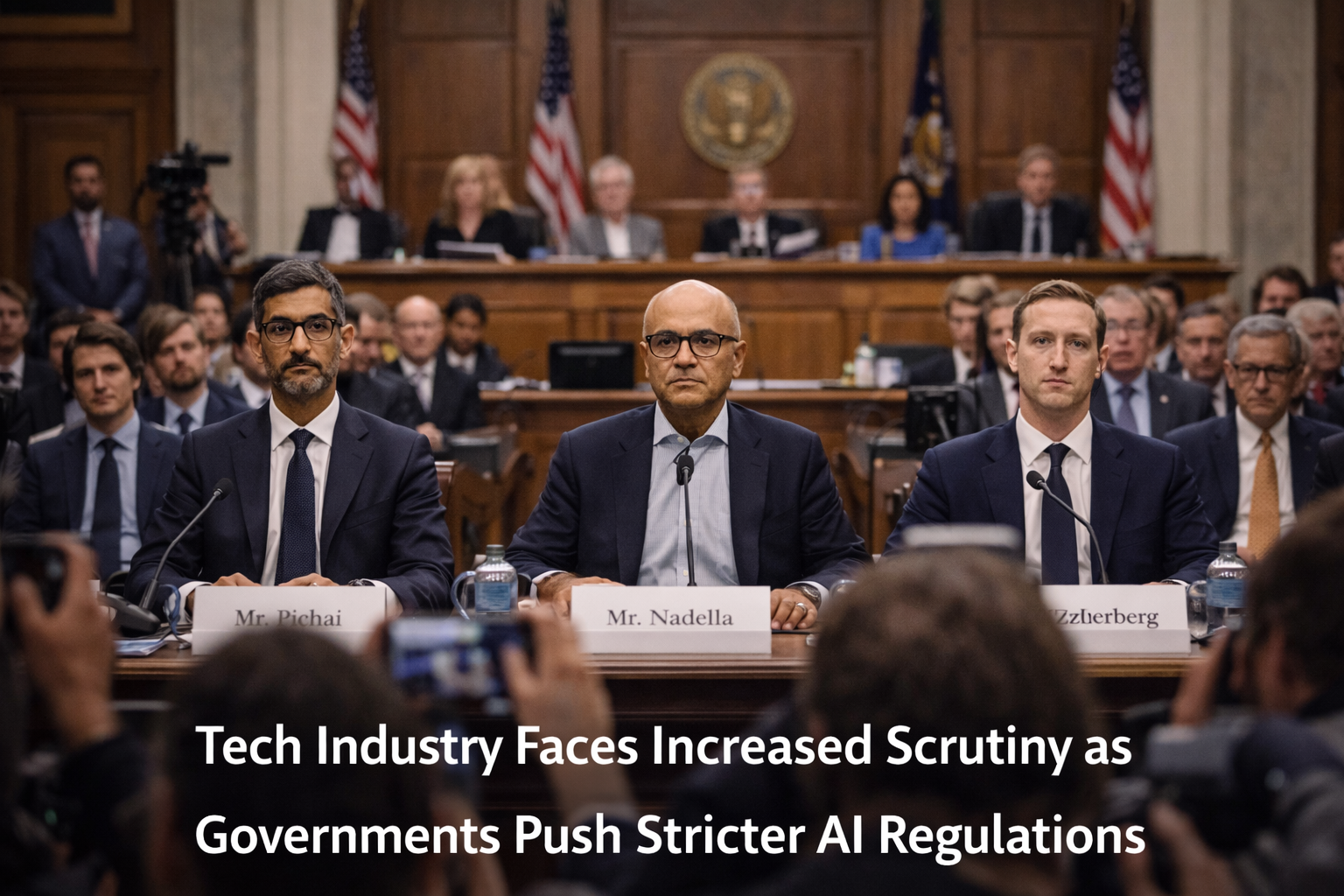
Governments around the world are intensifying oversight of the technology sector as concerns grow over the rapid expansion of artificial intelligence and its societal impact. Major regulatory discussions are underway in regions including the European Union, the United States, and Asia, signaling a global shift toward stricter governance of AI systems.
The European Commission has taken a leading role with its landmark AI regulatory framework, aiming to classify AI systems based on risk and impose tighter controls on high-risk applications. The proposed rules focus on areas such as data privacy, algorithmic transparency, and accountability for automated decision-making.
In the United States, policymakers are increasing pressure on major tech firms like Google, Microsoft, and Meta Platforms to ensure responsible AI development. Congressional hearings and regulatory proposals are examining issues ranging from misinformation to the ethical use of generative AI tools.
Meanwhile, countries in Asia, including India, are also exploring regulatory frameworks to balance innovation with user protection. Authorities are focusing on preventing misuse, ensuring data security, and promoting ethical AI deployment across sectors such as healthcare, finance, and governance.
Industry leaders have expressed mixed reactions, with some supporting clearer guidelines to build public trust, while others warn that excessive regulation could slow innovation and competitiveness. Experts believe that international cooperation will be crucial in establishing consistent standards, as AI technologies continue to evolve rapidly across borders.
As governments move forward with new rules, the global tech industry is entering a critical phase where compliance, transparency, and accountability will shape the future of artificial intelligence. News as Reported.


- upgraderz.aws@gmail.com
- upgraderz.aws@gmail.com
- upgraderz.aws@gmail.com