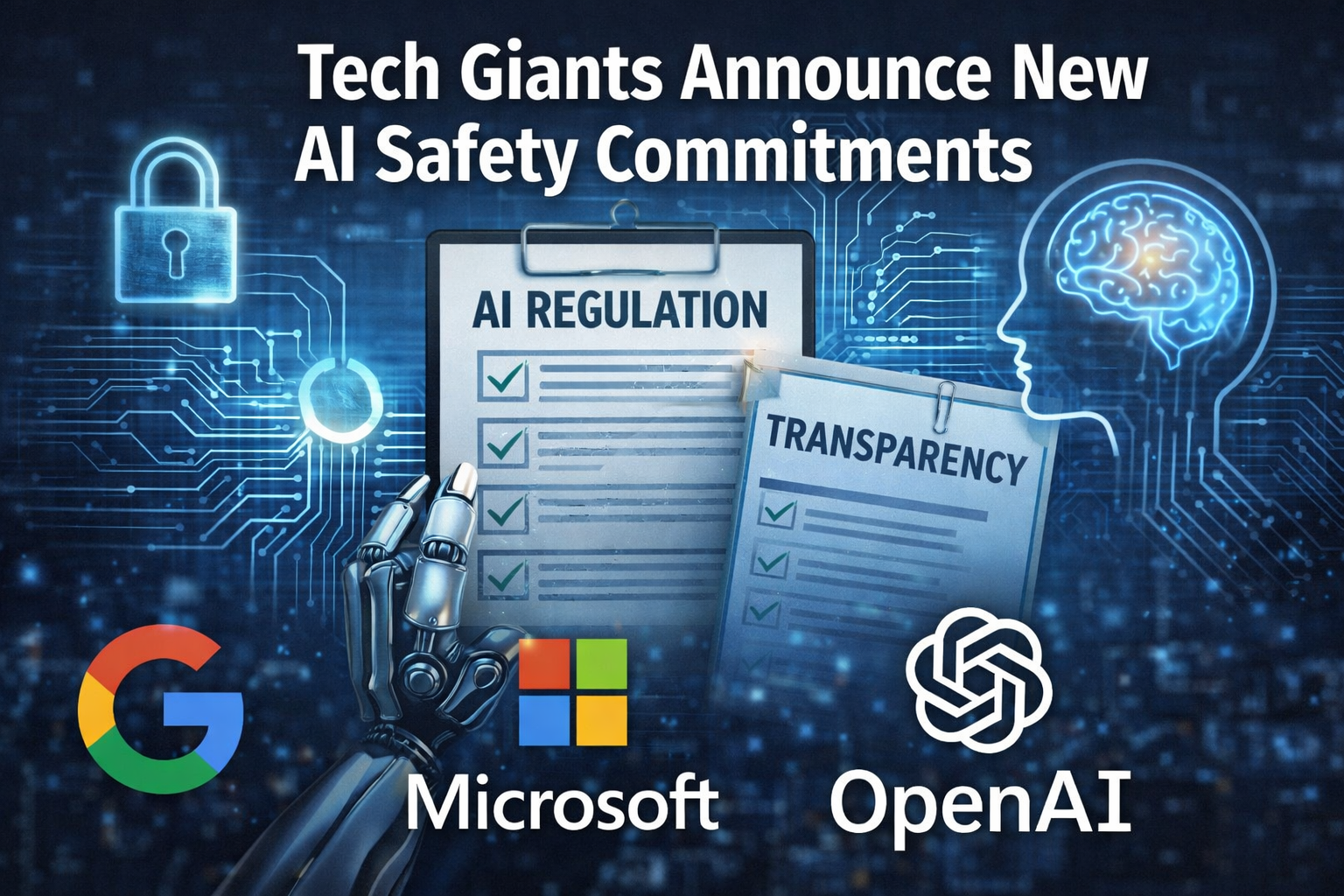
Major technology companies are stepping up efforts to regulate artificial intelligence, announcing new commitments focused on transparency, accountability, and responsible development as global scrutiny intensifies.
Leading firms—including companies like Google, Microsoft, and OpenAI—are aligning with emerging global frameworks that emphasize safer deployment of AI systems. These commitments include publishing safety reports, improving risk assessments, and ensuring clearer disclosure when users interact with AI-generated content.
A major driver behind these changes is evolving regulation, particularly the European Union AI Act, which introduces strict transparency requirements and mandates that AI-generated content be clearly labeled. The rules, set to expand through 2026, require companies to assess and mitigate risks associated with high-impact AI systems while maintaining human oversight.
In addition to regulatory pressure, companies are voluntarily adopting safety frameworks—such as publishing “risk reports” and conducting internal audits—to build public trust and address concerns over misuse, bias, and misinformation. Industry-wide collaborations are also increasing, with firms sharing best practices to combat harmful uses like deepfakes and cyber threats.
Experts note that while these commitments mark progress, they are not a substitute for enforceable laws. Governments across regions, including the United States, European Union, and India, are continuing to develop stricter regulatory frameworks to ensure AI systems remain safe, fair, and accountable.
Overall, the latest announcements signal a shift toward more responsible AI development, with transparency and safety becoming central to the future of the technology. News as Reported.