

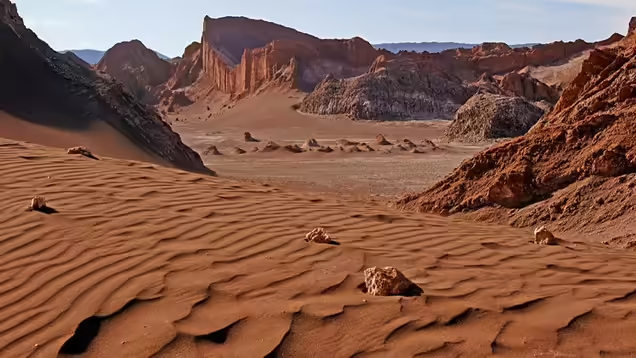
Scientists have discovered thriving microbial ecosystems beneath one of the driest deserts on Earth, overturning long-held assumptions about where life can survive. The findings reveal that even in environments considered almost entirely inhospitable, life can persist by adapting in unexpected ways.
Researchers studying subsurface layers beneath the hyper-arid desert found diverse communities of bacteria and microorganisms living several meters below the surface. Shielded from intense heat, radiation, and extreme dryness above, these organisms survive by drawing moisture and nutrients from mineral-rich underground layers. Some microbes were found to remain dormant for long periods, becoming active only when minimal water becomes available.
The discovery challenges traditional definitions of habitable environments and expands scientific understanding of life’s resilience. According to researchers, the desert’s underground ecosystems may resemble conditions found on early Earth, offering clues about how life first emerged under harsh planetary conditions.
The findings also have implications beyond Earth. Scientists say such ecosystems strengthen the possibility that life could exist beneath the surface of other planets and moons, such as Mars, where surface conditions are hostile but subsurface environments may offer protection.
Experts emphasize that uncovering hidden life in extreme environments reshapes biological science and highlights how much of Earth’s biodiversity remains unexplored. The research underscores that life can adapt and endure in places once thought completely barren- News as reported
