

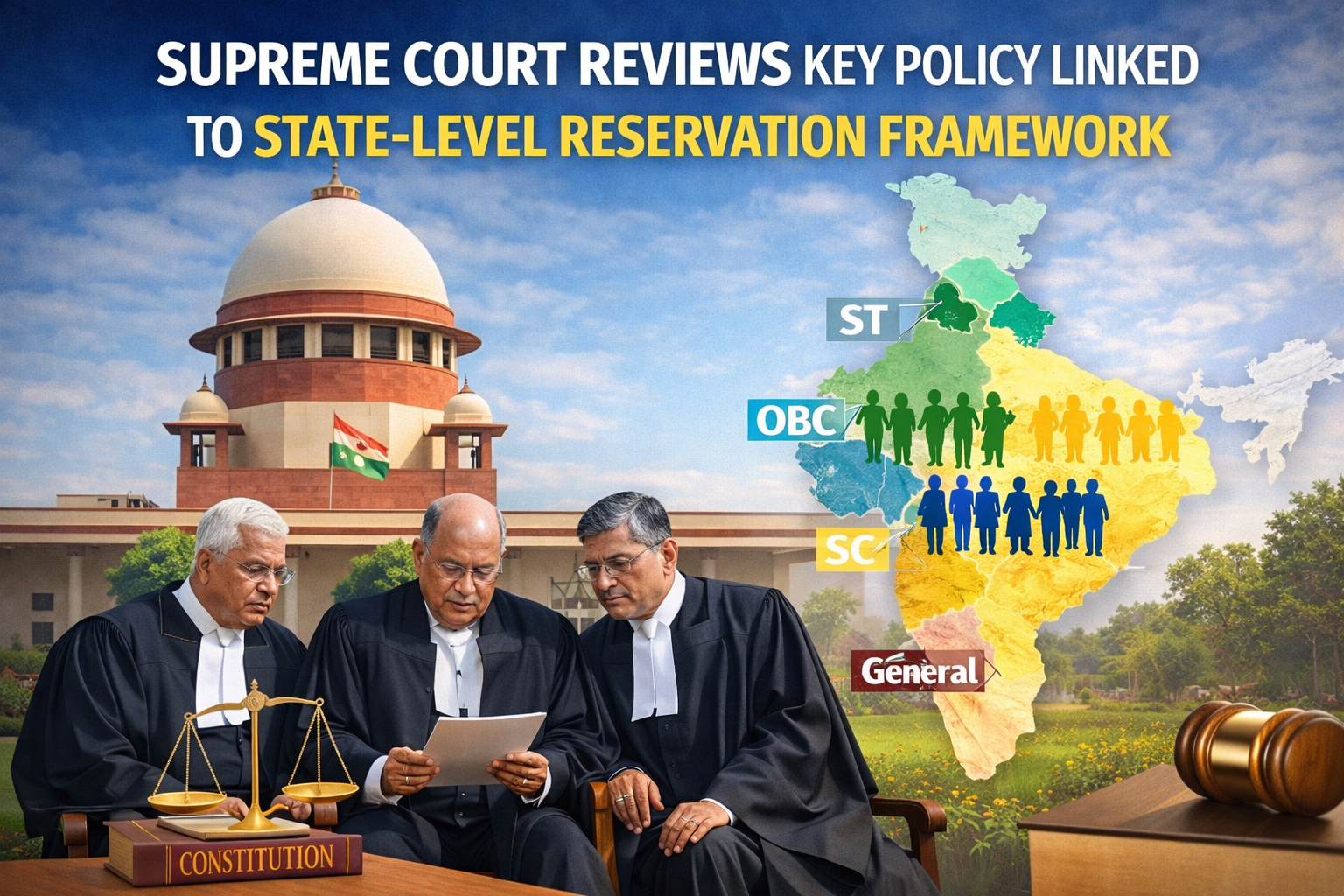
The Supreme Court of India has taken up a significant case concerning a policy linked to the state-level reservation framework, drawing nationwide attention. The case focuses on the constitutional validity and implementation of reservation policies adopted by various state governments, particularly in relation to quotas in education and public employment.
The bench is examining whether certain provisions of the policy align with the principles of equality enshrined in the Constitution of India. Key concerns include the extent to which states can modify reservation limits, the inclusion of new categories under reserved quotas, and the balance between affirmative action and merit-based selection. The outcome of this review is expected to have far-reaching implications for both state autonomy and social justice policies.
Legal experts argue that this case could redefine the framework governing reservations, especially in light of previous landmark judgments such as the Indra Sawhney case, which set a 50% cap on reservations. Some states have attempted to exceed this limit, citing unique socio-economic conditions, leading to legal challenges.
The court’s decision will be closely watched by policymakers, educational institutions, and job aspirants across the country. As the Supreme Court of India deliberates, the case highlights the ongoing debate between ensuring social equity and maintaining constitutional balance within India’s diverse and evolving society news as reported.


- upgraderz.aws@gmail.com
- upgraderz.aws@gmail.com
- upgraderz.aws@gmail.com
- upgraderz.aws@gmail.com