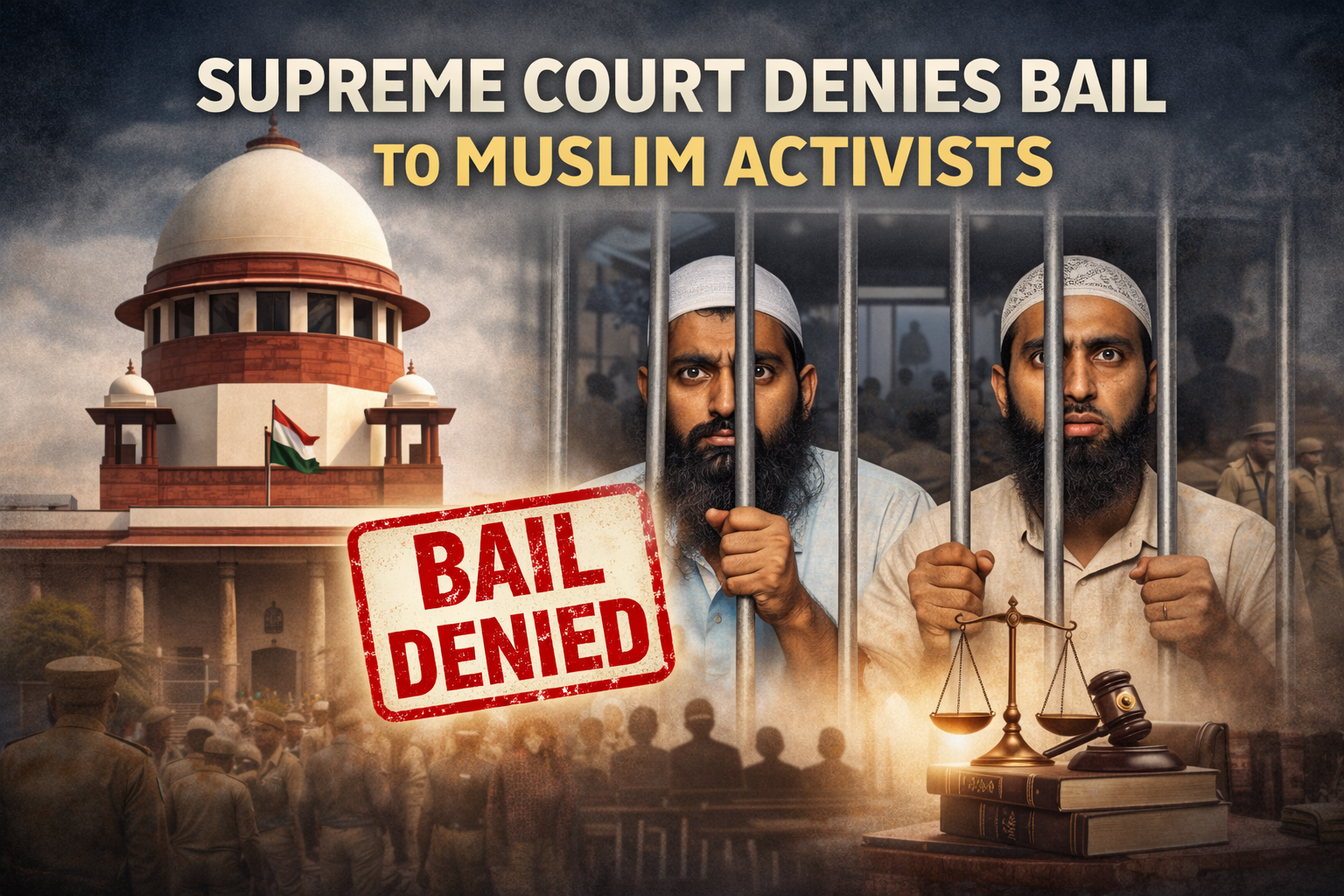
The Supreme Court has denied bail to two Muslim activists who have remained in custody for several years without the commencement or completion of a full trial, a decision that has drawn significant attention from legal experts and civil rights groups across the country. The activists were arrested under stringent security-related laws, with authorities alleging their involvement in activities considered a threat to national security. Despite the prolonged detention, the trial process has moved slowly, with repeated delays cited by the defense.
In its order, the apex court acknowledged the long period of incarceration but held that the seriousness of the charges and the applicable legal provisions did not justify granting bail at this stage. The court emphasized that bail decisions in such cases must balance individual liberty with broader concerns of public order and national security. It also noted that the lower courts should make efforts to expedite the trial process.
The ruling has reignited debate around preventive detention, the use of special laws, and the constitutional right to a speedy trial. Civil rights organizations argue that extended imprisonment without conviction undermines fundamental freedoms and disproportionately affects minority communities. They have called for judicial and legislative reforms to ensure that undertrial prisoners are not subjected to indefinite detention.
Legal scholars, meanwhile, point out that while courts often exercise caution in cases involving serious charges, prolonged delays raise critical questions about due process and fairness. The case is expected to remain under close scrutiny, as it highlights the ongoing tension between state security measures and the protection of individual rights guaranteed under the Constitution news as reported.