

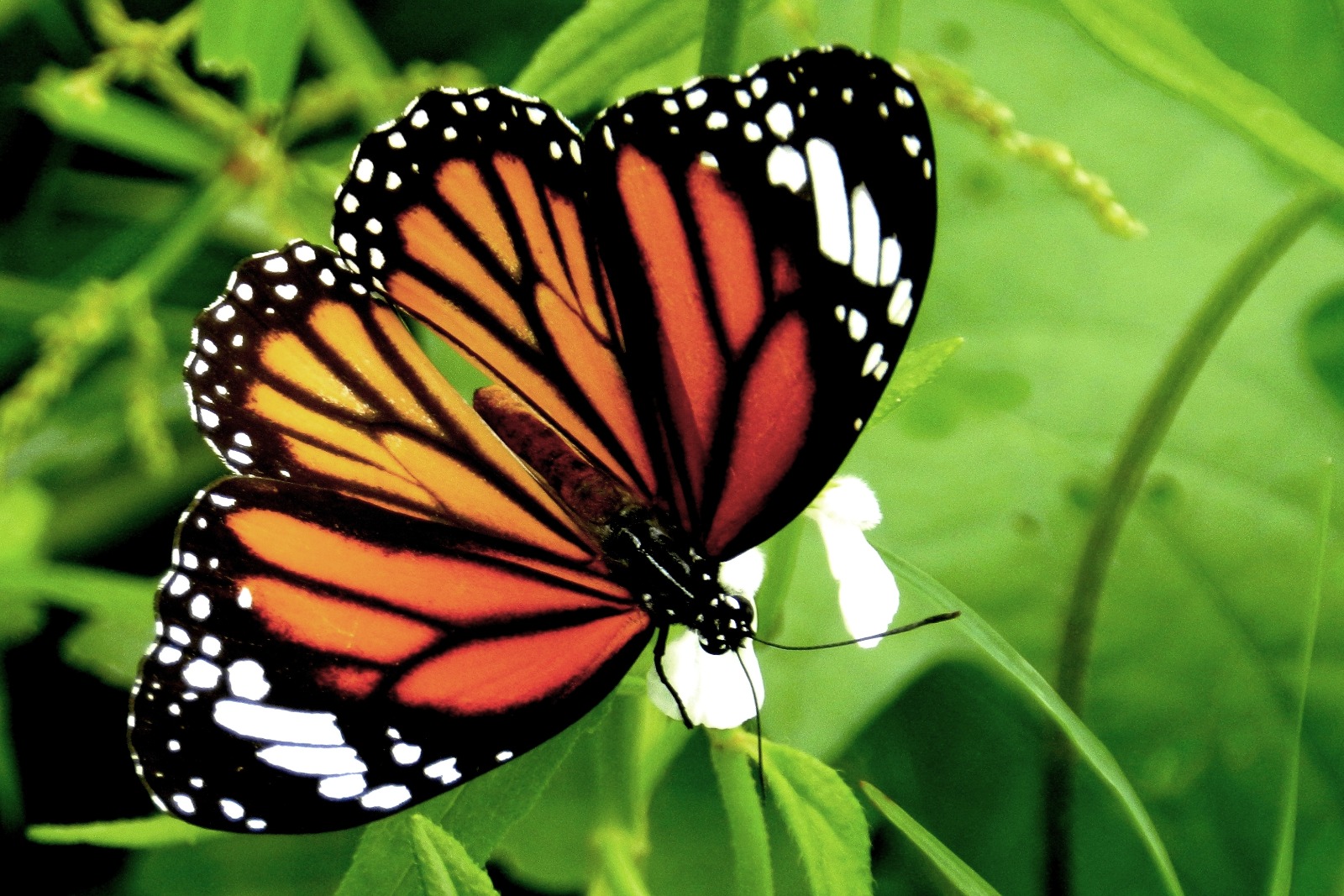
The Striped Tiger butterfly, scientifically known as Danaus genutia, has drawn attention once again for its fascinating migratory behavior and unique survival strategies. Commonly called the “varayan kaduva” (striped tiger) in local languages, this striking butterfly is widely found across South and Southeast Asia, including India.
First recorded in 1779 by Pieter Cramer, a Dutch textile merchant and pioneering entomologist, the species has long intrigued scientists and nature enthusiasts alike. Despite living in regions filled with predators, the Striped Tiger has evolved remarkable defense mechanisms that ensure its survival.
One of its key adaptations is its unpalatability. The butterfly feeds on toxic host plants during its larval stage, which makes it distasteful to predators such as birds. As a result, many predators learn to avoid it after initial encounters. In moments of danger, the Striped Tiger can also emit a foul odor, further deterring potential threats. Additionally, it sometimes adopts a deceptive tactic by remaining completely still and appearing dead, a behavior that often confuses predators and helps it escape unharmed.
Another notable feature of the species is its migratory nature. Large groups of Striped Tiger butterflies are known to travel significant distances in search of suitable habitats and food sources, contributing to ecological balance and pollination across regions.
The subspecies Danaus genutia genutia, highlighted in recent photographs, showcases the classic orange-and-black striped pattern that makes this butterfly easily recognizable.
Experts say the continued study of such species is crucial, as butterflies like the Striped Tiger play an important role in maintaining biodiversity and serve as indicators of environmental health.
CONTRIBUTION BY VINCENT MASH — EDITOR OF PHOTOWIDE MAGAZINE AND ASSOCIATE EDITOR OF PHOTO TRACK MAGAZINE

- upgraderz.aws@gmail.com
- upgraderz.aws@gmail.com
- upgraderz.aws@gmail.com
- upgraderz.aws@gmail.com