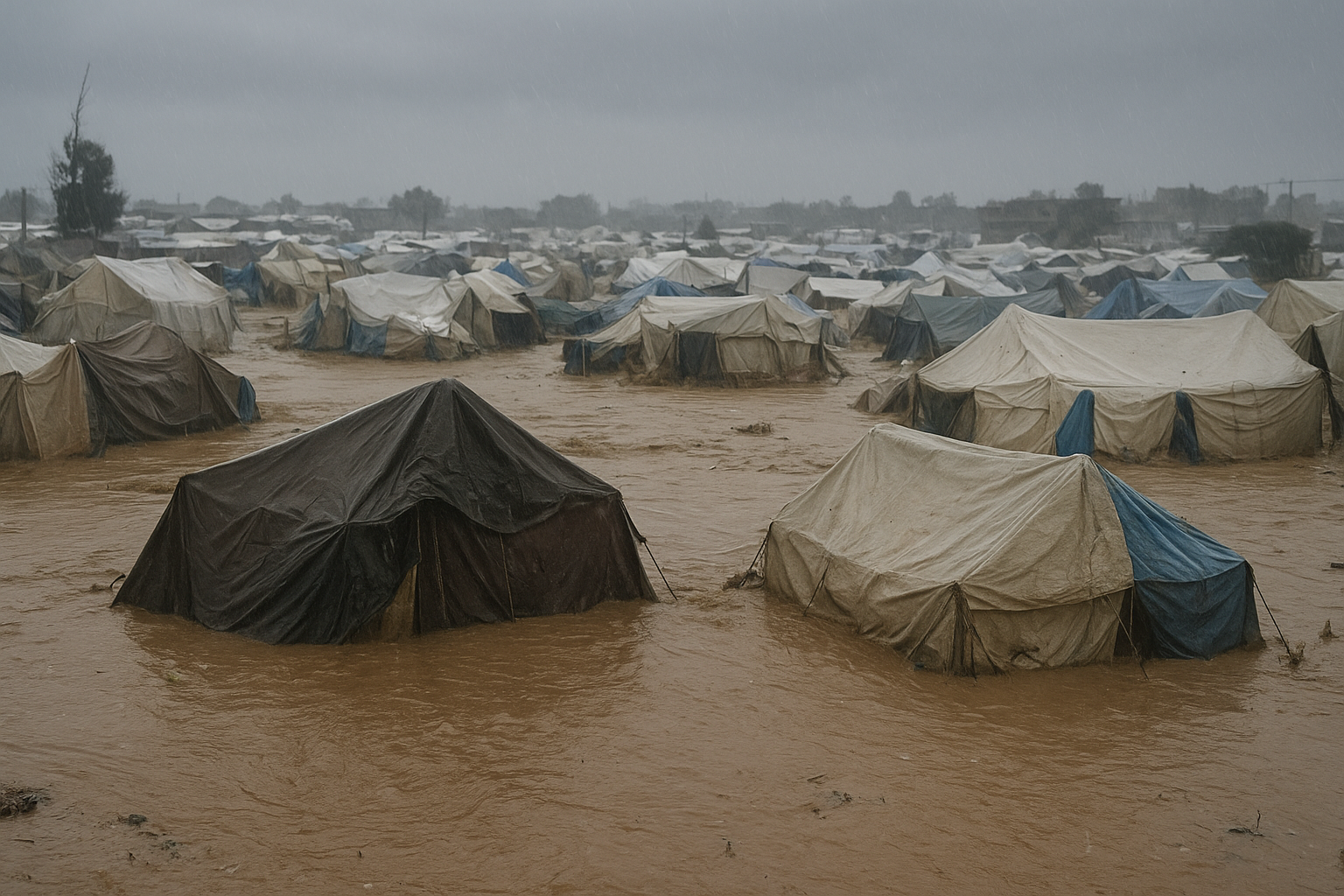
Storm Byron’s heavy rainfall has pounded the Gaza Strip, flooding tent camps that shelter hundreds of thousands of displaced families and compounding an already dire humanitarian emergency in the war-torn enclave. The torrential downpours have turned large parts of makeshift displacement sites into muddy lakes, soaking bedding, clothing and food supplies and leaving many families exposed to the winter cold.
The storm hit areas where infrastructure was already shattered by more than two years of conflict. Thousands of tents and temporary shelters — many erected on low-lying, debris-strewn ground — have been inundated as drainage systems remain wrecked and local civil defense teams struggle with scarce resources. Heavy winds and flooding caused by the storm have also led to structural collapses and widespread property damage.
Health and humanitarian agencies warn that standing water mixed with sewage and trash is increasing the risk of disease outbreaks, especially among vulnerable children and the elderly. In Khan Younis, an eight-month-old baby died of exposure after her family’s tent filled with rainwater, underscoring the severity of conditions for many displaced residents.
Aid organizations and the UN agency UNRWA have called for urgent delivery of more robust shelter materials, warm clothing and sanitation supplies, but deliveries have lagged behind needs, leaving many Gazans without adequate protection from the elements.
The storm has exposed how fragile living conditions remain under the fragile truce and highlighted the urgent need for increased humanitarian access and winter-ready support for the enclave’s vulnerable population.