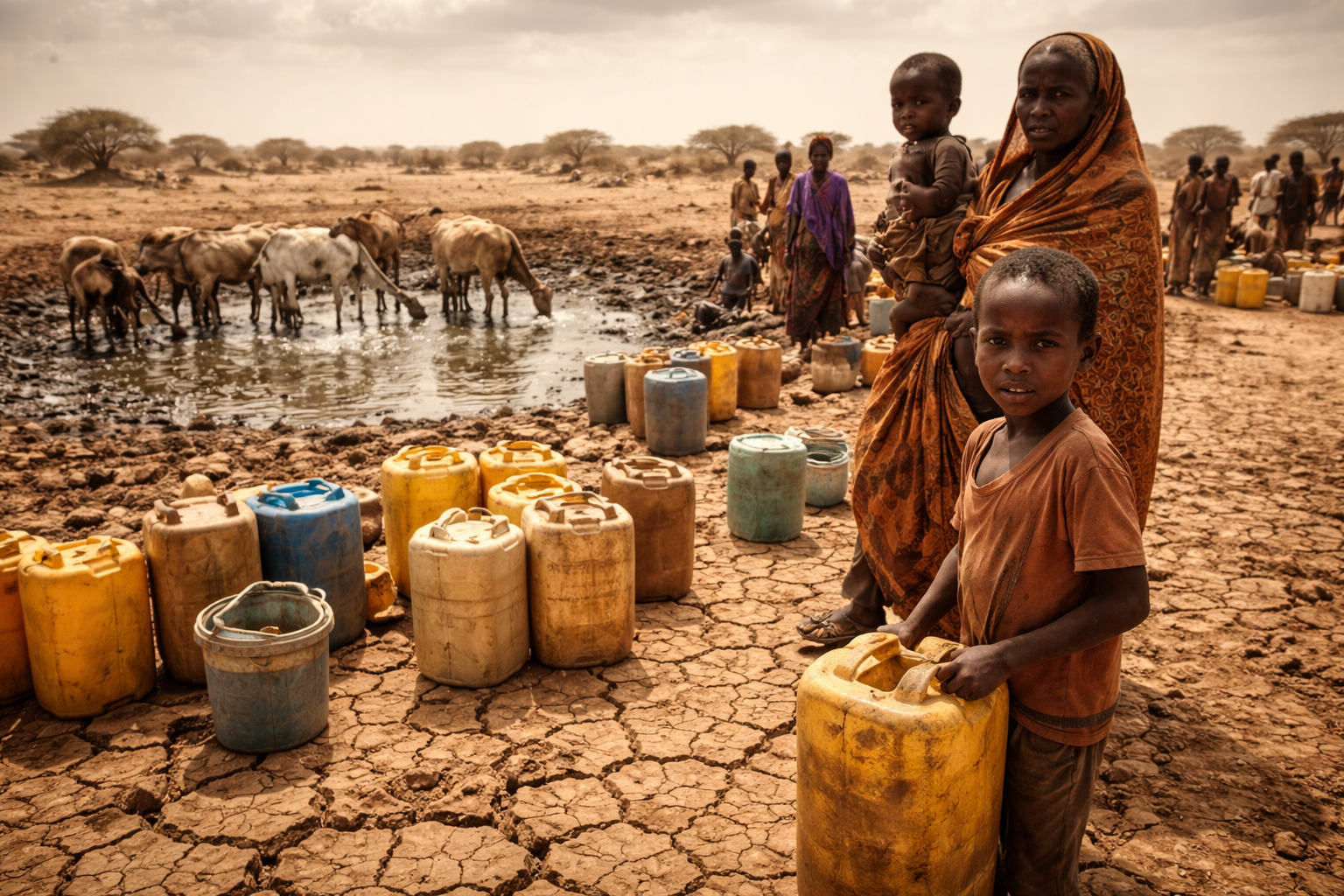
Severe drought conditions are intensifying across several regions in Africa, worsening food insecurity and prompting urgent humanitarian response efforts. Countries in East and Southern Africa are among the hardest hit, with prolonged dry spells, failed rainy seasons, and shrinking water resources severely affecting agriculture and livestock.
According to agencies such as the United Nations and the World Food Programme, millions of people are now facing acute food shortages. Crops have failed in large areas, while pastoral communities are struggling to sustain their animals due to lack of water and grazing land.
Governments and international aid organizations have stepped up relief efforts, including emergency food distribution, water supply initiatives, and nutritional support for vulnerable populations. However, aid agencies warn that funding gaps and logistical challenges could limit the scale of the response.
Experts link the worsening drought to climate variability and long-term changes associated with global warming, which have made weather patterns increasingly unpredictable. The crisis underscores the urgent need for climate resilience strategies, sustainable water management, and stronger global cooperation to address the growing humanitarian impact.
With forecasts suggesting continued dry conditions in some regions, humanitarian organizations are calling for immediate international support to prevent the situation from escalating into a larger famine crisis. News as reported.