

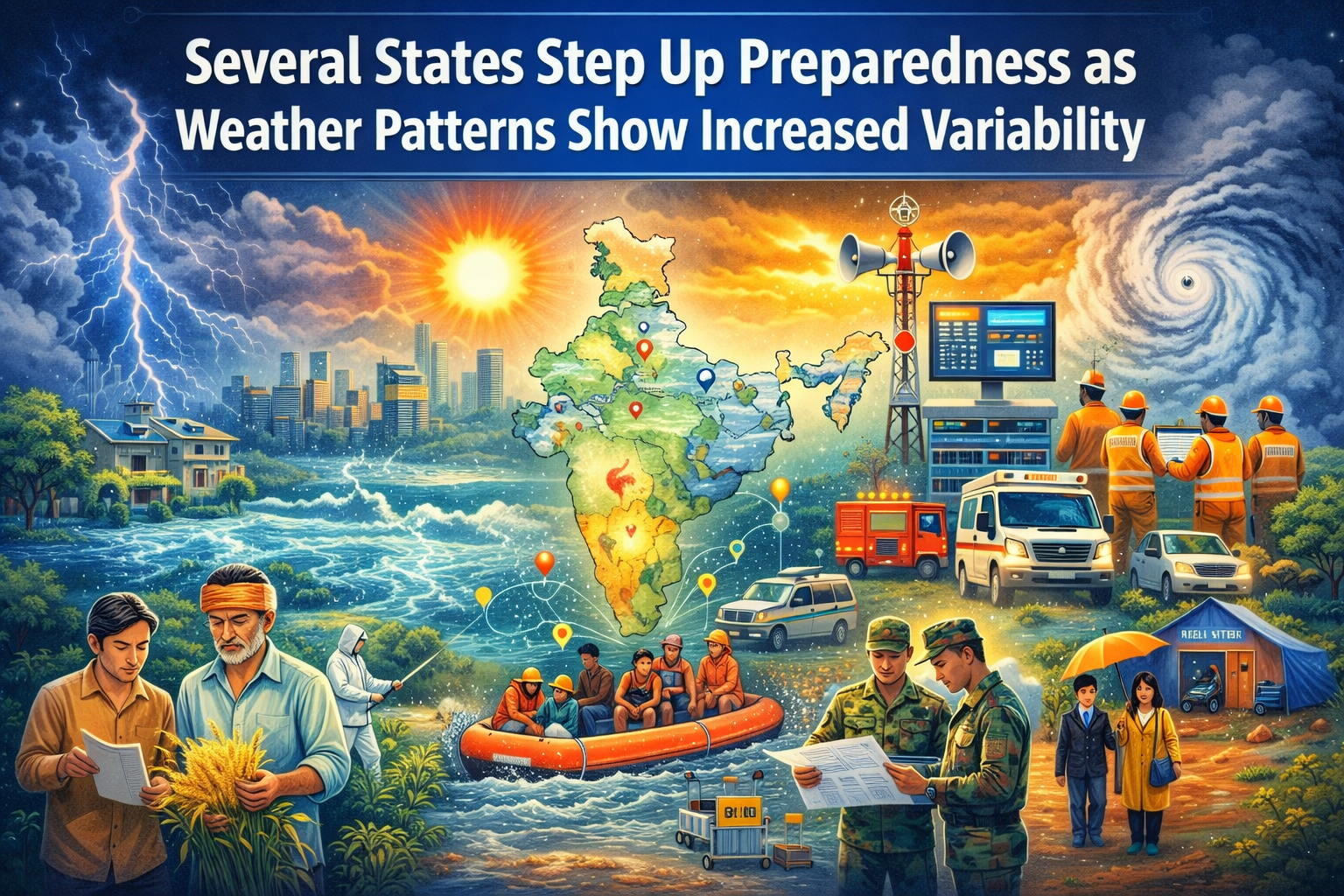
Several states across India have intensified preparedness efforts as weather patterns continue to show increased variability, posing challenges to disaster management, agriculture, and public health. Unpredictable rainfall, prolonged heatwaves, sudden cold spells, and the rising frequency of extreme weather events have prompted governments to adopt proactive and coordinated response measures.
State disaster management authorities, working closely with the India Meteorological Department and central agencies, have enhanced real-time weather monitoring and early warning systems. District administrations have been instructed to review emergency action plans, ensure the readiness of relief camps, and keep response teams on standby. Coastal and flood-prone regions are receiving special attention, with measures such as strengthening embankments, improving drainage networks, and conducting mock drills at the community level.
The agriculture sector is also a key focus of preparedness initiatives. States are issuing weather-based advisories to farmers to help them adjust sowing schedules, irrigation practices, and crop choices. Promotion of climate-resilient crops and wider coverage of crop insurance schemes aim to reduce the financial impact of weather-related losses on rural livelihoods.
Urban areas are preparing to handle heat stress and heavy rainfall by implementing heat action plans, ensuring uninterrupted water and power supply, and improving solid waste and stormwater management. Health departments are alerting hospitals to prepare for climate-linked illnesses, including heatstroke and waterborne diseases.
Experts emphasize that increasing weather variability highlights the urgent need for adaptive strategies. Through improved planning, technology adoption, and public awareness, states are seeking to minimize risks and enhance resilience in the face of a changing climate.


- upgraderz.aws@gmail.com
- upgraderz.aws@gmail.com
- upgraderz.aws@gmail.com
- upgraderz.aws@gmail.com