

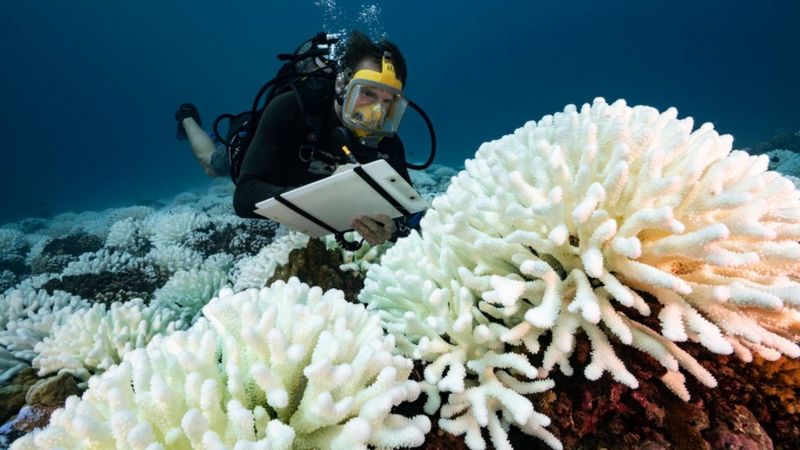
Marine scientists have raised fresh concerns over the rapid acceleration of coral bleaching across several of the world’s most important ocean biodiversity zones, warning that rising sea temperatures are pushing fragile reef ecosystems toward irreversible damage. Recent surveys indicate that prolonged marine heatwaves have caused widespread bleaching in parts of the Indian Ocean, Pacific reefs, and sections of the Great Barrier Reef, threatening thousands of marine species that depend on coral habitats.
Coral bleaching occurs when stressed corals expel the symbiotic algae that provide them with food and color, leaving them pale and vulnerable. If high temperatures persist, the corals often die, leading to the collapse of entire reef systems. Researchers say this year’s warming trends, combined with climate change and El Niño conditions, have intensified the frequency and severity of bleaching events.
Experts warn that the loss of reefs could affect fisheries, tourism, and coastal protection for millions of people worldwide. Coral reefs support nearly 25 percent of marine life and act as natural barriers against storms and erosion.
Scientists are calling for urgent global action to cut greenhouse gas emissions, reduce pollution, and strengthen conservation measures. Without immediate intervention, they caution, many iconic reefs could face long-term decline within decades, putting ocean biodiversity and livelihoods at serious risk. News as reported

- upgraderz.aws@gmail.com
- upgraderz.aws@gmail.com
- upgraderz.aws@gmail.com
- upgraderz.aws@gmail.com