

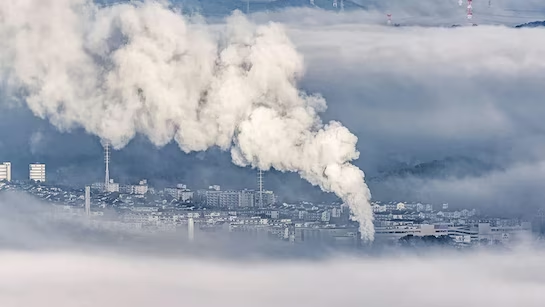
Scientific research has revealed that the rapid global surge in air-conditioner use is significantly intensifying greenhouse gas emissions and contributing to further global warming. As temperatures rise due to climate change, households and businesses are increasingly turning to cooling systems to cope with extreme heat. However, this growing dependence on air conditioning is creating a feedback loop that adds pressure to the climate.
Experts note that most air-conditioners rely heavily on electricity generated from fossil fuels in many parts of the world. This increased energy demand leads to higher carbon dioxide emissions, particularly during peak summer months when power grids are already under strain. In addition, many cooling systems use refrigerants known as hydrofluorocarbons (HFCs), which are potent greenhouse gases if leaked into the atmosphere.
The study highlights that without significant improvements in energy efficiency and a rapid shift to renewable energy sources, global cooling demand could triple by 2050. Researchers stress the need for climate-friendly cooling technologies, better building design, and stricter regulations on refrigerants to curb emissions. While air conditioning remains essential for public health and economic productivity in a warming world, scientists warn that sustainable solutions are urgently required to prevent it from worsening the climate crisis. News as reported

- upgraderz.aws@gmail.com
- upgraderz.aws@gmail.com
- upgraderz.aws@gmail.com
- upgraderz.aws@gmail.com