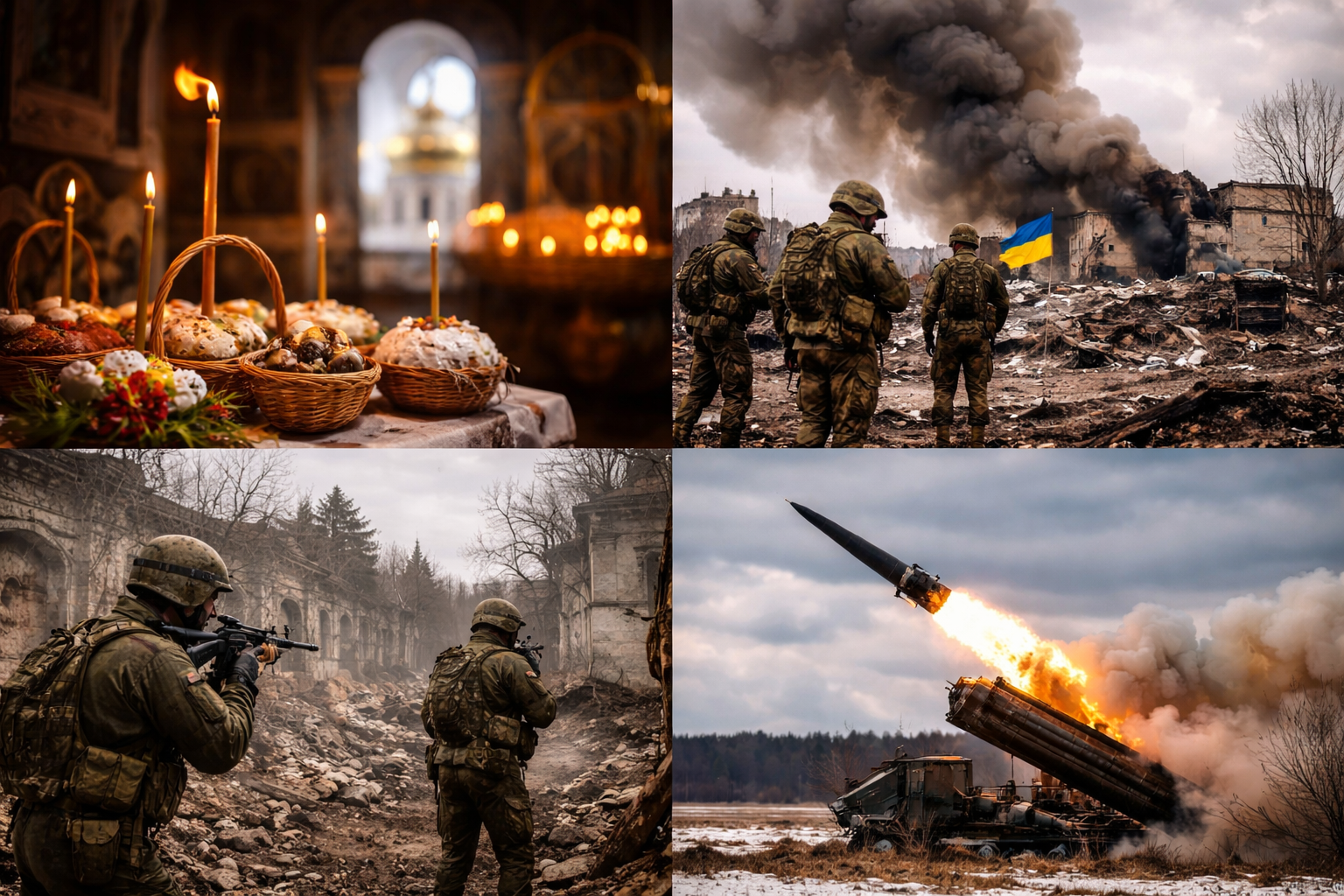
Tensions between Russia and Ukraine remain high despite the announcement of a temporary ceasefire linked to the Orthodox Easter holiday. Russian President Vladimir Putin ordered a brief halt to military operations lasting about 32 hours, beginning Saturday and extending through Easter Sunday, while Ukrainian President Volodymyr Zelenskyy said Ukraine would reciprocate if the truce was respected.
The temporary truce was introduced as a humanitarian pause during the religious holiday, but skepticism remains strong on both sides. Ukrainian officials have urged Moscow to extend the ceasefire further and restart peace negotiations, arguing that a longer halt in fighting could provide relief to civilians and open the door for diplomatic talks.
Despite the announcement, reports from the front lines suggest that tensions and military activities have not fully subsided. Airstrikes, drone attacks, and localized clashes have continued in several regions, highlighting the fragile nature of the ceasefire and the deep mistrust between the two countries. Ukrainian officials say previous temporary truces were frequently violated, leading to doubts about whether the current pause will hold.
Security concerns have also spread beyond Ukraine’s borders. NATO fighter jets were recently scrambled to intercept a Russian reconnaissance aircraft over the Baltic region, underscoring rising tensions between Russia and Western allies during the fragile truce period.
Analysts say the short ceasefire may provide only a brief humanitarian window rather than a meaningful step toward peace. While diplomatic discussions continue internationally, disagreements over territory and security guarantees remain major obstacles to a long-term settlement of the conflict. News as Reported.