

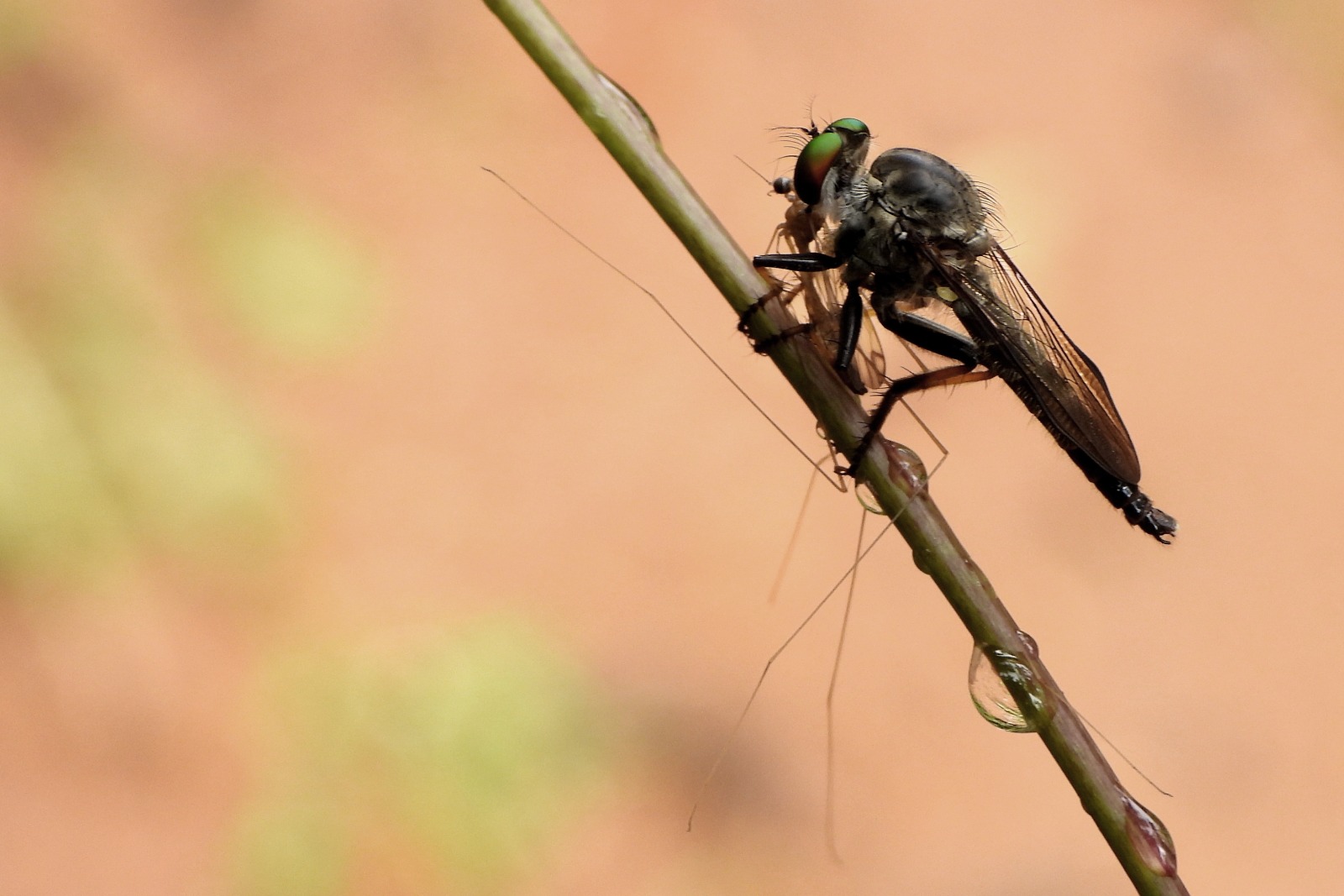
The Common Awl Robberfly (Neoitamus cyanurus), a member of the Asilidae family, is gaining attention for its important role in maintaining ecological balance. Belonging to a group of over 7,000 species commonly known as robber flies or assassin flies, this insect was first documented in 1849 by German entomologist Friedrich Hermann Loew.
Renowned for its exceptional hunting skills, the Common Awl Robberfly is a formidable aerial predator. It captures prey mid-flight using its strong legs and injects a toxic saliva that quickly immobilizes and liquefies the victim’s internal tissues. This allows the fly to feed efficiently on a wide variety of insect species, many of which are considered agricultural pests.
Despite its fearsome hunting technique, the species poses little threat to humans. Experts note that it does not typically bite people unless handled or provoked.
Ecologists emphasize the significant role of robber flies in natural pest control. By regulating populations of harmful insects, they contribute to healthier ecosystems and reduced reliance on chemical pesticides.
As awareness of biodiversity and sustainable agriculture grows, species like the Common Awl Robberfly are increasingly recognized as vital allies in preserving environmental stability.
CONTRIBUTION BY VINCENT MASH —
FORMER EDITOR OF PHOTOWIDE MAGAZINE AND ASSOCIATE EDITOR OF PHOTO TRACK MAGAZINE

- upgraderz.aws@gmail.com
- upgraderz.aws@gmail.com
- upgraderz.aws@gmail.com
- upgraderz.aws@gmail.com