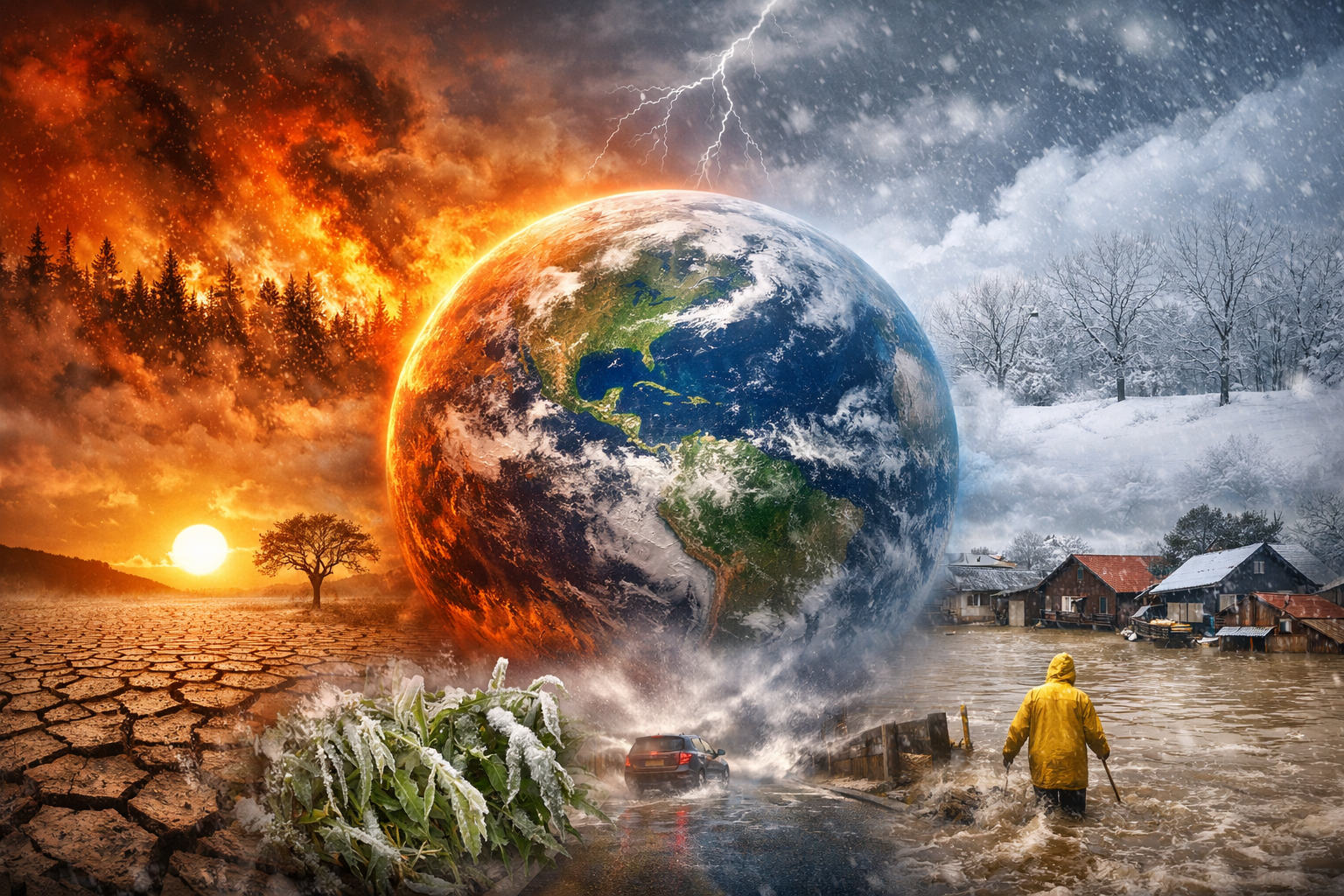
Unseasonal and extreme weather events are being reported across multiple continents as rising global temperatures continue to disrupt long-established climate patterns. Scientists and meteorological agencies have observed unusual heatwaves, unexpected cold spells, irregular rainfall, and intensified storms occurring outside their typical seasons, highlighting the growing impact of climate change on the planet’s weather systems.
In several parts of Europe and North America, warmer-than-average winters have reduced snowfall, while sudden cold snaps have damaged crops and strained energy systems. At the same time, regions in Asia and Africa are experiencing erratic monsoon behavior, with delayed rains in some areas and excessive rainfall in others, increasing the risk of floods and landslides. South America and Australia have also reported prolonged heatwaves and unseasonal wildfires, affecting agriculture, wildlife, and public health.
Climate experts attribute these disruptions to rising global temperatures driven largely by increased greenhouse gas emissions. Warmer oceans and atmosphere are altering jet streams and pressure systems, leading to unstable and unpredictable weather conditions. These changes not only threaten food security and water availability but also place additional pressure on infrastructure, healthcare systems, and disaster management agencies worldwide.
Governments and international organizations are being urged to strengthen climate adaptation strategies alongside accelerating efforts to reduce emissions. Scientists warn that without decisive action, unseasonal weather patterns may become more frequent and severe, underscoring the urgent need for coordinated global responses to address the escalating climate crisis.