

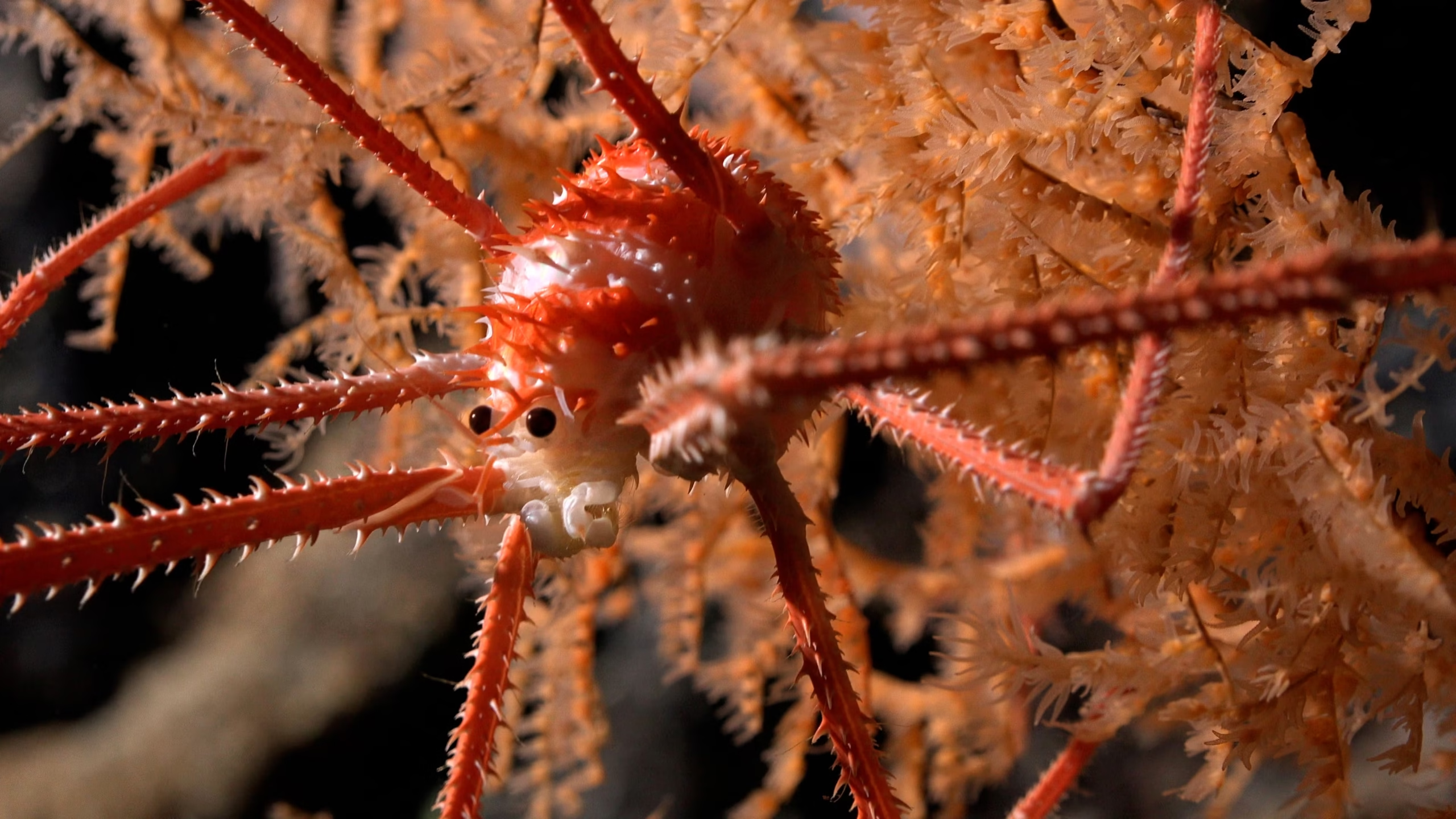
Researchers have discovered several previously unknown marine species during a recent deep-sea exploration mission in the Pacific Ocean, highlighting how little is still known about life in the planet’s deepest waters. The international team of marine scientists used advanced remotely operated vehicles and high-resolution underwater cameras to explore remote sections of the ocean floor thousands of meters below the surface.
During the expedition, scientists documented a variety of unusual organisms, including brightly colored corals, delicate sea sponges, and several small invertebrates believed to be entirely new to science. Some of the species were found living around hydrothermal vents and rocky seamounts, environments known for their extreme pressure, darkness, and unique chemical conditions.
Researchers involved in the mission say the findings provide valuable insight into deep-sea ecosystems and the remarkable adaptations that allow organisms to survive in such harsh environments. Experts from organizations such as the National Oceanic and Atmospheric Administration note that many deep-sea habitats remain unexplored, meaning countless species may still be undiscovered.
Scientists emphasize that documenting these ecosystems is important for global conservation efforts, especially as deep-sea mining and climate change begin to pose new threats to fragile marine habitats. The discovery also underscores the importance of continued ocean exploration to better understand Earth’s biodiversity and protect vulnerable underwater ecosystems for the future. News as reported
