

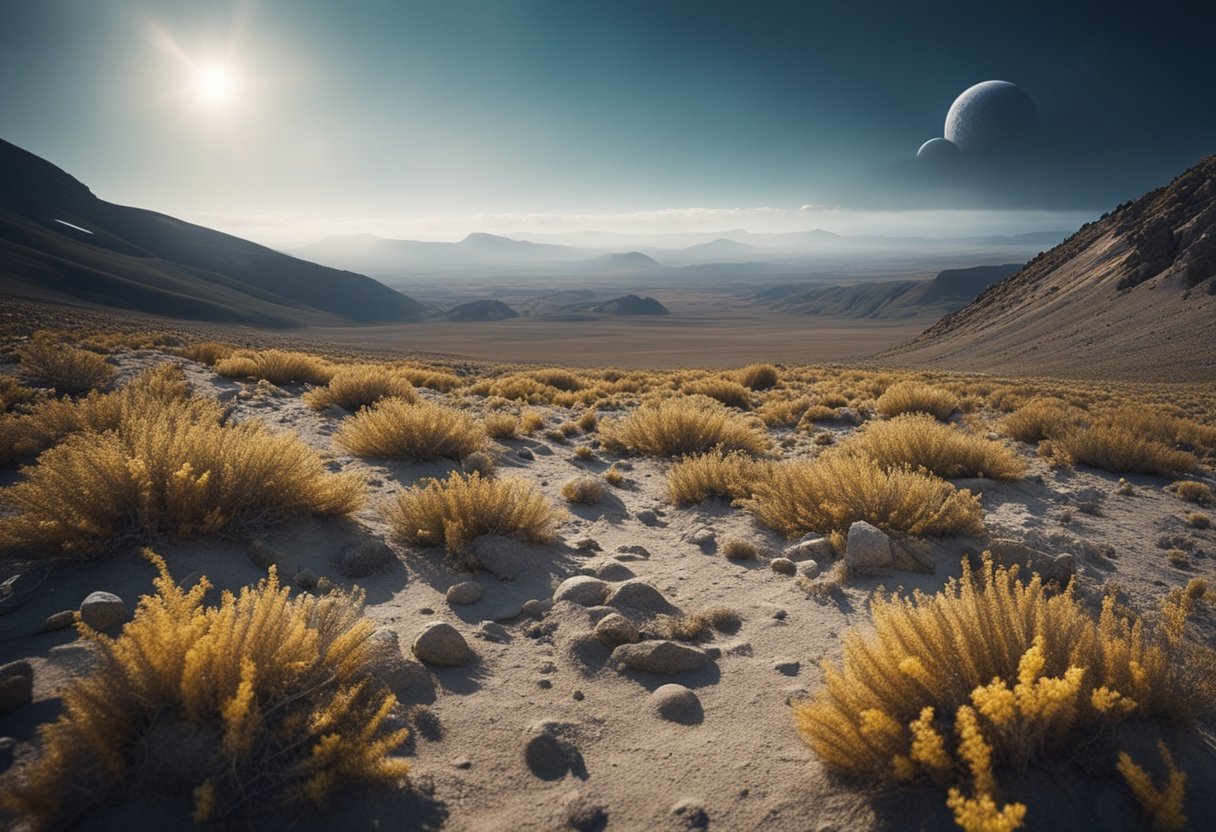
Scientists have discovered resilient microbial life thriving in some of the world’s harshest desert environments, offering new insights into how life might survive on other planets. The discovery comes from research conducted in extremely dry desert regions where temperatures, radiation levels, and lack of water create conditions similar to those found on Mars.
Researchers found that specialized microorganisms, often called extremophiles, are able to survive by adapting to intense heat, minimal moisture, and nutrient-poor soils. These microbes can remain dormant for long periods and become active when even small amounts of moisture appear.
The study shows that certain desert soils contain microscopic life forms capable of using limited organic material and atmospheric gases to sustain themselves. Scientists say these survival strategies demonstrate how life can persist in environments previously considered too hostile for biological activity.
Such discoveries are important for astrobiology, as deserts on Earth are often used as natural laboratories to study potential life-supporting conditions beyond our planet. By understanding how microbes adapt to extreme conditions, researchers can better design future missions searching for signs of life on Mars and other celestial bodies.
Experts believe that continued exploration of extreme environments on Earth will help scientists refine methods for detecting microbial life elsewhere in the solar system, expanding our understanding of the limits of life. News as reported
