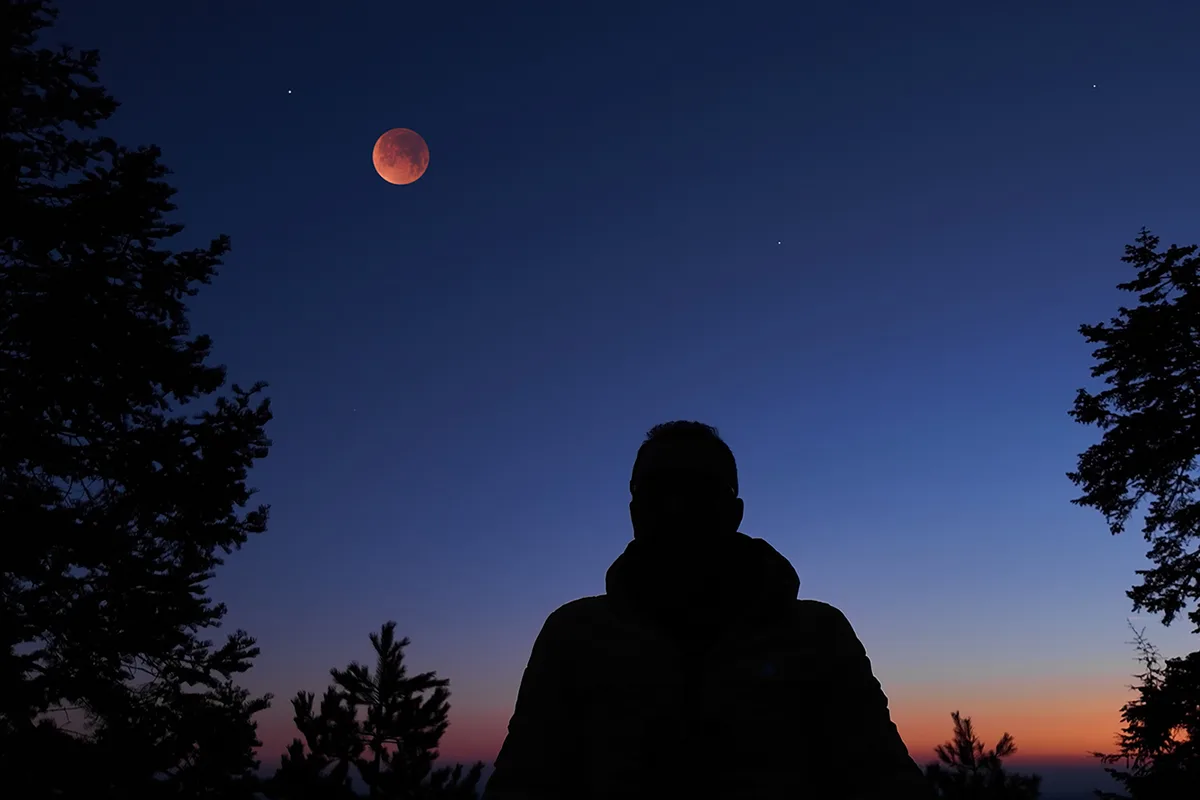
A rare total lunar eclipse, commonly known as a “Blood Moon,” is capturing the world’s attention as skywatchers prepare to witness the celestial spectacle on March 3, 2026. During the event, the Moon will pass completely into Earth’s umbral shadow, causing it to adopt a deep reddish hue due to sunlight filtering through the planet’s atmosphere — the characteristic effect that gives the eclipse its dramatic name.
Astronomers say this is the only total lunar eclipse of 2026 and the last until New Year’s Eve 2028, making it a must-see phenomenon for stargazers across continents. The totality — when the Moon is fully immersed in Earth’s shadow — will last around 58 minutes, with the broader eclipse lasting over five hours from start to finish.
Visibility will span large parts of the globe: observers in North America, East Asia, Australia, and Pacific regions are expected to enjoy the best views, weather permitting. In some locations, an unusual atmospheric effect called a selenelion could briefly allow viewers to see both the eclipsed “Blood Moon” and the rising Sun simultaneously.
Unlike solar eclipses, lunar eclipses are safe to watch with the naked eye, and no special equipment is needed — though binoculars or a telescope can enhance the experience. Enthusiasts around the world are planning gatherings, livestreams, and public viewing events to catch this cosmic event . news as reported.